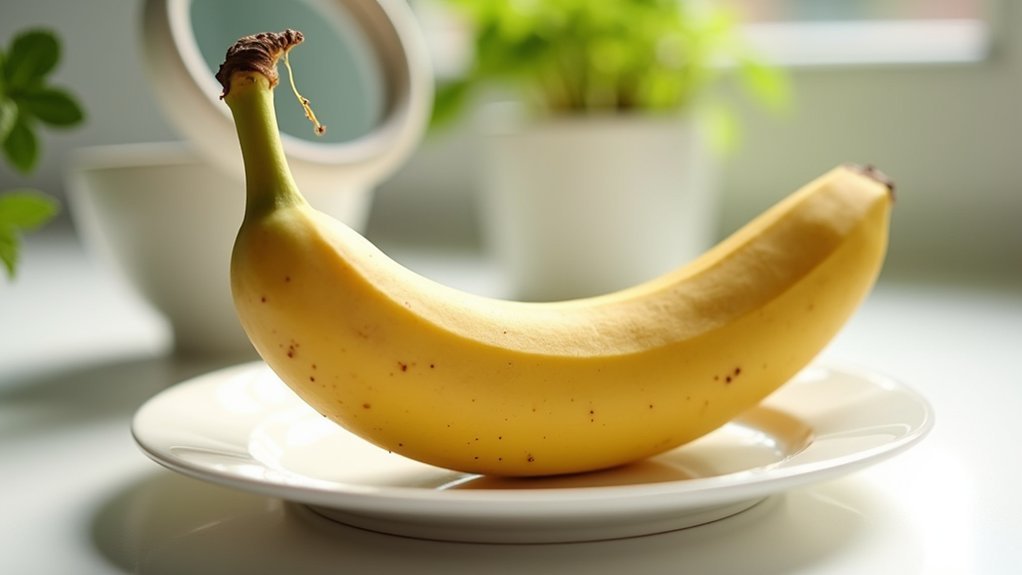

Yes, bananas are good for your teeth! They contain essential nutrients like potassium and vitamin C, which support strong teeth and healthy gums. With a lower acidity level compared to many other fruits, bananas are less likely to cause enamel erosion. However, their natural sugar content can contribute to tooth decay if you neglect oral hygiene. By maintaining good dental care, you can enjoy the benefits of bananas while keeping your smile bright. Discover more about maximizing your dental health.
Key Takeaways
- Bananas are rich in potassium and vitamin C, promoting strong teeth and healthy gums.
- Their high fiber content stimulates saliva production, which helps neutralize acids and protects enamel.
- With a pH range of 4.5-5.2, bananas are less acidic than many fruits, reducing enamel erosion risk.
- Although they contain natural sugars, their lower acidity makes them a safer option for dental health.
- maintaining good oral hygiene is essential to prevent tooth decay from sugars in bananas.
Nutritional Benefits of Bananas for Oral Health
When you consider your oral health, bananas can play a surprisingly beneficial role. Rich in potassium and vitamin C, they contribute to strengthening teeth and maintaining healthy gums.
Vitamin C is essential for collagen production, which supports gum health. Additionally, bananas’ high fiber content stimulates saliva production, vital for neutralizing acids and washing away food particles that may cause decay.
With a pH range of 4.5-5.2, they’re less acidic than many fruits, reducing the risk of enamel erosion. By including bananas in your diet and practicing good oral hygiene, you can support both your overall health and dental wellness.
Sugar Content in Bananas and Its Impact
Although bananas are often praised for their health benefits, their sugar content warrants attention when considering their impact on oral health.
With about 14 grams of natural sugars per fruit, bananas can contribute to tooth decay if you don’t maintain good oral hygiene. Bacteria in your mouth feed on these sugars, producing acids that may harm your tooth enamel over time.
However, bananas have relatively low acidity, making them less harmful than more acidic fruits.
Acidity Levels: How Bananas Compare to Other Fruits
When you consider the acidity levels of fruits, bananas stand out with a pH range of about 4.5-5.2, making them less acidic than options like oranges and apples.
Oranges have a pH of around 3.7-4.2, while apples can drop as low as 3.3.
This lower acidity in bananas means they’re less likely to erode your tooth enamel compared to more acidic fruits.
Banana Ph Levels
Bananas, with a pH range of about 4.5 to 5.2, offer a tooth-friendly option due to their relatively low acidity compared to other fruits.
Here’s how banana pH levels make them a better choice for your teeth:
- They’re low in acidity, reducing the risk of enamel erosion.
- They’re less likely to contribute to tooth decay compared to highly acidic fruits.
- They provide a more tooth-friendly option for maintaining dental health.
Incorporating bananas into your diet can help protect your teeth while still enjoying a delicious snack.
Choose bananas for a healthier, tooth-friendly alternative!
Comparison With Citrus Fruits
While enjoying a variety of fruits is important for a balanced diet, it’s crucial to take into account their acidity levels, especially regarding dental health.
Bananas, with a pH of 4.5-5.2, are much less acidic than citrus fruits like oranges and apples, which have pH levels around 3.7-4.2 and 3.3-4.0, respectively.
The higher acidity of these fruits can weaken tooth enamel over time, posing risks to your dental health.
The Role of Saliva in Dental Hygiene
Saliva plays an essential role in maintaining dental hygiene, as it neutralizes harmful acids produced by bacteria in your mouth and protects tooth enamel from erosion.
Saliva is crucial for dental health, counteracting harmful bacteria and safeguarding tooth enamel from erosion.
Keeping your saliva levels adequate is vital for:
- Aiding in the remineralization of tooth enamel, reinforcing its strength.
- Reducing plaque formation by digesting food particles effectively.
- Naturally cleansing your mouth by washing away food debris and bacteria.
The Importance of Maintaining Good Oral Hygiene
To maintain good oral hygiene, you need to focus on regular dental checkups and daily brushing habits.
Brushing twice a day removes plaque and food particles, while professional cleanings help detect issues early.
Prioritizing these practices not only protects your teeth but also supports your overall health.
Regular Dental Checkups
Regular dental check-ups play an essential role in maintaining good oral hygiene and preventing potential dental issues. By visiting your dentist every six months, you can guarantee:
- Professional cleanings remove plaque and tartar, reducing the risk of cavities and gum disease.
- Monitoring your child’s teeth supports healthy development and alignment.
- Dentists provide guidance on proper dental care and the impact of a healthy diet.
These consistent visits not only help maintain your oral health but also allow for early intervention, ultimately saving you time and money on more serious treatments.
Prioritize regular check-ups for a brighter, healthier smile!
Daily Brushing Habits
Maintaining good oral hygiene is essential for your overall dental health, and daily brushing habits play a considerable role in this.
Brushing twice a day for at least two minutes helps remove plaque and food particles, greatly reducing the risk of tooth decay. Using fluoride toothpaste not only strengthens tooth enamel but also offers protection against cavities, especially when you enjoy fruits high in sugar, like bananas.
Proper techniques, such as gentle circular motions, guarantee all surfaces are cleaned. Establishing consistent brushing habits in children fosters lifelong dental health and decreases the likelihood of future dental issues.
Can Bananas Contribute to Tooth Decay?
How can something as seemingly harmless as a banana contribute to tooth decay? While bananas are nutritious, their sugar and starch content can pose risks if you neglect oral hygiene.
Consider these factors:
- Bananas contain about 14 grams of natural sugars, which can lead to tooth decay.
- The starch can stick to your teeth, creating a breeding ground for harmful bacteria.
- Although their acidity is lower than many fruits, moderation is key to protect your enamel.
To mitigate these risks, maintain good oral hygiene practices, like brushing and rinsing after enjoying bananas, to help keep your teeth healthy.
Best Practices for Eating Bananas and Caring for Teeth
While bananas can be a delicious and nutritious addition to your diet, it’s important to adopt best practices for enjoying them without compromising your dental health.
Since bananas are high in natural sugars, consume them in moderation—one or two a day. After eating a banana, rinse your mouth with water to wash away residual sugars and help prevent bacterial growth.
Incorporating bananas into meals, like yogurt or oatmeal, can reduce their stickiness on teeth.
Maintain a rigorous oral hygiene routine by brushing twice daily and flossing, and don’t forget to schedule regular dental check-ups to guarantee your overall health.
Regular Dental Check-Ups and Their Importance
Regular dental check-ups are essential for maintaining ideal oral health, as they allow for early detection and prevention of potential issues.
Consider the benefits of regular visits:
- Thorough cleanings remove plaque and tartar that brushing might miss.
- Dentists assess the overall condition of teeth, gums, and soft tissues to address any concerns.
- For your child, visiting a pediatric dentist by age one sets a foundation for good oral health habits.
These check-ups not only promote healthy teeth but also guarantee that your child receives valuable nutrients through proper oral care practices.
Prioritize those appointments for a lifetime of healthy smiles!