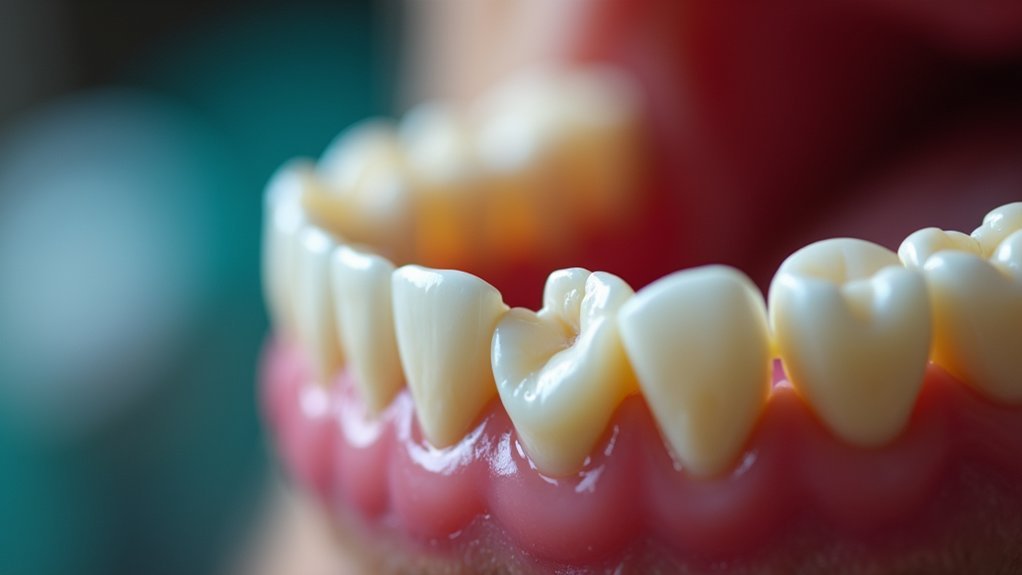

Yes, adult teeth can fall out due to several factors. Poor oral hygiene can lead to gum disease, which affects nearly half of adults over 30. Trauma from accidents or sports injuries also contributes to tooth loss. Lifestyle choices, like smoking and unmanaged diabetes, increase your risk. If you notice signs like bleeding gums or loose teeth, it’s essential to act quickly. Discover how to prevent tooth loss and what steps to take if you face this issue.
Key Takeaways
- Yes, adult teeth can fall out due to poor oral hygiene and untreated gum disease.
- Dental trauma, such as accidents or sports injuries, can also lead to tooth loss.
- Lifestyle factors like smoking and unmanaged diabetes increase the risk of losing teeth.
- Symptoms like loose teeth, swollen gums, and persistent bad breath may indicate impending tooth loss.
- Prompt dental care and preventive measures are essential to avoid losing adult teeth.
Causes of Tooth Loss in Adults
Tooth loss in adults can occur for several reasons, with poor oral hygiene being a primary factor. Neglecting dental care leads to plaque buildup, resulting in tooth decay and gum disease.
Nearly 50% of adults over 30 suffer from gum disease, which, if untreated, can progress to tooth loss. Additionally, about 92% of adults experience cavities by age 64, further weakening adult teeth.
Dental trauma from accidents, particularly sports injuries, also contributes to missing teeth.
Lifestyle choices, including smoking and unmanaged diabetes, heighten the risk of tooth loss, highlighting the connection between overall health and dental stability.
Symptoms Indicating Potential Tooth Loss
You should be aware of several warning signs that may indicate potential tooth loss.
Symptoms like persistent bad breath, bleeding gums, and toothaches can point to serious underlying dental issues.
Recognizing these indicators early can help you seek timely treatment and preserve your oral health.
Common Warning Signs
When it comes to maintaining dental health, recognizing the common warning signs of potential tooth loss is crucial. Persistent bad breath may indicate gum disease, while bleeding or swollen gums signal inflammation.
A loose tooth in adults is significant, often pointing to periodontal disease. Toothaches can suggest decay or infection; if untreated, they lead to complications and potential tooth loss.
Additionally, receding gums and increased tooth sensitivity accompany gum disease. Regular dental check-ups are essential to identify early symptoms like plaque buildup and changes in gum health, ensuring you maintain prime oral health and prevent serious issues from developing.
Gum Health Indicators
Gum health indicators play an essential role in identifying potential tooth loss, as they often reveal underlying issues that require immediate attention.
Bleeding gums during brushing or flossing signal possible gum disease and can indicate gingivitis, a precursor to periodontal disease. A loose tooth is a critical warning sign of advanced gum disease that necessitates prompt dental care.
Additionally, swollen gums may suggest significant dental issues, increasing the risk of tooth loss. Frequent toothaches often reflect dental decay or gum infections, both of which jeopardize tooth stability if not addressed quickly.
Timely intervention is essential for preserving your oral health.
Dental Pain Symptoms
What signs might indicate impending tooth loss? Persistent dental pain is often a red flag, suggesting issues like cavities or gum disease. Bleeding gums during brushing or flossing frequently point to gum disease, a leading cause of tooth loss. Additionally, bad breath that doesn’t improve with oral hygiene may signal gum infection. A loose tooth warrants immediate dental consultation, as it could indicate advanced gum disease. Swollen gums around a tooth also serve as a warning sign of inflammation, potentially leading to tooth loss if not promptly addressed.
| Symptom | Indication | Action Needed |
|---|---|---|
| Dental Pain | Underlying issues | Schedule a consultation |
| Bleeding Gums | Gum disease | Improve oral hygiene |
| Loose Tooth | Advanced gum disease | Urgent dental visit |
| Swollen Gums | Infection or inflammation | Seek professional help |
Immediate Steps to Take If a Tooth Falls Out
If a permanent tooth falls out, it’s crucial to act quickly to maximize the chances of successful reimplantation.
First, handle the tooth by the crown only; avoid touching the root. Rinse it gently with water, milk, or a saline solution—do not scrub.
Handle the tooth by the crown only; rinse gently with water or milk, avoiding scrubbing.
If possible, reinsert the tooth into its socket within two hours. If that’s not feasible, store it in milk or sterile saline to keep it moist.
Contact your dentist right away or an emergency dental clinic for guidance.
Consequences of Losing a Permanent Tooth
Losing a permanent tooth can have significant consequences for your oral health and overall well-being. An empty socket not only invites infection but can also complicate your dental care.
Here are some potential impacts of tooth loss:
- Adjacent teeth may shift, leading to misalignment and bite issues.
- The risk of further tooth loss and jawbone deterioration increases, especially with multiple missing teeth.
- Psychological effects, like stress and decreased self-esteem, can affect your social interactions.
It’s essential to seek professional dental care promptly to restore function and prevent further complications after experiencing tooth loss.
Replacement Options for Lost Teeth
When a permanent tooth is lost, it’s vital to explore replacement options promptly to maintain oral health and functionality.
Dental implants are the preferred choice for replacing a single missing tooth, as they mimic the natural root and prevent bone loss. For multiple missing teeth, a dental bridge can anchor artificial teeth to adjacent healthy teeth or implants.
Full or partial dentures provide solutions for those who’ve lost several or all teeth. Before proceeding, a proper evaluation of bone density is important, as insufficient bone may necessitate additional procedures to avoid alignment issues and shifting of adjacent teeth.
Preventative Measures to Avoid Tooth Loss
Tooth loss can often be prevented through proactive measures that prioritize oral health. By focusing on good oral care, you can greatly reduce your risk of losing teeth.
Here are key strategies to implement:
- Brush twice daily and floss regularly to combat cavities and gum disease.
- Maintain a healthy diet and avoid tobacco to support gum health.
- Address teeth grinding by consulting your dentist to prevent excessive pressure on your teeth.
Regular dental visits are vital for early detection of potential issues.
Importance of Regular Dental Check-Ups
Regular dental check-ups play an important role in maintaining your oral health, as they allow for the early detection of issues that could lead to tooth loss.
Visiting your dentist every six months guarantees professional cleanings remove plaque and tartar, greatly lowering your risk of gum disease. X-rays taken during these visits help monitor bone health, identifying potential problems before they escalate.
By prioritizing preventive care, you can address cavities and gum disease early, preserving your natural teeth and avoiding costly treatments later.
With 69% of adults by age 44 losing at least one tooth, regular check-ups are crucial for effective oral care.