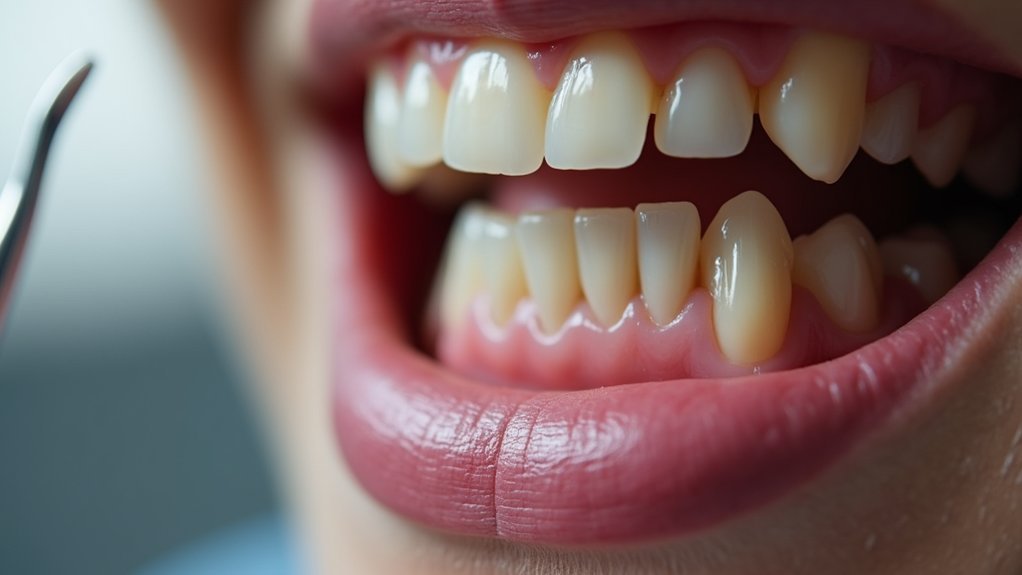

Yes, grinding your teeth can cause receding gums. The excessive pressure from bruxism leads to inflammation of the gum tissue and damages the periodontal ligaments, contributing to gum recession. Over time, this can expose tooth roots, increasing sensitivity and the risk of periodontal disease. Addressing bruxism is essential for maintaining healthy gums. To learn more about treatment options and preventive measures, consider exploring further insights on managing bruxism and protecting your oral health.
Key Takeaways
- Bruxism exerts excessive pressure on the gums, leading to inflammation and potential gum recession.
- Damage to periodontal ligaments can result in gum tissue shrinkage and decreased bone density.
- Teeth grinding may expose tooth roots, increasing sensitivity and contributing to gum recession.
- The stress from bruxism can create deeper gingival pockets, increasing the risk of periodontal disease.
- Early intervention with mouthguards and stress management is crucial to prevent receding gums caused by grinding.
Understanding Bruxism and Its Impact on Oral Health
While you mightn’t be aware of it, bruxism—commonly known as teeth grinding—can seriously affect your oral health.
This condition often occurs during sleep and exerts significant pressure on your gum tissue, leading to gum recession. The excessive force from grinding irritates periodontal ligaments, contributing to inflammation and ultimately causing gum tissue shrinkage and exposure of tooth roots.
Studies reveal that up to 16% of adults experience sleep bruxism, increasing the risk of periodontal disease. Recognizing the link between bruxism and gum recession emphasizes the need for early intervention, such as custom mouthguards, to safeguard your oral health.
Signs and Symptoms of Teeth Grinding
Teeth grinding, or bruxism, often goes unnoticed until its signs and symptoms become pronounced.
You might notice a scalloped tongue, which indicates pressure from grinding. Look for broken teeth or fillings, as excessive force can cause damage. Abnormal wear patterns, such as uneven surfaces or flattened edges, may also be visible.
Enlarged jaw muscles can signal constant clenching associated with bruxism. Additionally, you might experience headaches, earaches, and disrupted sleep, all of which can compromise your overall quality of life.
Recognizing these symptoms early can help in protecting your gum tissue and maintaining oral health.
How Teeth Grinding Leads to Gum Recession
When bruxism occurs, it exerts excessive pressure on your gums, leading to inflammation and eventual gum recession. This constant stress affects the periodontal ligaments, damaging the supportive structures of your teeth.
Over time, the jawbone may reabsorb, decreasing bone density and contributing to the shrinking of gum tissue. As gum recession progresses, you might notice increased tooth sensitivity, particularly to hot or cold stimuli, due to exposed roots.
Additionally, deeper gingival pockets can harbor bacteria, exacerbating gum recession and increasing the risk of periodontal disease. Early intervention is essential to prevent significant gum recession and long-term oral health issues.
Factors Contributing to Teeth Grinding
Understanding the factors contributing to teeth grinding can help you address the root causes of bruxism and its effects on oral health.
Consider these key contributors:
- Genetic predisposition
- High stress levels
- Sleep disorders (e.g., sleep apnea)
- Lifestyle choices (excessive caffeine or alcohol)
- Psychological factors (anxiety and depression)
These elements can lead to increased teeth grinding, which, in turn, may cause receding gums and affect tooth roots.
Implementing effective stress management techniques and addressing lifestyle habits can greatly mitigate bruxism’s impact on your dental health.
Taking proactive steps is essential for maintaining healthy gums and teeth.
Treatment Options for Bruxism
Addressing bruxism effectively involves a combination of treatment options tailored to your specific needs.
Custom-fitted mouthguards are vital for protecting your teeth from grinding during sleep, preventing further gum recession. Additionally, stress management techniques, including relaxation exercises and cognitive behavioral therapy, can greatly reduce teeth grinding episodes.
Orthodontic treatments may correct misalignments contributing to bruxism, while behavioral therapy helps you recognize and alter daytime clenching habits.
Regular follow-ups with dental professionals are essential to monitor the effectiveness of these treatment options, ensuring they protect your oral health and mitigate complications associated with bruxism.
Addressing Gum Recession: Treatment Solutions
Gum recession is a common consequence of bruxism, leading to increased sensitivity and potential tooth loss if left untreated.
Gum recession often results from bruxism, increasing sensitivity and risking tooth loss without timely intervention.
To address gum recession effectively, consider the following treatment options:
- Traditional gum grafting for restoring gum structure
- Pinhole Surgical Technique™ for minimally invasive tissue repositioning
- Custom-fitted mouthguards to protect teeth from grinding
- Regular follow-up appointments with a periodontist for monitoring gum health
- Early intervention to prevent severe dental issues
Preventive Measures to Reduce Teeth Grinding
To reduce teeth grinding, you can implement effective stress management techniques, such as meditation and deep breathing exercises.
Using a custom mouthguard while you sleep can protect your teeth and gums from the damaging effects of bruxism.
Additionally, adjusting lifestyle habits, like reducing caffeine and alcohol intake, can further minimize the likelihood of grinding during the night.
Stress Management Techniques
While stress is a considerable contributor to teeth grinding, implementing effective stress management techniques can help mitigate this issue.
By incorporating these practices into your routine, you can enhance your overall well-being and reduce the risk of bruxism:
- Engage in mindfulness practices like meditation or yoga.
- Maintain a consistent sleep schedule to improve sleep quality.
- Participate in regular physical activities to relieve tension.
- Utilize relaxation techniques such as deep breathing and progressive muscle relaxation.
- Seek professional counseling to address anxiety disorders effectively.
These strategies can greatly lower stress levels and help prevent teeth grinding.
Custom Mouthguard Usage
Stress management techniques can greatly reduce teeth grinding, but incorporating a custom mouthguard into your nightly routine offers additional protection.
Custom mouthguards are crafted from your unique tooth impressions, ensuring a snug fit that cushions your teeth and gums. This considerably lessens the pressure associated with bruxism, thereby mitigating the risk of gum recession.
Studies indicate that using nightguards decreases both the frequency and intensity of grinding, leading to improved oral health outcomes.
Regular use of a custom mouthguard serves as a first-line defense against the adverse effects of bruxism, preserving both your teeth and gum health effectively.
Lifestyle Habit Adjustments
Making lifestyle habit adjustments can be essential in reducing the likelihood of teeth grinding. Implementing the following strategies can greatly help:
- Reduce caffeine and alcohol intake to lower anxiety.
- Practice stress management techniques like meditation and yoga.
- Establish a consistent sleep routine to improve sleep quality and address sleep disorders.
- Engage in jaw relaxation exercises throughout the day to minimize clenching.
- Avoid chewing on non-food items to deter clenching habits.
Seeking Professional Help for Bruxism and Gum Health
If you suspect you’re grinding your teeth, seeking professional help is essential for maintaining your gum health.
Dental professionals can diagnose bruxism and recommend effective treatment options to prevent gum recession and other complications. Periodontists assess the severity of gum recession and provide tailored solutions, like custom nightguards or gum grafting.
Regular dental check-ups facilitate early detection of bruxism-related issues, helping mitigate damage to your teeth and gums. Treatment may also include behavioral therapy aimed at reducing stress, a common bruxism trigger.
Advanced diagnostic tools, such as electromyography, can evaluate jaw muscle activity and guide your thorough treatment plan.