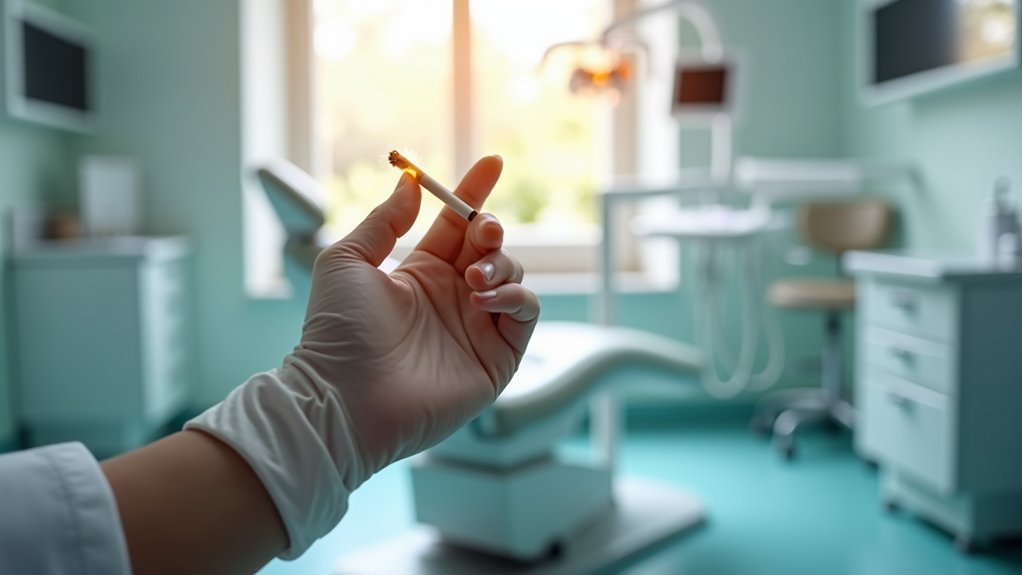

No, you shouldn’t smoke after teeth cleaning. Smoking irritates your gums and can prolong recovery time, making healing more difficult. The chemicals in smoke restrict blood flow, which is essential for healing, and can lead to gum disease or even tooth loss. Furthermore, smoking increases plaque buildup, counteracting the benefits of your cleaning. If you’re curious about managing cravings and optimizing your dental health, there are effective strategies to take into account.
Key Takeaways
- Smoking after teeth cleaning irritates sensitive gums, hindering the healing process.
- Chemicals in cigarette smoke can prolong recovery time for your gums.
- Nicotine constricts blood vessels, reducing necessary blood flow for healing.
- Waiting at least 24 hours post-cleaning is recommended for optimal recovery.
- Smoking increases the risk of gum disease, undermining the benefits of your cleaning.
Why You Should Wait
After a teeth cleaning, it’s crucial to wait before smoking, as doing so can negatively impact your oral health.
Smoking irritates your gums, which are already tender and sensitive after a cleaning, hindering the healing process. The chemicals in cigarette smoke can prolong recovery time for your gums, making it harder for them to heal effectively.
Additionally, smoking constricts blood vessels, reducing blood flow vital for healing. By waiting at least 24 hours before smoking, you allow your tissues to recover, ultimately supporting better oral health outcomes and ensuring your efforts in maintaining oral hygiene aren’t compromised.
Impact of Smoking on Healing
While it might be tempting to light up after a teeth cleaning, doing so can severely impair your healing process.
Smoking after a dental appointment can:
- Hinder blood flow, restricting oxygen needed for your gums to heal.
- Prolong recovery time, leading to discomfort and complications.
- Increase the risk of gum disease, causing inflammation and receding gums.
- Make your teeth and gums more susceptible to staining and damage due to the temporary porosity of cleaned teeth.
To promote ideal healing and maintain your oral hygiene routine, it’s best to avoid smoking and allow your gums to recover fully.
Concerns Beyond Staining
When you smoke after teeth cleaning, you’re not just risking stains; you’re also increasing your chances of gum disease and slowing down your healing process.
The chemicals in tobacco can compromise your immune system, making it harder for your mouth to recover from dental work. This can lead to serious complications, including inflammation and tooth loss, which negate the benefits of your cleaning.
Gum Disease Risk
Although many people focus on the cosmetic effects of smoking, such as teeth staining, the risks to your gum health are far more concerning.
Smoking greatly increases your risk of developing gum disease, leading to severe dental issues.
- Impairs blood flow to gums, hindering healing
- Increases inflammation and symptoms like receding gums
- Disrupts the balance of bacteria, promoting harmful growth
- Four times more likely to develop gum disease compared to non-smokers
To maintain ideal dental care, especially after professional teeth cleaning, consider the impact of smoking on plaque and tartar buildup and your overall gum health.
Healing Complications
The impact of smoking extends beyond cosmetic concerns, directly affecting your healing process after teeth cleaning.
Smoking considerably increases your risk of gum disease, leading to inflammation and potential tooth loss. The chemicals in cigarettes compromise your immune system, impairing healing and making you more susceptible to complications like dry socket after extractions.
Additionally, smoking can exacerbate sensitivity and discomfort in tender gums post-cleaning. Regular smoking contributes to higher plaque and tartar accumulation, negating the benefits of your professional dental cleaning.
Prioritizing your oral health means considering these healing complications and their long-term effects.
Strategies to Manage Cravings
Managing cravings after teeth cleaning can be challenging, but several effective strategies can help you stay on track.
Focus on maintaining your oral health and reducing tartar buildup with these methods:
- Chew sugar-free gum to distract from smoking cravings and stimulate saliva production.
- Use nicotine gum to manage cravings and ease withdrawal symptoms.
- Suck on sunflower seeds for a tactile distraction and to keep your hands busy.
- Engage in physical activities or hobbies to divert your attention during the recovery period after your dental procedure.
These strategies can support your commitment to a smoke-free life.
Setting Yourself Up for Success
After implementing strategies to manage cravings, it’s important to focus on setting yourself up for success in your journey toward a smoke-free life.
Begin by waiting at least 24 hours after dental cleaning before smoking to allow your gums to heal and reduce sensitivity. Discuss your smoking cessation goals with your dentist, who can help create a personalized plan that aligns with your lifestyle.
Consider using alternatives like nicotine gum or patches to manage cravings effectively.
Importance of Dental Cleanings
Regular dental cleanings play an essential role in preventing tooth decay and enhancing gum health.
By removing plaque and tartar, you’re not only protecting your teeth but also promoting healthier gums.
These cleanings help you maintain a bright smile and catch any potential issues early, ensuring your oral health stays on track.
Preventing Tooth Decay
While you may not realize it, maintaining your oral health heavily relies on the importance of regular dental cleanings.
These cleanings play an essential role in preventing tooth decay by addressing plaque and tartar buildup.
- Remove plaque and tartar effectively
- Reduce cavity risk by up to 50%
- Detect early signs of decay for timely intervention
- Create smoother surfaces that resist plaque accumulation
Enhancing Gum Health
Dental cleanings are essential for enhancing gum health, as they effectively eliminate plaque and tartar buildup that can lead to gum disease.
By scheduling regular cleanings, you can detect early signs of gingivitis, addressing issues before they escalate. This cleaning procedure not only polishes your teeth but also creates a smoother surface, making it harder for harmful bacteria to cling and cause inflammation.
Additionally, maintaining a clean mouth promotes healthy blood flow to the gums, aiding in healing. Research shows that regular cleanings greatly lower the risk of tooth loss and improve gum attachment levels, ensuring lasting gum health.