
Wearing an old retainer can indeed put your teeth at risk of falling out. An outdated retainer may create misalignment and exert excessive pressure on your gums, leading to complications like tooth mobility or loss. If your retainer feels tight or uncomfortable, or shows visible signs of damage, it’s essential to consult your orthodontist. Regular check-ups can help prevent serious dental issues. Knowing how to maintain your retainer effectively is equally important for your long-term oral health.
Key Takeaways
- Wearing an old retainer can lead to misalignment of teeth, increasing the risk of tooth mobility and potential loss.
- Ill-fitting retainers can exert excessive pressure on teeth, which may cause damage or irritation to gums.
- Neglecting to replace worn-out retainers may result in teeth shifting back to their original positions, necessitating further orthodontic intervention.
- Signs of a worn-out retainer include discomfort, tightness, and visible cracks that can compromise dental stability.
- Regular orthodontic check-ups are crucial to monitor retainer fit and prevent complications that could lead to tooth loss.
Understanding Retainers and Their Function
When you finish orthodontic treatment, wearing a retainer becomes essential for maintaining your teeth’s alignment.
Retainers are custom-made dental appliances that prevent your teeth from shifting back to their original positions. They work by allowing your gums and bones to adapt to the new positions of your teeth, counteracting the natural tendency for relapse after braces or aligners are removed.
Consistent retainer use is important, especially during the critical weeks following treatment. While they effectively maintain alignment, retainers aren’t designed to correct significant misalignments, so consulting your orthodontist is imperative if you notice any substantial shifting.
Causes of Retainer Tightness
If you’re not wearing your retainer consistently, natural tooth movement can lead to a tight fit as your teeth shift back toward their original positions.
Additionally, the wear and tear on the retainer itself can distort its shape, causing discomfort and increased tightness.
Understanding these factors is essential for maintaining proper alignment and comfort with your retainer.
Natural Tooth Movement
Natural tooth movement occurs constantly, influenced by the forces of chewing and biting, which can gradually cause your teeth to shift positions.
This natural tendency can pull your teeth back toward their original alignment, making wearing a retainer essential. When you wear a retainer inconsistently, it may not effectively combat these changes, leading to a tighter fit.
Additionally, factors like the eruption of wisdom teeth or alterations in your jawbone can further impact retainer fit.
Over time, wear and tear on the retainer itself can distort its shape, exacerbating tightness and potentially undermining your orthodontic results.
Retainer Wear Consistency
Consistent retainer wear is vital for maintaining your teeth’s alignment; otherwise, you may experience tightness and discomfort.
When you don’t wear your retainer regularly, your teeth can shift from their original positions, causing the retainer to fit tightly. Additionally, changes in your oral structure, such as jawbone alterations or wisdom teeth eruption, can exacerbate this issue.
Over time, wear and tear may distort the retainer’s shape, further compromising its fit. Regular orthodontic check-ups are important to guarantee your retainer is adjusted appropriately, preventing discomfort and making sure your teeth remain aligned effectively.
Always remember to wear your retainer as prescribed.
Risks of Wearing an Old Retainer
Wearing an old retainer can pose significant risks to your dental health.
Misalignment from an ill-fitting retainer may lead to potential tooth damage, while excessive pressure can cause gum irritation and recession.
It’s essential to recognize these concerns and consult an orthodontist before using an outdated retainer to prevent further complications.
Potential Tooth Damage
While you might think that using an old retainer is harmless, it can actually pose significant risks to your dental health.
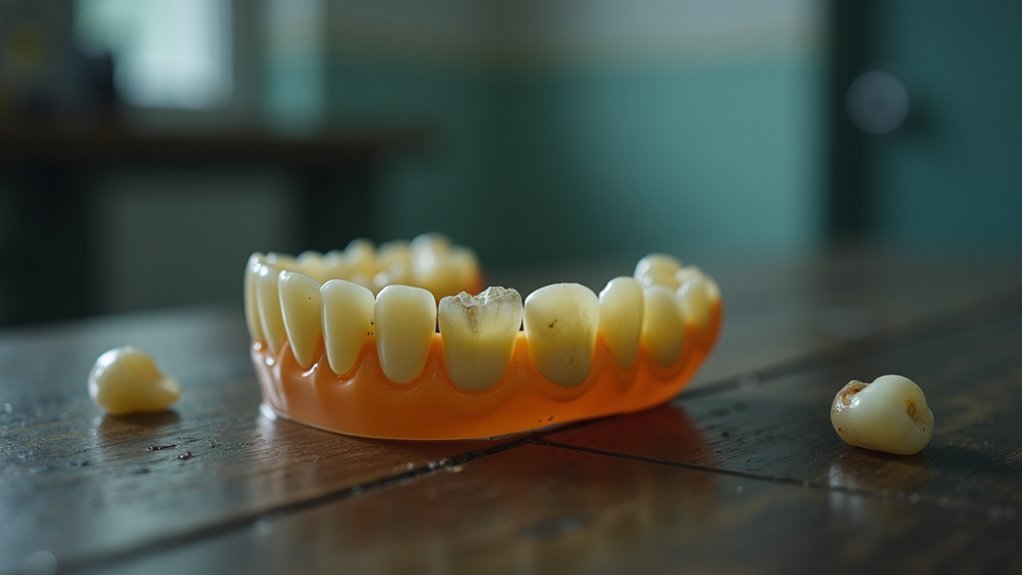
An outdated retainer that no longer fits properly can exert excessive pressure on your teeth, leading to tooth mobility and potential loss. Forcing it onto shifted teeth can damage the enamel, increasing the risk of fractures.
Additionally, this pressure can disrupt the stability of tooth roots, heightening the chances of complications such as tooth fallout.
To prevent these issues, regular check-ups with an orthodontist are essential for evaluating retainer fit and safeguarding your dental wellbeing.
Misalignment Risks
Using an outdated retainer can greatly exacerbate misalignment issues if your teeth have shifted since its last fitting.
An ill-fitting old retainer may exert excessive pressure, risking tooth mobility and potential loss. Here are key misalignment risks associated with wearing an old retainer:
- Root Fractures: Forcing a retainer on markedly shifted teeth can fracture tooth roots, leading to serious complications.
- Gum Irritation: An outdated retainer may cause gum irritation, increasing decay and sensitivity risks.
- Exacerbation of Misalignment: Long-term wear without orthodontic supervision can worsen existing misalignment and dental health issues.
Always consult an orthodontist before using an old retainer.
Gum Health Concerns
Neglecting to replace an outdated retainer can lead to significant gum health concerns.
An ill-fitting retainer can apply excessive pressure, causing gum irritation and potential gum recession. Additionally, if bacteria accumulate on a poorly cleaned retainer, your risk of developing gum disease increases.
A warped retainer may inflame your gums, resulting in pain and heightened tooth sensitivity. Forced use can destabilize tooth positioning, stressing the supporting gum tissue and risking tooth mobility.
Long-term wear inhibits proper oral health practices, leading to plaque buildup and decay. Prioritizing your retainer’s fit is essential for maintaining ideal gum health.
Signs Your Retainer No Longer Fits
If your retainer feels excessively tight or causes discomfort, it’s a clear indication that it may no longer fit properly. You should be vigilant for these signs:
- Difficulty inserting or removing the retainer, suggesting distortion or significant tooth movement.
- Noticeable gaps between your retainer and teeth, indicating its ineffectiveness in maintaining alignment.
- Increased pressure on your teeth or gums while wearing the retainer, signaling a need for adjustment or replacement.
Regular orthodontic checkups can help identify when your retainer no longer fits, ensuring effective measures are taken to maintain your dental health and alignment.
What to Do If You’ve Stopped Wearing Your Retainer
When you’ve stopped wearing your retainer, it’s vital to take prompt action to avoid complications with your dental alignment.
Schedule an appointment with your orthodontist as soon as possible to evaluate any potential shifted teeth.
Attempting to wear a retainer after a significant break can lead to discomfort, so don’t force it back in.
If your teeth have shifted considerably, your orthodontist may suggest additional treatment options, like a new retainer or braces, to restore alignment.
Importance of Regular Orthodontic Check-ups
Regular orthodontic check-ups play an essential role in maintaining your dental health and ensuring the effectiveness of your retainer.
By attending these appointments, you can:
- Monitor the fit and function of your retainer, ensuring it supports proper teeth alignment.
- Allow your orthodontist to assess changes in your oral structure that may require adjustments or retainer replacement.
- Identify early signs of gum irritation or discomfort, minimizing long-term dental issues.
Consistent check-ups reinforce the importance of retainer wear, promoting your overall dental health and the longevity of your orthodontic results.
Don’t underestimate the value of regular visits to your orthodontist.
Maintaining Oral Health With Retainers
Maintaining oral health with retainers is essential for ensuring the longevity of your orthodontic results. An ill-fitting retainer can cause discomfort and promote teeth shifting, jeopardizing your treatment.
Prioritize oral hygiene by cleaning your retainer regularly to prevent plaque buildup, which increases the risk of decay and gum disease. Schedule regular orthodontic check-ups to evaluate your retainer fit and make necessary adjustments.
Consistent use of your retainer as prescribed stabilizes your teeth, helping to maintain alignment over time. By focusing on these practices, you’ll protect your investment in a healthier, straighter smile for years to come.