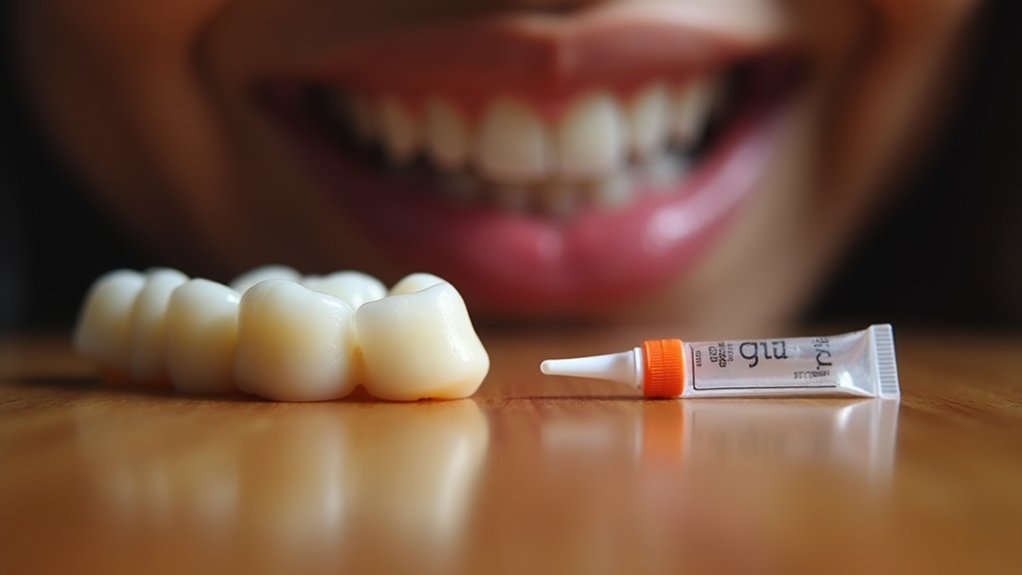

You shouldn’t use super glue on your teeth. It contains toxic chemicals that can irritate your mouth and potentially damage your dental structures. Plus, it creates a permanent bond, complicating future repairs and increasing the risk of infections. Super glue isn’t water-resistant, so it can dissolve in saliva, leading to further issues. There are safer, professional methods for tooth repair that prioritize your oral health. Discover more about the proper ways to address dental problems.
Key Takeaways
- Super glue contains toxic chemicals that can irritate oral tissues and damage dental structures.
- It creates permanent bonds, complicating future dental repairs and potentially misaligning teeth.
- Prolonged use can lead to infections, pain from exposed nerves, and increased risk of gum disease.
- Super glue is not water-resistant and will dissolve in saliva, causing further damage.
- Professional dental solutions, like bonding or crowns, are safer and more effective for tooth repair.
The Dangers of Using Super Glue on Teeth
While it might seem tempting to use super glue for a quick fix on a chipped or loose tooth, doing so poses significant risks to your oral health.
This type of glue contains toxic chemicals that can irritate mouth tissues and trigger allergic reactions. The heat generated during the setting process may damage dental structures, risking tooth death.
Furthermore, super glue creates permanent bonds that complicate future dental repairs. DIY applications can lead to infections and prolonged pain from exposed nerves.
Since super glue isn’t water-resistant, it’ll dissolve in saliva, rendering your temporary fix ineffective and potentially causing further damage.
Chemical Composition and Health Risks
When considering super glue for dental use, it’s essential to recognize its toxic components, such as formaldehyde and acetic acid, which can irritate your mouth and provoke allergic reactions.
This irritation can lead to inflammation and even gum disease, posing significant health risks. Understanding these potential effects is important before making any decisions about using super glue on your teeth.
Toxicity of Super Glue
Although super glue is a common household adhesive, its chemical composition raises significant health concerns when used in the mouth.
The toxic chemicals, such as formaldehyde and acetic acid, can irritate tissues and lead to allergic reactions. Direct exposure may cause inflammation and disrupt your oral flora, increasing the risk of gum disease.
Additionally, the heat generated during curing can damage sensitive tooth structures. Prolonged use of glue can also pose respiratory risks due to inhaling harmful fumes.
Ultimately, using super glue on dental work complicates future repairs and risks further oral health problems, making it an unwise choice.
Allergic Reactions and Irritation
Using super glue in the mouth can trigger a range of allergic reactions and irritations due to its harmful chemical composition.
The toxic chemicals, like formaldehyde and acetic acid, can inflame gums, increasing your risk of gum disease. If you experience swelling, itching, or redness, it may indicate an allergic reaction that could complicate your dental health.
Additionally, direct exposure can cause irritation that might lead to further damage.
Remember, super glue isn’t designed for oral use, and using it can pose severe health risks, including respiratory issues if inhaled.
Prioritize safe dental practices for your well-being.
Why Super Glue Isn’t a Long-Term Solution
While it might seem convenient to use super glue for quick fixes on your teeth, it’s important to understand why this approach isn’t a viable long-term solution. Super glue can misalign teeth, complicating future dental work and potentially leading to costly root canal treatments. Its water-soluble nature means repairs might fail in your mouth’s moist environment, increasing the risk of infections.
| Super Glue Risks | Long-Term Consequences |
|---|---|
| Misalignment | Complicated procedures |
| Heat damage | Potential root canals |
| Difficulty in repositioning | New dentures required |
| Loss of bond | Increased oral health issues |
| Infection risk | Nerve exposure |
Consequences of DIY Dental Repairs
When you attempt DIY dental repairs, you expose yourself to significant risks that can lead to serious consequences for your oral health.
Attempting DIY dental repairs can jeopardize your oral health and lead to serious complications.
Using super glue can cause toxic reactions, irritating mouth tissues and potentially triggering allergies. The heat generated during curing can damage your tooth’s dentin, leading to severe complications like root canal treatment.
Additionally, your efforts may complicate professional repairs, making it harder for a dentist to reposition your tooth correctly.
To avoid worsening your dental issues and incurring higher costs, it’s essential to seek professional care.
If you’re experiencing dental problems, contact us for safe and effective solutions.
Proper Methods for Tooth Repair
If you’ve experienced a chipped or damaged tooth, it’s essential to explore proper methods for repair that guarantee both functionality and aesthetics.
Composite bonding is an excellent choice for minor chips, using tooth-colored resin to seamlessly restore your tooth back to its natural look.
For significant damage, crowns are recommended, as they cover the entire tooth, ensuring strength and shape.
If you’re dealing with multiple chips or unevenness, consider veneers, which enhance your smile’s overall aesthetics.
Prioritizing these professional solutions won’t only restore your teeth but also prevent complications like infections and structural issues down the line.
When to Seek Professional Dental Help
Experiencing dental issues can be alarming, and knowing when to seek professional help is vital for maintaining your oral health.
If you have a broken tooth, contact your dentist immediately to prevent further damage and potential infections. Pain from exposed nerves or sensitivity to temperature changes also warrants professional assistance.
Additionally, if a dental restoration like a crown or filling has come loose, don’t hesitate to seek help to guarantee proper reattachment.
Persistent discomfort or noticeable changes in your teeth or gums should prompt a dental visit. Regular check-ups are essential for early detection and overall oral health.