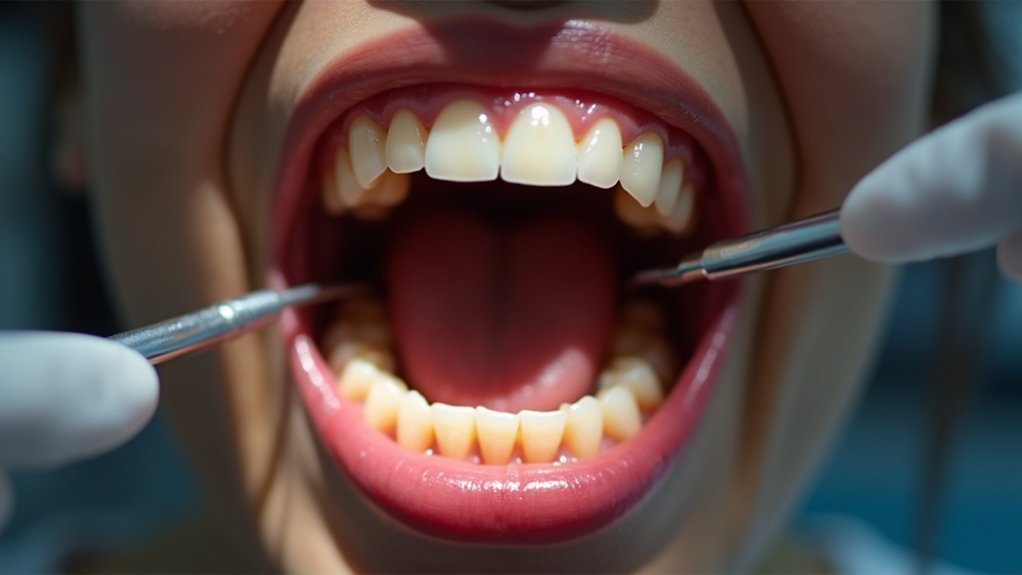

Yes, impacted wisdom teeth can definitely cause a sore throat. When these teeth become trapped due to insufficient jaw space, inflammation and infection may occur. This can lead to throat discomfort, swollen lymph nodes, and jaw pain. Additionally, infected wisdom teeth might trap bacteria and plaque, worsening your symptoms. It’s important to guarantee regular dental check-ups. You might discover further insights on the connection between wisdom teeth and throat issues ahead.
Key Takeaways
- Impacted wisdom teeth can cause inflammation and infection, leading to throat discomfort.
- Infection from wisdom teeth may radiate pain to the jaw and ear, affecting swallowing.
- Symptoms like swollen lymph nodes and fever may indicate a spreading infection.
- Extraction of the infected wisdom tooth is necessary to resolve throat pain effectively.
- Prompt dental evaluations are crucial to prevent complications associated with wisdom teeth.
Understanding Wisdom Teeth
Understanding wisdom teeth is vital, especially since they often emerge during your late teens or early twenties.
These third molars can become impacted due to inadequate space in your jaw, leading to potential oral health issues. Impacted lower wisdom teeth may trap food particles and bacteria, greatly increasing the risk of infection. This can result in inflammation and pain, complicating your oral hygiene efforts.
Regular dental evaluations are essential for monitoring these teeth, as timely extraction can prevent severe complications, including the risk of developing a sore throat.
Prioritizing this aspect of your dental care will help maintain overall health.
How Wisdom Teeth Can Cause a Sore Throat
When wisdom teeth become impacted, they can trigger a series of complications that may lead to a sore throat.
The inflammation and infection in the surrounding gum tissue often result from plaque and bacteria accumulation around partially erupted wisdom teeth. This infection can cause throat discomfort, jaw pain, and difficulty swallowing due to the proximity of the impacted wisdom tooth.
As the infection spreads, you might experience swollen lymph nodes, exacerbating throat symptoms.
Prompt dental evaluation and treatment of an impacted wisdom tooth are essential to prevent the spread of infection, avoiding a dental emergency and further complications in your throat.
Symptoms of Infected Wisdom Teeth
Infected wisdom teeth often present with several key symptoms that require immediate attention. Symptoms include swollen gums, swelling and redness around the affected area, and throat pain that may radiate to your jaw or ear. If you have an abscessed tooth, you might notice pus, a foul taste, or bad breath due to trapped bacteria. Additionally, swollen lymph nodes in your neck can indicate that an oral infection is spreading. Severe symptoms, such as fever and persistent headaches, require prompt professional evaluation.
| Symptom | Description | Action Required |
|---|---|---|
| Swollen Gums | Inflammation around the tooth | Consult a dentist |
| Throat Pain | Discomfort radiating to the throat | Seek medical advice |
| Abscessed Tooth | Presence of pus, foul taste, bad breath | Immediate dental care |
| Swollen Lymph Nodes | Sign of spreading infection | Urgent medical evaluation |
Treatment Options for Sore Throat Caused by Wisdom Teeth
Sore throat resulting from wisdom teeth issues often necessitates targeted treatment to alleviate discomfort and address the underlying infection. The most effective option is extraction of the infected wisdom tooth, which quickly resolves symptoms.
Post-extraction, maintaining oral hygiene is essential; gently cleaning the socket promotes healing. If extraction isn’t immediately feasible, antibiotics may be prescribed to manage severe infections.
Additionally, over-the-counter pain relievers like ibuprofen can help mitigate throat pain during this waiting period. Rinsing with warm salt water and using antiseptic mouthwash further aids in reducing throat pain and preventing complications associated with infected wisdom teeth.
When to Seek Professional Dental Care
If you experience severe throat pain that doesn’t improve with home remedies, it’s essential to consult a dental professional.
Indicators like noticeable swelling around your jaw, pus near the wisdom tooth, or difficulty swallowing signal potential infections that require immediate attention.
Don’t ignore these symptoms, as timely intervention can prevent further complications.
Signs of Infection
Recognizing the signs of infection related to wisdom teeth is essential for timely intervention and recovery. If you notice persistent sore throat, especially with localized pain, it could signal an infection.
Pay attention to these key symptoms:
- Visible redness, swelling, or pus around the wisdom tooth
- Difficulty swallowing or opening your mouth due to swelling
- Swollen lymph nodes accompanied by throat pain
These indicators suggest that you may need professional dental attention.
Additionally, symptoms like fever, jaw stiffness, or headaches further reinforce the need for prompt care to prevent complications associated with wisdom teeth infections.
Severe Pain Indicators
Experiencing severe pain in the throat can often indicate underlying issues related to wisdom teeth, making it essential to seek professional dental care promptly. Symptoms such as persistent jaw pain, swollen tissue, or pus around the wisdom tooth signify infection. If you notice swollen lymph nodes, fever, or pain radiating to the ear, these are critical indicators that require immediate dental evaluation. Delaying treatment may lead to serious complications, including the spread of infection. Here’s a quick reference table to help you identify when to seek care:
| Symptom | Indicator | Action Required |
|---|---|---|
| Severe throat pain | Wisdom teeth issues | Immediate dental evaluation |
| Jaw pain | Infection possibility | Urgent professional care |
| Swollen tissue | Possible abscess | Seek dental evaluation |
| Difficulty swallowing | Severe complication | Immediate assessment |
Difficulty Swallowing Symptoms
Difficulty swallowing can arise from impacted wisdom teeth, leading to inflammation and swelling in the surrounding gum tissue. If you experience these symptoms, it’s essential to seek professional dental care.
Watch for:
- Painful swallowing or severe jaw pain
- Swollen lymph nodes and throat irritation
- Fever or pus around the wisdom tooth
These signs may indicate an infection or abscess. Persistent difficulty swallowing, especially if it worsens, requires immediate evaluation to prevent complications.
Early intervention is important for your health, ensuring that any underlying issues related to your wisdom teeth are promptly addressed. Don’t hesitate to consult your dentist.
Tips for Maintaining Oral Health With Wisdom Teeth
Maintaining ideal oral health with wisdom teeth requires diligent care and proactive measures. To prevent infection, practice thorough oral hygiene by brushing and flossing regularly, especially around the back molars.
Use an antiseptic mouthwash daily to effectively eliminate bacteria and reduce plaque buildup in hard-to-reach areas. Schedule regular check-ups with your dentist to monitor the growth of your wisdom teeth and identify potential issues early.
If you experience pain and discomfort, seek a professional evaluation promptly to avoid complications like impaction. Additionally, maintain a healthy diet, steering clear of hard or sticky foods to minimize irritation and pressure on your wisdom teeth.