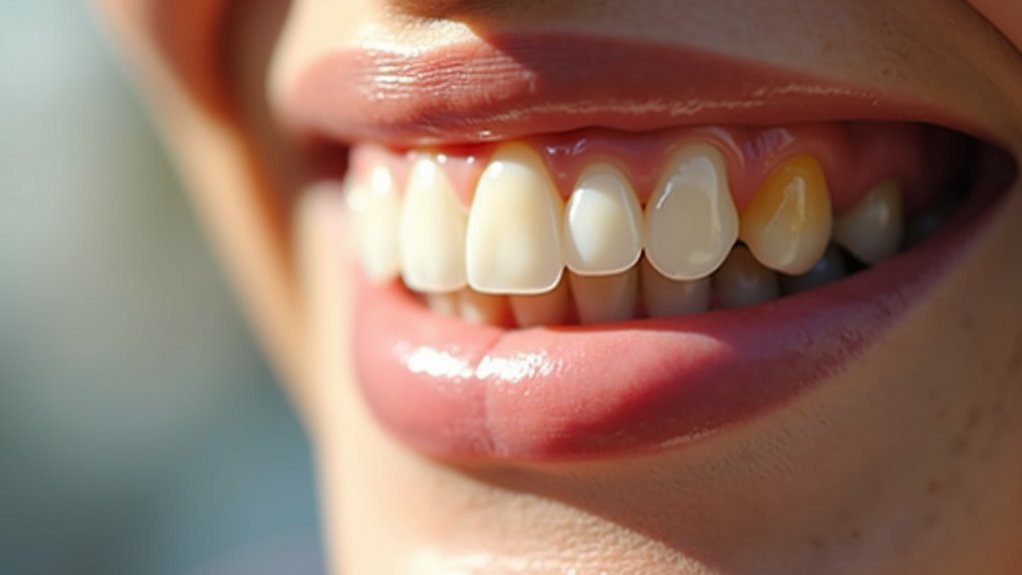

Invisalign doesn’t cause your teeth to yellow on its own. However, if you neglect your oral hygiene or continue consuming staining foods and drinks, you might notice discoloration. It’s essential to brush and floss regularly and clean your aligners after meals to maintain your smile. Keeping a low-pigment diet can also help prevent stains. If you want to know more about how to protect your teeth during treatment, there are tips and options available.
Key Takeaways
- Invisalign itself does not cause teeth to yellow; discoloration is often due to dietary choices and poor oral hygiene.
- Staining foods and beverages, such as coffee and red wine, can lead to yellowing during treatment.
- Food particles can get trapped between teeth and aligners, emphasizing the need for good oral hygiene.
- Maintaining a low-pigment diet and cleaning aligners can help prevent tooth discoloration.
- Consult with a dentist for whitening options, as strong treatments are best post-Invisalign for optimal results.
What Is Invisalign?
Invisalign is a cutting-edge cosmetic orthodontic treatment that utilizes custom-made, clear aligners to gradually shift your teeth into their ideal positions.
This teeth straightening treatment offers a removable option, allowing you to maintain your oral hygiene routine without hassle. You’ll wear the aligners for 20-22 hours daily and receive new trays every two weeks, ensuring continuous teeth movement.
Made from smooth, BPA-free plastic, these aligners cause less irritation than traditional braces.
Regular dental cleanings and diligent care help prevent plaque buildup, so you can keep your teeth looking and feeling great throughout your Invisalign journey.
Understanding Tooth Discoloration
Tooth discoloration can stem from several factors, including dietary choices and oral hygiene practices.
If you consume staining foods like coffee or red wine, or if you neglect regular brushing and flossing, you may notice your teeth becoming yellowed over time.
Understanding these causes is essential for maintaining a bright smile and ensuring the effectiveness of your Invisalign treatment.
Causes of Tooth Discoloration
While many factors contribute to tooth discoloration, understanding their origins can help you take proactive steps in maintaining a bright smile.
Highly pigmented foods and beverages like coffee, tea, and red wine can stain your teeth. Smoking is another major culprit, leaving behind nicotine and tar stains.
Poor oral health practices, such as irregular brushing and flossing, allow plaque to build up, leading to discoloration. Age also plays a role, as enamel wear exposes darker dentin beneath.
Additionally, certain medications, like tetracycline antibiotics, can cause intrinsic staining, particularly in developing teeth.
Implementing a teeth whitening program can help prevent yellow teeth.
Role of Oral Hygiene
Maintaining good oral hygiene is essential for preventing tooth discoloration, especially during orthodontic treatments like Invisalign.
You should brush and floss at least twice a day to prevent plaque buildup that can lead to staining and yellowing of teeth. Food particles may get trapped between your teeth and aligners, making proper cleaning vital.
Using whitening toothpaste and mouthwash can help maintain tooth color and prevent demineralization. Regular dental checkups, at least twice a year, effectively remove plaque and stain pigments.
Additionally, avoiding pigmented foods and beverages is one of the most effective ways to prevent tooth yellowing while using Invisalign aligners.
Impact of Diet Choices
Your dietary choices play a significant role in the color of your teeth, especially during Invisalign treatment.
To prevent yellowing teeth, consider these tips:
- Limit staining foods and drinks like coffee, tea, and red wine.
- Clean your aligners regularly after consuming these items to avoid discoloration.
- Maintain a diet low in pigments while practicing good oral hygiene.
Factors Contributing to Yellow Teeth
Various factors contribute to the yellowing of teeth, often leading to aesthetic concerns for many individuals.
Poor dental hygiene allows plaque to accumulate, causing discoloration that can detract from your smile. Smoking considerably contributes to yellow teeth, as tar and nicotine stain enamel.
Additionally, certain foods and beverages, like coffee, tea, and red wine, can leave lasting marks on your teeth. Aging naturally wears down enamel, revealing the yellowish dentin beneath.
To maintain a bright smile, consider regular dental whitening treatments and diligent oral care to remove plaque and prevent further yellowing.
Maintaining Oral Hygiene With Invisalign
While using Invisalign, keeping up with oral hygiene is essential to guarantee both your teeth and aligners stay in top condition.
To prevent issues during treatment, consider these tips:
- Brush your teeth after eating before re-inserting your Invisalign trays to minimize food particle buildup.
- Clean your aligners daily with cleaning crystals or a soft brush, avoiding hot water to prevent warping.
- Maintain regular dental checkups to monitor your progress and keep your teeth healthy.
Tips for Preventing Staining of Aligners
To keep your Invisalign aligners clear and free from stains, it’s important to adopt a proactive cleaning routine.
Start by cleaning your trays daily with a soft toothbrush and rinsing them after each removal. Avoid wearing aligners while you eat or drink dark-colored sauces, coffee, or red wine. If you do, remove them for no longer than 30 minutes and brush your teeth before reinserting.
For best results, soak your aligners in Invisalign cleaning crystals or denture cleaners regularly. Limiting the time your aligners are out helps maintain their effectiveness and prevents discoloration during the whitening process.
Options for Teeth Whitening During Treatment
Teeth whitening during your Invisalign treatment can be a viable option, but it’s crucial to approach it carefully.
Teeth whitening during Invisalign is possible, but it requires careful consideration and professional guidance.
Before starting any whitening program, consult with a dentist to verify compatibility with your trays.
Consider these options:
- Use whitening toothpaste to maintain brightness without damaging aligners.
- Opt for milder rinses that help combat surface stains.
- Save strong whitening treatments for post-Invisalign to avoid damaging your aligners.
Many professionals recommend waiting until your treatment’s complete for the best results.
A professional teeth whitening session afterward can effectively remove stubborn stains and enhance your smile’s final appearance.