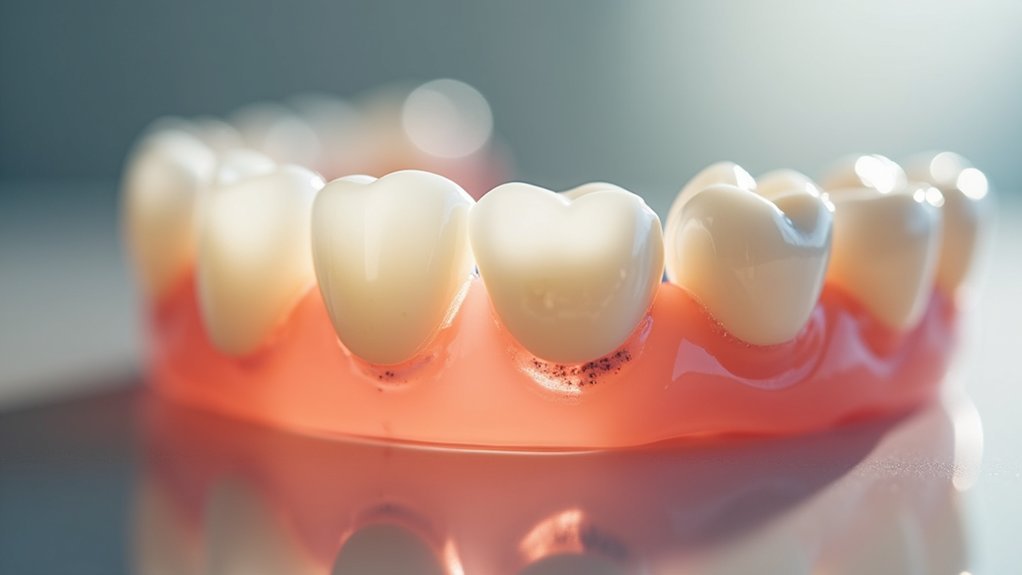

Fake teeth, or dentures, stay in place through suction created by saliva between the denture base and your gums. Adhesives can enhance this stability by filling gaps and improving the seal. The shape of your jawbone and tissue health also play significant roles in retention. Furthermore, facial muscles aid in holding the dentures securely. For best comfort and function, regular maintenance and adjustments are essential. You’ll uncover even additional insights into denture care and stability ahead.
Key Takeaways
- Fake teeth, or dentures, stay in place primarily through suction created by saliva between the denture base and gums.
- Denture adhesives can be applied for extra security, enhancing the seal and preventing movement.
- The support from facial muscles contributes to the stability of dentures by applying gentle pressure.
- Anatomical features, such as bony ridges and healthy gums, play a crucial role in retaining dentures securely.
- Regular adjustments by a dentist help maintain the fit and function of dentures as mouth changes occur over time.
Types of Dentures
When considering dentures, it’s essential to understand the various types available to meet your dental needs.
Partial dentures fill gaps left by missing teeth while supporting remaining natural teeth, enhancing your oral health.
Complete dentures are designed for cases where all natural teeth are absent, relying on jaw shape and saliva for stability.
Lower suction dentures utilize suction for a secure fit, ideal for those with lower jaw reconstruction.
Dentures over implants are surgically anchored, providing a stable, long-lasting solution.
Fixed dentures offer a permanent replacement, functioning like natural teeth and eliminating the need for removal.
Mechanisms of Retention
To understand how fake teeth stay in place, you need to contemplate the mechanisms of retention, which include suction and seal dynamics, adhesives for extra security, and muscle support.
A well-fitting denture creates a seal with your gums, maximizing suction, while adhesives can enhance this effect.
Additionally, the natural support from your facial muscles plays an essential role in keeping lower dentures secure during everyday activities.
Suction and Seal Dynamics
Understanding how fake teeth stay in place involves recognizing the crucial role of suction and seal dynamics.
Dentures rely on suction created by a thin layer of saliva trapped between the denture base and your gums, enhancing retention. A precise fit is necessary, maximizing the surface area contact with your gums and palate.
Additionally, your facial muscles, including cheeks and lips, apply gentle pressure, contributing further to stability during daily activities. Anatomical features like bony ridges in your jaw also support the dentures.
Regular adjustments and proper care are essential to maintain this fit and guarantee ideal suction dynamics over time.
Adhesives for Extra Security
Denture adhesives serve as a crucial enhancement for individuals seeking extra security in their dental prosthetics. They create a cushioning layer between the denture and gums, improving stability and filling gaps that could disrupt the suction seal. Available in creams, gels, and strips, these adhesives can greatly reduce slippage risk.
| Type | Benefits |
|---|---|
| Creams | Easy to apply, good cushioning |
| Gels | Strong hold, moisture-resistant |
| Strips | Convenient, mess-free application |
| All types | Boosts confidence, promotes oral hygiene |
Regular cleaning guarantees healthy bone maintenance and ideal adhesive performance.
Muscle Support Mechanism
While many factors contribute to denture retention, muscle support serves as a fundamental mechanism that enhances stability. This support keeps your dentures in place through:
- Gentle pressure from facial muscles against the denture surfaces.
- Enhanced stability during chewing and speaking.
- Utilization of surrounding muscle tension for a secure fit.
- Coordination of muscle movements that create a suction effect, especially for upper dentures.
Understanding how muscle support works is essential for maintaining good oral habits. By recognizing its role, you can guarantee your teeth remain secure and comfortable throughout daily activities.
Factors Influencing Stability
When it comes to the stability of your dentures, several key factors come into play.
The efficiency of the suction mechanism, the use of denture adhesives, and the anatomical support from your gums and jawbone all contribute to how well your fake teeth stay in place.
Understanding these elements can help you maintain ideal denture performance and comfort.
Suction Mechanism Efficiency
How effectively do dentures utilize the suction mechanism to stay in place? The suction mechanism relies on a seal created between traditional dentures and your gums, using saliva for stability.
Several factors influence this efficiency:
- Jawbone Shape: An ideal fit enhances surface contact.
- Tissue Health: Healthy gums support better suction.
- Facial Muscles: They help maintain the position of dentures.
- Bone Loss: Changes over time can weaken suction, compromising stability.
Maintaining adequate saliva is essential; a dry mouth can diminish suction, leading to looseness in your dentures.
Denture Adhesives Usage
Understanding the factors influencing the effectiveness of denture adhesives can greatly enhance their stability and your comfort.
These adhesives create a cushioning effect, improving suction and retention for loose dentures. Available as creams, gels, or strips, they fill gaps under the denture base, guaranteeing better stability during daily activities.
Regular use, according to the manufacturer’s guidelines, minimizes the risk of slips, boosting your confidence. However, factors like dry mouth and jaw shape can affect their performance.
Cleaning your dentures thoroughly before application is vital, as it prevents food buildup and promotes ideal adhesion and comfort throughout the day.
Anatomical Structure Support
The fit and stability of dentures heavily depend on the anatomical structure of your mouth and jaw.
Key factors influencing this stability include:
- Jaw Shape: Variations in jaw structure can affect denture retention.
- Facial Muscles: Cheeks and lips provide pressure, stabilizing dentures during chewing and speaking.
- Bony Ridges: Natural contours in your jaw offer a solid base for denture support.
- Saliva: Creates a suction effect between the denture base and gums, essential for upper denture stability.
Understanding these factors helps guarantee your dental solutions fit comfortably, especially when considering any remaining teeth or changes in your jaw’s anatomy.
The Role of Adhesives
When you wear dentures, using adhesives can greatly enhance their stability and comfort.
These adhesives, available in creams, gels, and strips, provide vital security for loose dentures. They create a cushion between your dentures and gums, filling gaps to improve the suction seal, which enhances retention.
To achieve the best results, make sure to follow the manufacturer’s instructions carefully. Regular cleaning is essential since leftover adhesive can cause plaque buildup, leading to discomfort and affecting the fit.
Ultimately, denture adhesives can markedly boost your confidence by preventing embarrassing slips during oral activities like speaking or eating.
Customization for Comfort
Although many people think all dentures are the same, modern customization techniques guarantee that your dentures fit your mouth’s unique shape, enhancing both comfort and function.
This customization process assures a comfortable fit and effectively replaces missing teeth by addressing individual needs. Key aspects include:
- Advanced technology for precise shaping.
- Tailored designs considering gum and bone contours.
- Materials that mimic natural teeth for aesthetics.
- Personalized fittings to reduce tissue irritation.
With regular follow-ups, your customized dentures will continue to provide maximum comfort and functionality, adapting as your mouth changes over time.
Maintenance and Care
Proper maintenance and care of your dentures is essential for ensuring their longevity and your oral health.
Regularly clean your dentures with water and denture cleaner to prevent plaque buildup. Soak them overnight in water or a cleaning solution to maintain moisture and prevent warping.
Regular cleaning and soaking of your dentures are crucial to prevent plaque buildup and maintain their shape.
If you use denture adhesives, follow the manufacturer’s instructions for ideal application. Consult your dentist for adjustments if your dentures feel loose, as they may require realignment over time.
Routine dental check-ups are vital for monitoring your dentures’ condition, ensuring proper fit, and reducing the risk of discomfort or complications.