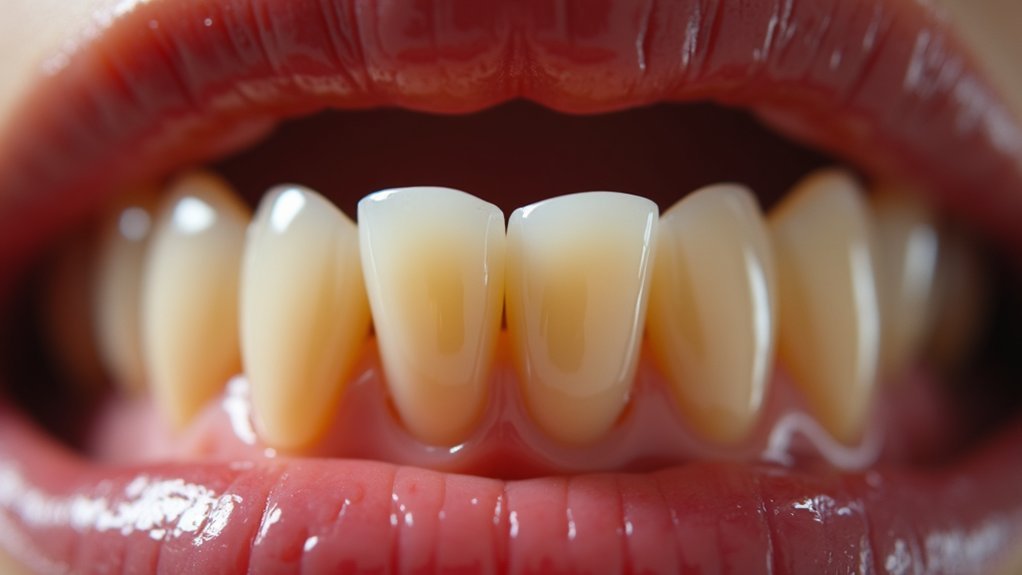

If you’re feeling pressure in your teeth, it might be due to bruxism, misaligned teeth, or gum disease. Stress and anxiety can also play a role, causing you to clench your jaw, which increases pressure. Temporary discomfort can occur during orthodontic treatments, too. If you’re experiencing pain when pressing on your teeth, or notice gum swelling, it’s wise to consult a dentist. Exploring further can help you manage and understand your symptoms better.
Key Takeaways
- Tooth pressure may result from bruxism, where grinding or clenching teeth increases discomfort and sensitivity.
- Misalignment of teeth or jaws can create uneven pressure during chewing, leading to discomfort.
- Gum disease can destabilize teeth, contributing to a sensation of pressure in the mouth.
- Temporary pressure is often normal during orthodontic treatments as teeth shift positions.
- Persistent pressure, pain, or sensitivity warrants a dental evaluation to rule out serious issues.
Understanding the Sensation of Pressure in Teeth
When you experience pressure in your teeth, it can be both uncomfortable and concerning. This sensation often stems from bruxism, where habitual grinding and clenching create tension and discomfort.
Misalignment of your teeth or jaws can intensify this feeling, as uneven pressure impacts certain teeth during biting. If you’re undergoing orthodontic treatments, temporary pressure is normal as your teeth shift into place.
Misaligned teeth or jaws can lead to uneven pressure, causing discomfort, especially during orthodontic treatment as teeth adjust.
Additionally, stress and anxiety can worsen bruxism, leading to further dental health issues.
It’s essential to seek a dental evaluation if you notice persistent pressure, as it may signal misalignment or other oral health issues needing attention.
Common Causes of Tooth Pressure
Persistent pressure in your teeth can arise from several common causes that warrant attention.
Bruxism, or habitual teeth clenching, often leads to increased tooth pressure and discomfort. Misalignment of your teeth or jaws can create uneven pressure during activities like chewing.
Gum disease, resulting from bacterial infections, affects the stability of your teeth, contributing to sensations of pressure. Additionally, changes in dental alignment from orthodontic treatments may cause temporary discomfort.
Stress and anxiety can exacerbate teeth clenching, further intensifying pressure. Consulting a dental professional can help you address these issues and improve your overall oral hygiene and comfort.
Signs That Indicate a Need for Professional Evaluation
Noticing any discomfort or pain when you apply pressure to your teeth should prompt immediate attention.
Persistent sensitivity might indicate underlying dental issues, like cavities or cracked teeth, that require professional evaluation.
Be alert to noticeable changes in your bite or increased tooth mobility, as these can signal serious conditions needing a dentist’s expertise.
Additionally, swelling, bleeding, or sensitivity in your gums are critical signs of gum disease, warranting prompt assessment to avoid complications.
Difficulty chewing can also suggest misalignment or other dental concerns.
Regular dental check-ups are essential for maintaining oral hygiene and detecting issues early.
Strategies to Manage Discomfort From Pressure in Teeth
If you’re experiencing discomfort from pressure in your teeth, several effective strategies can help manage this sensation.
Try applying a warm compress to your jaw to ease tightness and reduce pressure on that tooth. Incorporate warm saltwater rinses to soothe irritated gums and inflammation. Staying hydrated and maintaining a balanced diet is essential for overall oral hygiene.
If bruxism (teeth grinding) is an issue, consider custom-fitted mouthguards. Additionally, practice relaxation techniques like deep breathing and gentle jaw stretching to alleviate stress-related tension.
If discomfort persists, don’t hesitate to see your dentist for professional care and guidance.
Importance of Proper Oral Hygiene
Maintaining a daily brushing routine is essential for preventing plaque buildup and tooth decay that can lead to pressure in your teeth.
Regular dental check-ups, ideally every six months, help catch any issues early, ensuring you keep discomfort at bay.
Daily Brushing Routine
A daily brushing routine is essential for your oral health, as it effectively removes plaque and food particles that can lead to cavities and gum disease.
Brushing at least twice a day with fluoride toothpaste strengthens enamel, reducing tooth sensitivity and minimizing pressure in the teeth. Using a soft-bristled toothbrush and proper technique prevents gum irritation and dental discomfort.
Remember to replace your toothbrush every three to four months to maintain effective plaque removal. Incorporating daily flossing into your routine further cleans between teeth, decreasing plaque buildup and lowering the risk of pressure sensations, ultimately ensuring proper oral hygiene.
Regular Dental Check-ups
Regular dental check-ups play an essential role in maintaining your oral health, as they allow your dentist to catch potential issues early before they lead to more serious complications.
By scheduling these visits every six months, you can:
- Identify potential causes of tooth pain, such as cavities or gum disease.
- Benefit from professional cleanings that remove plaque and tartar buildup.
- Foster better oral hygiene habits, reducing the likelihood of dental issues.
To guarantee peak dental health, consult your dentist regularly.
Investing in these check-ups not only protects your teeth and gums but also saves you from costly treatments down the line.
When to Consult Your Dentist for Ongoing Symptoms
When should you consult your dentist about ongoing pressure in your teeth? If discomfort lingers for more than a few days, it is vital to see a medical professional for an accurate diagnosis or treatment plan. Notable changes in your bite or increased tooth mobility could indicate serious issues. Look out for swelling, bleeding, or sensitivity in your gums; these signs may point to gum disease. If over-the-counter pain relief fails, consult your dentist for tailored treatment options. Regular dental check-ups are important in preventing symptoms like pressure in your teeth from escalating.
| Symptoms | Action Required |
|---|---|
| Persistent discomfort | Consult your dentist |
| Changes in bite | Immediate dental visit |
| Gum swelling or bleeding | Professional evaluation needed |
| Ineffective pain relief | Seek tailored treatment |