
Yes, you can get braces with crowns on your front teeth. However, it’s essential to verify that the crowns are in good condition and suitable for orthodontic treatment. Your orthodontist will use specialized adhesives and techniques to bond brackets to your crowns safely. Proper planning and regular check-ups will help monitor the crowns and surrounding teeth throughout the process, guaranteeing a successful outcome. Continue exploring how different treatment options can cater to your specific needs.
Key Takeaways
- Yes, you can get braces with crowns on front teeth, but careful evaluation by an orthodontist is essential.
- Specialized adhesives are used to bond brackets to crowns, minimizing the risk of damage.
- Maintaining excellent oral hygiene and regular check-ups is crucial during orthodontic treatment.
- Different orthodontic options, like Invisalign, can be ideal for patients with crowns, reducing potential risks.
- Open communication with your orthodontist about crowns and treatment planning is vital for a successful outcome.
Understanding Dental Crowns
Dental crowns serve as protective caps that restore the shape, strength, and functionality of damaged or decayed teeth.
You’ll find that crowns can be made from various materials, including porcelain, ceramics, and metal alloys, allowing customization to match your natural teeth.
They’re particularly useful when fillings can’t adequately address dental issues, providing a durable solution for compromised teeth.
Additionally, crowns can enhance the aesthetics of front teeth, concealing discoloration or irregular shapes while improving your smile.
How Braces Work With Crowns
When considering braces with crowns, understanding crown compatibility is essential for effective treatment.
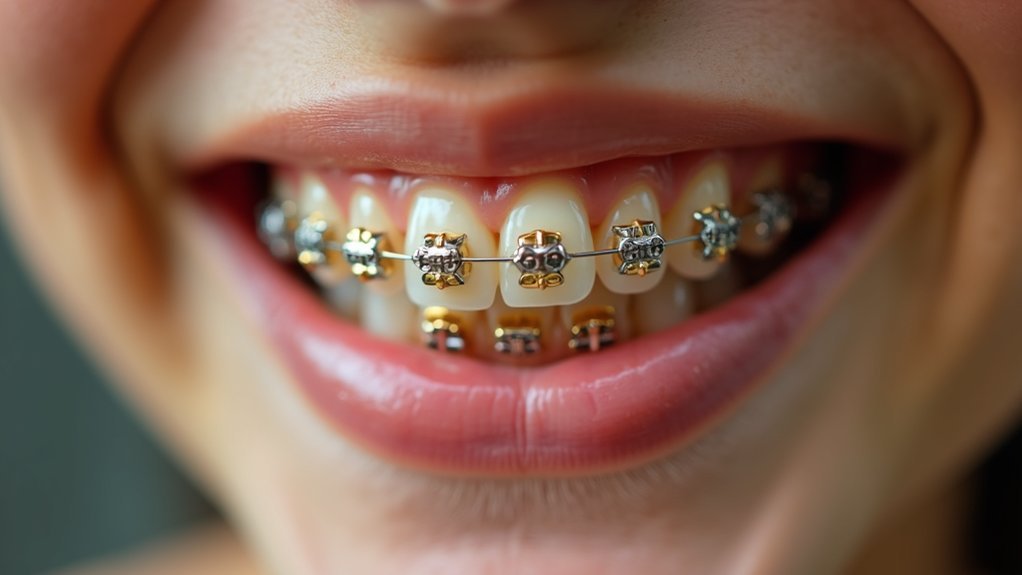
Specialized adhesives are used to securely bond brackets to crowns without damaging them, while careful planning guarantees the orthodontist addresses any challenges that arise.
Regular check-ups will help monitor both the crowns and surrounding teeth throughout the orthodontic process.
Crown Compatibility With Braces
While many people might worry about the compatibility of braces with crowns on their front teeth, it’s vital to highlight that braces can be effectively applied if the crowns are healthy and properly constructed.
Orthodontic treatments can proceed smoothly with crowns, as orthodontists utilize precise techniques to bond brackets securely. Special adhesives minimize the risk of damage to porcelain crowns, ensuring crown compatibility throughout the process.
If needed, brackets can even be placed on the back of crowns to protect them further. Regular monitoring and adjustments by your orthodontist are essential to maintain the integrity of your crowns during treatment.
Special Adhesives for Crowns
Braces can effectively bond to crowns using specialized adhesives designed to guarantee a secure attachment without compromising the integrity of the crown. Traditional dental enamel glue isn’t suitable for this purpose, as it may damage the restoration. Instead, orthodontists often use porcelain bonding kits, confirming both strength and safety during treatment. It’s essential to assess the compatibility of materials and apply special care when attaching brackets to crowned teeth.
| Adhesive Type | Purpose | Benefits |
|---|---|---|
| Porcelain Bonding Kit | Attaching brackets to crowns | Reliable and safe |
| Specialized Primer | Guarantees secure bond without damage | Protects crown integrity |
| Dental Enamel Glue | Not recommended for crowns | Potentially harmful |
| Orthodontic Techniques | Safe application and removal | Minimizes risk of damage |
Orthodontic Treatment Planning Essentials
Understanding the nuances of orthodontic treatment planning is essential, especially for patients with crowns on their front teeth.
When considering braces with a crown, your orthodontist will assess the type and quality of the crowns, as this influences bracket placement and overall treatment strategy.
Specialized porcelain bonding kits help securely attach brackets, minimizing the risk of damage during orthodontic treatment. Regular check-ups are vital to monitor the health of both the crowns and surrounding teeth.
If you prefer a less invasive option, clear aligners like Invisalign can effectively address alignment issues without compromising your dental treatments.
Will My Crown Get Damaged With Braces?
How can you be sure that your crowns will remain intact during orthodontic treatment?
Healthy crowns are generally safe during braces application, thanks to precise techniques used by orthodontists. They employ special adhesives designed for porcelain crowns, ensuring a strong bond without risking damage.
Regular dental check-ups throughout your treatment will monitor your crowns and the effectiveness of the braces. Additionally, careful removal of braces post-treatment is essential to avoid harming your crowns or other restorations.
Treatment Options for Crowns and Braces
While many patients worry about the compatibility of crowns with braces, effective treatment options are available. Orthodontists can securely bond brackets to crowns using special adhesives. The quality of your crowns plays a significant role in your treatment plan, as well-made crowns generally withstand braces without damage. Regular monitoring is essential to guarantee safety. Here’s a summary of options:
| Treatment Option | Description |
|---|---|
| Metal Braces | Strong and effective for aligning teeth. |
| Ceramic Braces | Discreet option that blends with teeth. |
| Lingual Braces | Hidden behind teeth, offering aesthetic appeal. |
| Aligners | A gentle alternative, less impact on crowns. |
| Custom Solutions | Tailored approaches based on individual needs. |
Invisalign as an Alternative for Patients With Crowns
Invisalign offers a practical solution for patients with crowns on their front teeth, as its clear aligners don’t require bonding and won’t directly pressure your crowns.
This means you can effectively address alignment issues while maintaining the integrity of your dental work.
However, it’s crucial to consult with an orthodontist to determine if Invisalign is the right fit for your specific needs.
Benefits of Invisalign Treatment
For patients with crowns on their front teeth, choosing an orthodontic treatment can be challenging; however, Invisalign offers a viable solution.
This innovative approach doesn’t require bonding to teeth, minimizing the risk of damaging your crowns during treatment. The nearly invisible aligners provide aesthetic benefits, allowing you to maintain a natural appearance.
Importantly, Invisalign is compatible with dental crowns, veneers, and bridges, ensuring effective teeth straightening without compromising existing dental work.
Plus, regular consultations with your orthodontist will help monitor your progress, enhancing overall dental aesthetics, including the option for teeth whitening and replacing crowns after achieving alignment.
Compatibility With Dental Crowns
When considering orthodontic options, understanding the compatibility of treatment with existing dental crowns is essential.
Invisalign clear aligners are an effective choice for patients with crowns on their front teeth. Unlike traditional braces, Invisalign doesn’t require bonding, reducing the risk of damaging your crowns.
The custom-made aligners gradually shift your teeth without the bulk of metal brackets, making them a less invasive alternative. Plus, their nearly invisible design offers an aesthetically pleasing solution for those concerned about visible dental work.
Consulting with an orthodontist will guarantee that Invisalign is the right fit for your specific needs and dental health.
Consultation and Treatment Planning
Although you may have concerns about orthodontic treatment due to existing crowns on your front teeth, consulting with an orthodontist can help you explore options like Invisalign.
This treatment is preferred for patients with crowns, as it avoids bonding, minimizing the risk of damage. Clear aligners are nearly invisible, offering an aesthetic advantage over traditional braces.
During your consultation, your orthodontist will create a customized treatment plan that accommodates your crowns while ensuring ideal alignment.
Regular check-ins are essential to monitor your progress and make adjustments as needed, maintaining the integrity of your existing restorations throughout the process.
Pre-Treatment Considerations for Braces
Before you consider getting braces, it’s vital to address any existing dental issues, such as cavities or gum disease, to secure your oral health is ideal throughout the treatment.
Consult with your orthodontist, especially regarding the type and quality of crowns on your front teeth, as these factors can influence your orthodontic plan.
Maintaining excellent oral hygiene is essential to prevent complications with your crowns during treatment.
Open communication about any concerns you have regarding the crowns and the braces will foster confidence and help guarantee successful outcomes.
Prioritizing these considerations sets the stage for effective orthodontic results.
Case Studies: Successful Orthodontic Treatment With Crowns
Orthodontic treatment involving crowns on front teeth can lead to successful outcomes, as evidenced by various case studies.
Patients with existing crowns can effectively undergo braces treatment, with orthodontists using specialized techniques to bond brackets securely without damaging the restorations.
For instance, one case study highlighted a patient with a healthy crown on a lower incisor who experienced no damage after braces removal.
By tailoring treatment plans and closely monitoring progress, orthodontists guarantee both aesthetic and functional results.
Many patients report satisfaction with their smiles post-treatment, demonstrating that effective techniques can enhance alignment, even in the presence of dental crowns.
Expert Guidance for Orthodontic Care With Existing Restorations
When considering orthodontic care with existing crowns, it’s vital to seek expert guidance to navigate the complexities involved.
Orthodontists can successfully bond braces even with crowns using specialized adhesives, making certain that your dental work remains intact.
Prior to treatment, your orthodontist will assess the crowns’ quality and type to minimize risks and guarantee compatibility.
Techniques exist for securely attaching brackets to crowns, allowing for effective tooth movement while preserving restorations.
Regular monitoring and adjustments are important to maintain your oral health throughout the process.
Discuss your dental history and concerns with your orthodontist to create a tailored treatment plan that meets your needs.