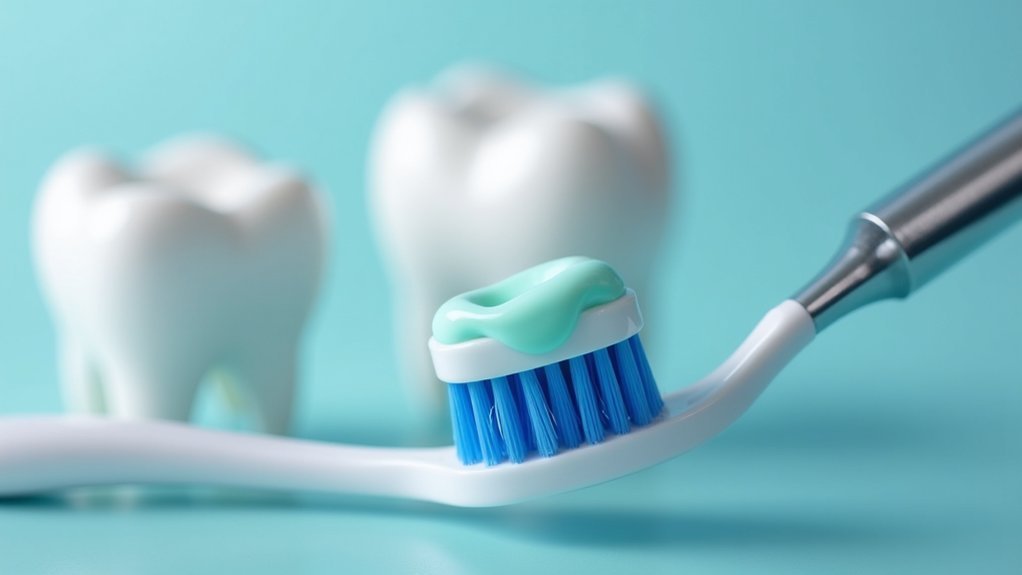

To clean the backside of your teeth effectively, use a soft-bristled toothbrush angled at 45 degrees toward the gums. Brush gently in circular motions, paying special attention to the grooves of your back teeth. Don’t forget to floss daily to remove plaque and food particles in hard-to-reach areas. Using mouthwash after brushing helps combat bacteria. Regular check-ups can further prevent cavities. There’s more to learn about enhancing your oral hygiene and maintaining a radiant smile.
Key Takeaways
- Angle your toothbrush at a 45-degree angle toward the gums to effectively clean the backside of teeth.
- Use gentle circular motions on the outer, inner, and biting surfaces for thorough cleaning.
- Incorporate dental floss, curving it around each tooth to reach tight spaces and remove plaque.
- Consider using interdental brushes or water flossers for enhanced access to hard-to-reach areas.
- Rinse your mouth well after brushing to ensure all debris and bacteria are removed.
Understanding the Importance of Cleaning Back Teeth
When it comes to maintaining your oral health, understanding the importance of cleaning your back teeth is essential.
Your molars have intricate grooves that trap food particles and plaque, increasing the risk of decay. Because these areas are hard to reach with a toothbrush, neglecting them can lead to cavities and gum disease.
Cleaning your back teeth is vital for effective chewing and overall dental hygiene. Regular brushing and flossing specifically targeting these teeth can prevent tartar buildup and maintain their health.
Prioritizing the cleanliness of your back teeth greatly reduces the risk of future dental issues.
Tools for Effective Cleaning
Cleaning your back teeth effectively requires the right tools. A soft-bristled toothbrush with a small head is ideal, as it easily maneuvers around molars.
Don’t forget dental floss; it’s essential for removing plaque and food particles stuck between teeth and along the gum line where your toothbrush can’t reach. For larger gaps, consider using interdental brushes for a thorough clean.
Additionally, an antibacterial mouthwash can help combat bacteria and plaque in those tricky spots. Regularly replacing your toothbrush every three to four months guarantees peak cleaning efficiency, keeping your back teeth healthy and clean.
Techniques for Brushing Back Teeth
To effectively clean the back surfaces of your teeth, start by angling your toothbrush at a 45-degree angle towards your gums.
Use gentle circular motions to reach all areas, including the outer, inner, and biting surfaces of your back teeth.
Don’t forget to incorporate flossing into your routine to remove plaque and food particles from spots your toothbrush can’t reach.
Proper Toothbrush Angle
Achieving a thorough clean of the backside of your teeth hinges on the proper angle of your toothbrush. Aim for a 45-degree angle towards the gum line to effectively clean the back molars. Use gentle circular motions to remove plaque without harming your gums, ensuring you reach all surfaces—outer, inner, and biting. Focus on the top surfaces of your molars, where food and plaque often accumulate. Regularly check your toothbrush bristles for wear, replacing it every three to four months for ideal cleaning.
| Tooth Surface | Cleaning Technique | Frequency |
|---|---|---|
| Back Molars | 45-degree angle, circular | Twice daily |
| Inner Surfaces | 45-degree angle, gentle | Twice daily |
| Outer Surfaces | 45-degree angle, circular | Twice daily |
| Biting Surfaces | 45-degree angle, gentle | Twice daily |
| Bristle Check | Inspect for wear | Every month |
Effective Brushing Techniques
Effective brushing techniques are essential for maintaining oral health, especially when it comes to the backside of your teeth. Angle your toothbrush at a 45-degree angle towards the gum line to effectively target these areas.
Use gentle circular motions on the back surfaces to dislodge plaque and food particles. Make sure to brush all surfaces of your molars—outer, inner, and biting—thoroughly.
Focus on the tip of the toothbrush to reach behind the molars, applying small, gentle strokes. After brushing, rinse your mouth well to remove any dislodged debris, enhancing your oral hygiene before incorporating floss into your routine.
Flossing for Cleanliness
Flossing is an important step in your oral hygiene routine, especially for keeping the back teeth clean.
These areas often trap food particles and plaque that your toothbrush can’t reach. Use a gentle sawing motion to curve the floss around each tooth, ensuring you contact the tooth surface and gum line effectively.
Regular flossing greatly reduces the risk of cavities and gum disease in tight spaces, particularly among molars. If traditional floss is challenging, consider a water flosser as an effective alternative.
Daily flossing, alongside brushing, is vital for maintaining ideal oral hygiene and preventing dental issues.
Flossing and Its Role in Dental Hygiene
While brushing your teeth is essential for maintaining oral hygiene, it’s equally important to incorporate flossing into your daily routine.
Flossing removes plaque and food particles trapped between your teeth, areas that toothbrushes often miss. By doing so, you greatly reduce your risk of cavities and gum disease. In fact, daily flossing can decrease gum disease risk by up to 40%.
The American Dental Association recommends using about 18 inches of floss, employing a gentle sawing motion while curving it around each tooth.
If traditional flossing is challenging, consider a water flosser as an effective alternative for maintaining dental health.
Insights on Back Teeth Cavities
Back teeth cavities can form due to plaque buildup in the grooves of molars, making them hard to clean.
You might notice symptoms like tooth sensitivity or visible holes, which signal the need for immediate attention.
Understanding how cavities develop and implementing prevention strategies is key to maintaining your dental health.
Cavity Formation Causes
Cavities often form in the back teeth due to their unique structure, which includes deep grooves and pits that trap food particles and plaque.
This plaque buildup occurs when bacteria metabolize sugars from food, producing acids that erode enamel and lead to tooth decay within just 20 minutes.
Additionally, the difficulty in accessing these teeth with a toothbrush increases the likelihood of plaque accumulation.
Sugary and acidic foods further fuel harmful bacteria, raising the risk of cavities.
Regular brushing and flossing are essential to clear plaque and food debris from these areas, helping you maintain peak dental health.
Symptoms of Cavities
The development of cavities in your back teeth often goes unnoticed until more serious symptoms arise. You might experience sensitivity to hot or cold foods, or pain when biting down, indicating decay.
Look for visible holes or dark spots on your back teeth, which can signal advanced cavities. Additionally, persistent bad breath may suggest the presence of bacteria thriving in cavities.
If left untreated, these cavities can escalate into infections, causing swelling and pain in surrounding gums. Regular dental check-ups are essential for early detection, as many symptoms may not be apparent until the decay has progressed considerably.
Prevention Strategies
Because molars have complex grooves that easily trap food and plaque, implementing effective prevention strategies is essential for maintaining oral health. Here are key methods to prevent back teeth cavities:
| Strategy | Description | Frequency |
|---|---|---|
| Regular Brushing | Brush with fluoride toothpaste | Twice daily |
| Flossing | Use dental floss or interdental brushes | Daily |
| Mouthwash | Rinse with tartar-fighting mouthwash | Daily |
| Dental Check-ups | Schedule professional cleanings | Every six months |
| Specialized Tools | Use water flossers for hard-to-reach areas | As needed |
Incorporate these strategies into your routine for ideal oral health.
Maintaining Oral Health With Routine Check-Ups
While you might think brushing and flossing are enough for maintaining your oral health, regular dental check-ups play an essential role in preventing serious issues.
These visits, ideally every six months, help detect problems like cavities or gum disease, especially in hard-to-reach areas. Professional cleanings remove tartar buildup, ensuring your teeth stay clean and healthy.
Dentists also offer personalized advice on effective cleaning techniques tailored to your needs. Additionally, X-rays identify hidden issues, promoting a proactive approach to your dental health.
Keeping consistent appointments fosters a partnership with your dentist, enhancing your overall well-being and reducing the risk of complications.
Tips for Achieving a Healthier Smile
Achieving a healthier smile requires more than just the basics of brushing and flossing; it involves a thorough approach to oral hygiene.
Start by using a regular toothbrush with a soft bristle and small head to effectively reach the backside of your teeth. Incorporate daily flossing to remove food debris and prevent plaque in tight spaces.
Spend at least two minutes brushing, focusing on the gum line and molars. Additionally, consider using mouthwash before brushing to loosen particles and enhance cleaning.
Interdental brushes or water flossers can also improve access and efficiency for a complete clean.