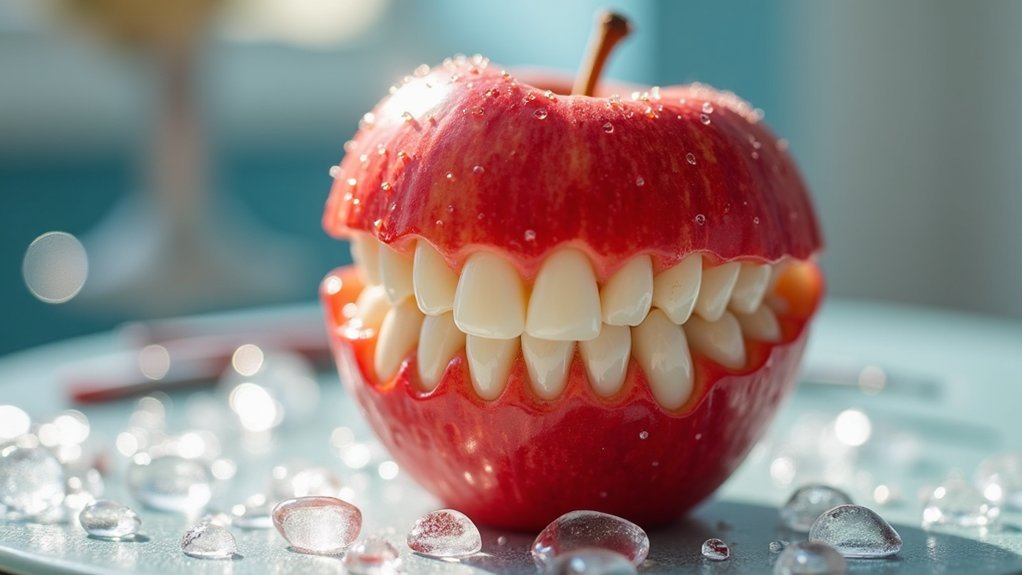

Malic acid can be detrimental to your teeth due to its low pH level, which leads to enamel erosion. This weakening of enamel increases your risk of cavities and heightened sensitivity to hot, cold, or sweet foods. Prolonged exposure can also cause discoloration and gum recession, making your teeth more vulnerable. To protect your teeth, it is crucial to take preventive measures. Discover more strategies to maintain enamel health and make better dietary choices to safeguard your smile.
Key Takeaways
- Malic acid can lower pH levels in the mouth, creating an acidic environment that promotes tooth enamel demineralization.
- Prolonged exposure to malic acid increases the risk of enamel erosion, leading to cavities and sensitivity.
- Symptoms of enamel erosion include increased sensitivity to temperature changes and visible discoloration of teeth.
- Rinsing your mouth with water after consuming malic acid-rich foods can help neutralize acidity and protect enamel.
- Limiting intake of sour foods and incorporating calcium-rich products can strengthen enamel and promote dental health.
Understanding Malic Acid and Its Sources
Although malic acid is commonly associated with the tartness of apples, it’s important to recognize its presence in various fruits and food products. This organic acid enhances flavors and acts as a preservative in many items, contributing to their sour taste.
Foods that contain malic acid include pears, cherries, and certain flavored beverages. While it plays a role in promoting saliva production, excessive consumption, particularly from sour candies, can impact dental health.
The acidic nature of malic acid can lead to demineralization of tooth enamel, increasing the risk of decay. Moderation is essential to maintain oral health.
The Impact of Malic Acid on Tooth Enamel
When you consume malic acid, particularly in sour candies, it can greatly affect your tooth enamel. The low pH level of malic acid creates an acidic environment that promotes enamel demineralization. Prolonged exposure can weaken tooth enamel faster than many other acids, increasing the risk of cavities. Regular intake of malic acid-rich foods necessitates preventive dental care to protect your teeth. Rinsing your mouth with water post-consumption can help neutralize acidity and mitigate enamel erosion.
| Impact of Malic Acid | Effects on Tooth Enamel |
|---|---|
| Acidity Level | Low pH promotes demineralization |
| Erosion Risk | Increases with prolonged exposure |
| Protective Measures | Rinse with water after consumption |
Symptoms of Enamel Erosion From Malic Acid
How can you tell if malic acid is affecting your enamel? Recognizing the symptoms of enamel erosion is essential for maintaining your oral health. Here are three key indicators:
- Increased sensitivity – You may experience discomfort when consuming hot, cold, or sweet foods and drinks.
- Visible changes – Look for discoloration or a dull appearance on your teeth as enamel wears away.
- Gum recession – This can expose tooth roots, heightening vulnerability to tooth decay and sensitivity.
Frequent exposure to malic acid in sour candies can accelerate these issues, leading to more severe dental problems over time.
Preventive Measures to Protect Your Teeth
Recognizing the signs of enamel erosion from malic acid highlights the need for proactive measures to safeguard your dental health.
Rinse your mouth with water after consuming malic acid-rich foods to neutralize acidity and protect your enamel. Limit your intake of these foods, like certain fruits and sour candies.
Incorporate fluoride toothpaste in your routine, as it promotes enamel remineralization against acidic damage. Additionally, include calcium-rich foods in your diet to strengthen enamel.
Finally, schedule regular dental check-ups to monitor your enamel health and receive tailored advice on managing the effects of acidic substances effectively.
Recommendations for Healthier Alternatives
To maintain ideal dental health while still enjoying flavorful options, consider healthier alternatives to foods high in malic acid. These choices can be beneficial for your teeth and overall well-being:
- Fresh Fruits: Opt for apples or pears for natural sweetness and nutrients.
- Vegetables: Snack on carrots or celery to stimulate saliva production, which neutralizes acid.
- Dairy Products: Incorporate yogurt or cheese for calcium that strengthens tooth enamel.
These options help you avoid harmful acids while promoting a healthy mouth.
Consult your family dentist for personalized recommendations tailored to your needs.