
You should avoid nuts for at least 2-3 weeks after wisdom teeth removal to guarantee proper healing. Nuts can get lodged in the extraction site and disturb the healing blood clot, increasing the risk of complications like dry socket. Once your mouth feels comfortable, you can gradually reintroduce finely chopped or soft nuts. Make sure to consult your dentist for personalized advice. There’s more to explore about safe reintroduction and dietary alternatives during your recovery.
Key Takeaways
- Avoid eating nuts for at least 2-3 weeks after wisdom teeth removal to ensure proper healing.
- After two weeks, start with small amounts of finely chopped, soft nuts.
- Ensure nuts are not sticky or chewy to prevent lodging in the extraction site.
- Gradually reintroduce nuts while monitoring for any discomfort or irritation.
- Consult your dentist or oral surgeon for personalized advice on reintroducing nuts.
Why Avoid Nuts Immediately After Surgery?
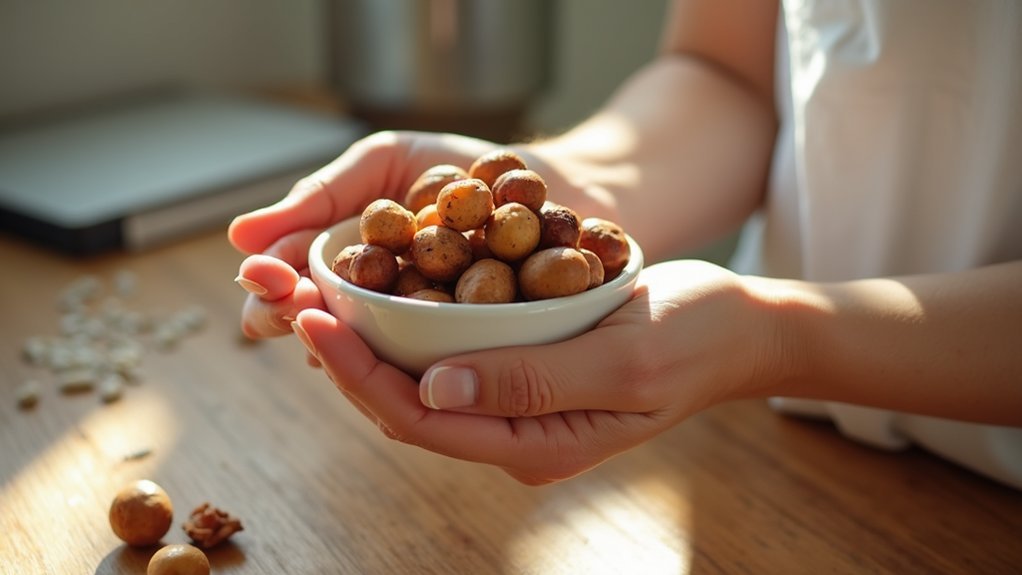
After surgery, it’s essential to avoid nuts because they can easily get lodged in the extraction site. Chewing these crunchy foods can disturb the healing blood clot, leading to complications like dry socket, increased bleeding, and inflammation.
The texture of nuts may irritate sensitive gum tissue, causing unnecessary pain during your recovery period. To guarantee proper healing and minimize the risk of infection, it’s advised to avoid foods like nuts for at least 2-3 weeks post-surgery.
Introducing them too early can prolong your recovery time and might necessitate additional dental care if complications arise.
Timeline for Reintroducing Nuts Into Your Diet
While your body heals from wisdom teeth removal, it’s crucial to follow a timeline for reintroducing nuts into your diet.
- For at least two weeks, avoid hard and crunchy nuts that could irritate the healing site.
- After two weeks, start with small amounts of soft, finely chopped nuts to assess comfort.
- Always make sure nuts aren’t sticky or chewy to prevent lodging in the extraction site.
Consult your dentist or oral surgeon for personalized advice based on your recovery progress.
Gradually reintroducing nuts is essential for a smooth shift back to your regular diet without discomfort.
Signs Your Mouth Is Ready for Nuts
Once you’ve followed the timeline for reintroducing nuts into your diet, it’s important to recognize the signs that indicate your mouth is ready for them.
You should verify your surgical site has healed considerably, with no pain or discomfort present. Check for the absence of bleeding or oozing, as these factors reduce the risk of complications when consuming harder foods.
If you can comfortably chew soft foods without irritation, that’s a good sign. Gradually reintroducing nuts in small amounts will help you assess your mouth’s readiness and tolerance for these nutritious snacks.
Alternatives to Nuts During Recovery
As you recover from wisdom teeth removal, it’s essential to find alternatives to nuts that are gentle on your healing mouth.
Here are some soft food options to take into account:
- Mashed bananas or applesauce for a sweet boost of nutrition
- Creamy yogurt or cottage cheese for easy-to-swallow protein
- Smoothies made with soft fruits and vegetables for delicious flavors
Incorporate cooked vegetables like mashed sweet potatoes and soft scrambled eggs for added protein and nutrition.
These options will help you maintain a balanced diet while keeping your healing mouth comfortable.
Tips for Eating Nuts Safely After Healing
After your mouth has healed from wisdom teeth removal, you can start enjoying nuts again by following a few essential guidelines to secure a safe and pleasant experience.
Wait at least 2-3 weeks post-extraction to minimize the risk of complications.
Wait at least 2-3 weeks after extraction to ensure a safe recovery before enjoying nuts again.
Begin with finely chopped nuts or nut butter to reduce irritation and opt for soft varieties.
Gradually introduce nuts into your diet, starting with small amounts to monitor discomfort.
Avoid hard or crunchy nuts, as they can dislodge healing tissue.
Always chew on the opposite side of the extraction site to guarantee a safe eating experience.