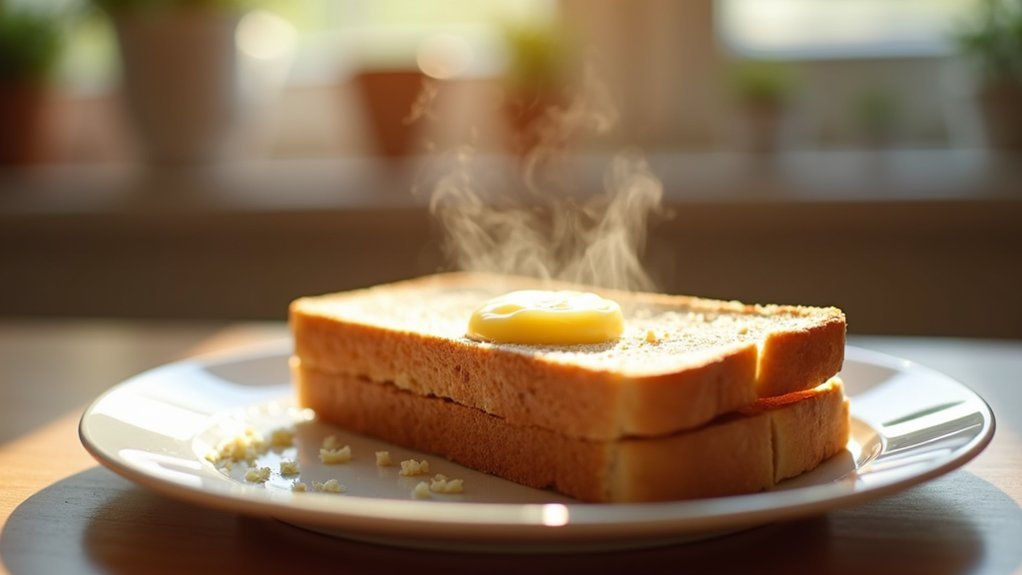

You shouldn’t eat toast right after wisdom teeth removal, as it can dislodge blood clots and lead to painful complications like dry socket. For the first 5 to 7 days, stick to soft foods like scrambled eggs and yogurt to aid your recovery. After about a week, if you’re feeling better, you may cautiously reintroduce softer forms of bread. To guarantee a smooth healing process, there are important guidelines and signs of complications you should monitor.
Key Takeaways
- Avoid all forms of toast for the first 5 to 7 days post-extraction to prevent dislodging blood clots.
- Soft bread may be acceptable after a few days, but crusty varieties remain risky.
- Gradually introduce soft toast around the 7-day mark, ensuring it’s fresh and not crunchy.
- Focus on soft foods like scrambled eggs and yogurt during the initial recovery phase.
- Monitor for discomfort when introducing new foods, adjusting as needed for a smooth recovery.
Understanding the Risks of Eating Toast After Extraction
When you’ve just had your wisdom teeth removed, it’s crucial to understand the risks associated with eating toast during your recovery.
Crunchy bread can dislodge the blood clot at the tooth extraction site, leading to a painful condition known as dry socket. For the first 5 to 7 days post-extraction, you should avoid all forms of toast to prevent irritation and complications.
While soft bread may be acceptable after a few days, crusty varieties remain a risk. Gradually introducing toast around the 7-day mark should be done cautiously, ensuring it’s soft and not excessively crusty to support your healing process.
Recommended Foods for Recovery
Following wisdom teeth removal, it’s important to choose the right foods to aid your recovery and minimize discomfort. Prioritize soft foods to eat, like scrambled eggs, yogurt, and blended soups, during the initial healing phase. After about 4 days, you can gradually reintroduce solid food, such as toast, but make certain it’s soft and fresh to avoid damaging your gums.
| Soft Foods | Notes |
|---|---|
| Scrambled Eggs | Easy to chew and nutritious. |
| Yogurt | Smooth and soothing. |
| Blended Soups | Warm and comforting option. |
Monitor any discomfort when adding new foods to guarantee a smooth recovery.
Timeline for Reintroducing Solid Foods
As you start your recovery from wisdom teeth removal, understanding the timeline for reintroducing solid foods is essential for a smooth healing process.
In the first week following your wisdom tooth extraction, focus on soft foods like scrambled eggs or oatmeal. Typically, you can introduce solid foods around day four, depending on your comfort level.
However, avoid crusty toast initially, as it can irritate the healing area. Gradually shift to firmer options while monitoring for any discomfort.
Full recovery usually occurs within 2 to 6 weeks, so be patient as you work towards enjoying a regular diet again.
Signs of Complications to Watch For
After your wisdom teeth removal, it’s essential to monitor your recovery for signs of complications.
Pay attention to any persistent pain, swelling that worsens, or unusual bleeding from the extraction site.
If you notice any foul discharge or have difficulty opening your mouth, these could indicate issues that require prompt dental evaluation.
Pain and Discomfort Levels
Pain management is essential after wisdom teeth removal, as it can be an indicator of how well your recovery is progressing.
In the first few days, some discomfort is normal, but watch for signs of complications:
- Persistent or increasing pain, which may suggest a painful dry socket
- Difficulty swallowing or persistent numbness
- Excessive bleeding or reopening of the extraction site
- Signs of infection, such as fever or a foul taste
If you experience any of these symptoms, consult your dentist promptly.
Addressing these issues early can help promote healing and guarantee a smoother recovery.
Swelling and Inflammation Signs
Swelling and inflammation around the extraction site are common responses your body has as it begins the healing process.
Within the first 48 hours, you might notice some swelling, but it should gradually decrease. If you experience persistent or worsening swelling, it may indicate a complication.
Increased pain and discomfort can accompany inflammation, which, if it intensifies, might signal an infection. Watch for signs of redness or warmth around the area, and if you develop a fever or chills, contact your dentist immediately.
A sudden increase in swelling later on could suggest a dry socket or another issue needing attention.
Unusual Bleeding or Discharge
While some bleeding is expected immediately following wisdom teeth removal, you should be vigilant for any unusual bleeding or discharge, as they can signal complications.
Watch for these signs:
- Bleeding that persists beyond 24 hours or is severe
- Yellow or green discharge, especially with increased pain or swelling
- Foul-smelling discharge, which may indicate an infection
- Excessive bleeding that doesn’t subside despite applying pressure
Monitoring these symptoms during the first week of recovery is essential, as complications often arise shortly after the procedure.
If you notice any concerning signs, contact your dentist promptly for guidance.
Tips for a Smooth Recovery Process
To guarantee a smooth recovery after wisdom teeth removal, it’s essential to follow a few key tips.
Start by consuming soft foods like scrambled eggs and oatmeal around day 3 to promote comfort and avoid irritation at the extraction site.
Begin introducing soft foods such as scrambled eggs and oatmeal around day 3 to enhance comfort and prevent irritation.
Monitor any discomfort when gradually introducing solid foods, and always chew on the opposite side.
Maintain a nutrient-rich diet with smoothies and blended soups during the initial phase.
Importantly, avoid hard, crunchy, or sticky foods for at least a week to protect your healing process and minimize the risk of dislodging the blood clot.
Prioritize your recovery for best results.
When to Consult Your Dentist
If you notice persistent pain, swelling, or any signs of infection after your wisdom teeth removal, it’s essential to consult your dentist.
Difficulty opening your mouth or chewing beyond a week may indicate complications that require professional evaluation.
Don’t hesitate to reach out with any concerns about your healing process or dietary restrictions.
Signs of Complications
Recognizing the signs of complications after wisdom teeth removal is essential for ensuring a smooth recovery. If you notice any of the following symptoms, contact your dentist promptly:
- Severe pain worsening days after extraction, possibly indicating a dry socket or infection
- Noticeable swelling or bruising not decreasing after 72 hours
- Persistent bleeding from the extraction site beyond the first few hours
- A foul taste or odor in your mouth, accompanied by fever or chills, suggesting an infection
Addressing these signs of complications—swelling, bleeding, infection, dry socket, and numbness—can help you recover effectively.
Persistent Pain Issues
Experiencing persistent pain after wisdom teeth removal can be concerning, especially when it lasts beyond the initial recovery period of 3-5 days.
This may indicate complications like a dry socket or infection, requiring immediate dental attention. If your pain worsens instead of improving, consult your dentist to evaluate the healing process.
Be vigilant for signs such as swelling, redness, or fever, as these could signal an infection. Severe pain unmanageable with over-the-counter medications also warrants a visit.
Regular follow-up appointments are essential, so report any unusual symptoms promptly to your dental professional for effective care.
Dietary Concerns
While adjusting to a post-wisdom teeth diet can be challenging, knowing when to consult your dentist is essential for ensuring a smooth recovery.
Here are key signs to watch for:
- Persistent pain or swelling beyond the typical recovery period
- Unusual bleeding or discharge from the extraction site
- Difficulty eating or discomfort while consuming soft foods
- Questions about when it’s fine to eat normal foods like toast
If you’re experiencing any of these issues, don’t hesitate to reach out.