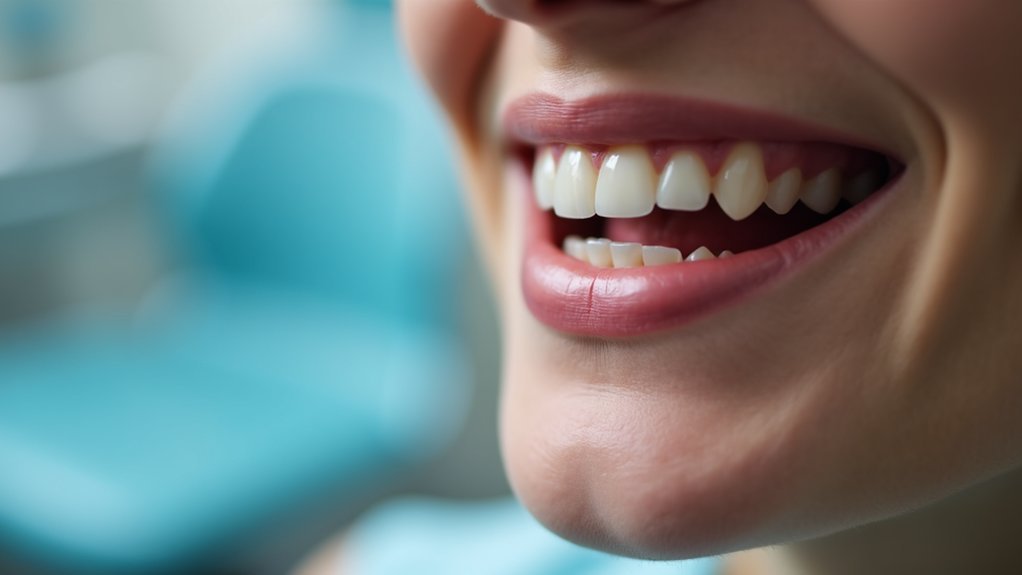

Yes, misaligned teeth can indeed cause TMJ disorders. When your bite is off, it puts extra strain on the temporomandibular joint, leading to jaw pain, clicking, and difficulty chewing. This misalignment creates uneven pressure that can result in chronic jaw discomfort and tension headaches. If you’re experiencing these symptoms, it’s essential to explore treatment options that can realign your teeth and alleviate TMJ issues. There are effective solutions available to help you find relief.
Key Takeaways
- Misaligned teeth can disrupt the bite, increasing strain on the temporomandibular joint (TMJ) during chewing.
- An uneven bite leads to chronic discomfort and potential TMJ disorders (TMD) due to increased pressure.
- Approximately 75% of adults experience some form of bite misalignment, contributing to TMJ issues.
- Symptoms of TMJ pain include jaw pain, clicking sounds, and headaches from muscle tension caused by misaligned teeth.
- Orthodontic treatment can alleviate TMJ symptoms by realigning teeth and improving overall bite function.
Understanding the Connection Between Misaligned Teeth and TMJ
When misaligned teeth disrupt your bite, they can create significant strain on the temporomandibular joint (TMJ), leading to various disorders.
Misalignment often results in an improper bite, increasing pressure on the TMJ during chewing. This pressure can accelerate wear on both your teeth and the joint, resulting in chronic discomfort and potential TMJ disorders (TMD).
Studies show that about 75% of adults experience some form of bite misalignment that could contribute to TMJ pain over time.
Addressing these issues through orthodontic treatment not only alleviates TMJ symptoms but also promotes better overall oral health by redistributing bite forces evenly.
Common Symptoms of TMJ Pain Linked to Misalignment
If you have misaligned teeth, you might notice several symptoms linked to TMJ pain.
Common issues include jaw pain, clicking or popping sounds when you move your jaw, and difficulty when chewing or speaking.
These symptoms often indicate increased strain on the temporomandibular joint due to uneven bite forces.
Jaw Pain Symptoms
Misaligned teeth can considerably contribute to the development of TMJ disorders, resulting in various jaw pain symptoms you might experience.
You may notice discomfort in your jaw, often accompanied by facial pain or headaches, due to muscle tension from compensating for the misalignment.
Additionally, you might struggle with chewing and speaking, as these activities can place further strain on your jaw muscles and joints.
Over time, untreated misaligned teeth can exacerbate TMJ symptoms, potentially leading to chronic jaw pain and dysfunction.
Recognizing these symptoms is essential for seeking appropriate care and alleviating discomfort.
Clicking and Popping Sounds
As you move your jaw, you might notice clicking and popping sounds, which are common indicators of TMJ pain linked to misalignment. These sounds occur when the articular disc in the temporomandibular joint displaces, often exacerbated by an uneven bite from misaligned teeth. Research shows that 75% of adults may face bite misalignment, increasing the risk of TMJ-related symptoms like clicking or popping. It is crucial to address these sounds early, as they can signal underlying issues and lead to more severe TMJ dysfunction if untreated.
| Symptoms | Causes | Treatment Options |
|---|---|---|
| Clicking or Popping | Misalignment can cause | Professional Evaluation |
| Jaw Discomfort | Articular Disc Displacement | Physical Therapy |
| Muscle Strain | Uneven Bite | Occlusal Splints |
Difficulty Chewing and Speaking
When your teeth are misaligned, you may find that chewing and speaking become increasingly difficult. This misalignment can lead to TMJ pain, affecting your daily life.
Here are three common issues you might experience:
- Pain while chewing: Uneven pressure on your jaw strains the temporomandibular joint.
- Speech difficulties: Severe misalignment impacts tongue placement and airflow.
- Compensatory habits: You may clench or grind your teeth, worsening discomfort.
Correcting misalignment through orthodontic treatment can considerably enhance your ability to chew and speak clearly, improving your overall quality of life.
Causes of Jaw Misalignment and Their Impact on TMJ
Misalignment of your teeth often stems from factors like malocclusion or childhood habits, which can negatively impact your TMJ health.
When your bite is off, it creates uneven pressure on the temporomandibular joint, leading to pain and dysfunction.
Understanding these causes is essential for addressing TMJ-related issues effectively.
Misalignment Contributing Factors
Teeth that are misaligned often stem from malocclusion, which can lead to an improper bite that forces the jaw into unnatural positions.
Several contributing factors can exacerbate this misalignment, impacting TMJ disorder:
- Bruxism (teeth grinding): This habit increases muscle tension, straining the jaw.
- Poor dental articulation: Misalignment disrupts the natural bite force distribution, leading to TMJ strain.
- Anterior open bite: When front teeth don’t contact, compensatory clenching can elevate jaw joint stress.
Understanding these factors can help you address symptoms effectively and support others experiencing TMJ discomfort.
Impact on TMJ Health
Improper bite alignment greatly impacts TMJ health, as it creates undue stress on the temporomandibular joint (TMJ) and the surrounding muscles.
Misalignment can lead to malocclusion, resulting in uneven pressure during chewing and exacerbating tension in the jaw. This strain contributes to TMJ dysfunction, causing headaches, jaw pain, and clicking sounds.
Additionally, dental health issues like overcrowding or gaps from missing teeth force the jaw into compensatory positions, further disrupting normal function.
Addressing misalignment through orthodontic treatments can alleviate TMJ symptoms, promote proper alignment, and considerably reduce strain on the TMJ, enhancing overall dental health.
Treatment Options for Addressing Misaligned Teeth and TMJ Pain
When your bite is out of alignment, it can lead to various dental issues, including TMJ pain.
Misaligned bites can cause dental problems, including discomfort from TMJ pain.
To address misaligned teeth and alleviate discomfort, consider these treatment options:
- Orthodontic treatments: Braces or clear aligners can realign teeth, reducing stress on the jaw joint.
- Custom orthotic devices: Mouthguards stabilize your bite, relieving TMJ symptoms and muscle strain.
- Surgical options: For severe misalignment, procedures like osteotomies may restore proper jaw alignment.
Additionally, physical therapy can strengthen jaw muscles and improve flexibility, further easing TMJ pain.
Seek professional guidance to find the best approach for your situation.
Preventive Measures to Avoid TMJ Issues Related to Misalignment
To effectively prevent TMJ issues related to misalignment, it’s essential to address potential risk factors early on.
Begin with routine dental check-ups to identify misaligned teeth that may go unnoticed. Encourage children to avoid habits like thumb sucking and prolonged pacifier use, which can lead to misalignment.
Incorporate stress management techniques, such as mindfulness, to reduce teeth grinding. Custom mouthguards or orthotic devices can support jaw alignment, mitigating TMJ risks.
Additionally, maintain good posture and avoid chewing non-food items, as these preventive measures can greatly lessen the strain on jaw muscles and joints, protecting your TMJ health.
Benefits of Correcting Misaligned Teeth for TMJ Relief
Correcting misaligned teeth offers significant benefits for TMJ relief, as it directly addresses the underlying issues contributing to discomfort.
By improving alignment, you can experience:
- Reduced Pressure: Alleviating strain on the TMJ minimizes jaw pain, headaches, and clicking sounds.
- Balanced Forces: Proper teeth alignment evenly distributes biting forces, preventing muscle strain and TMD symptoms.
- Enhanced Function: Improved oral function makes chewing and speaking easier, further reducing muscle tension.