
You can typically start eating ground beef about five days after your wisdom teeth removal. Make sure it’s thoroughly cooked and kept soft to avoid irritating your healing tissues. It’s best to chew on the opposite side of the surgery site and avoid spicy seasonings. Pay attention to any pain or discomfort while eating, and adjust your diet accordingly. If you want to know more about dietary tips and alternatives post-surgery, keep exploring.
Key Takeaways
- Ground beef can typically be reintroduced around Day 5 post-surgery, as long as it’s well-cooked and soft.
- Ensure the ground beef is finely minced to avoid discomfort during chewing.
- Avoid spicy seasonings to prevent irritation to healing tissues from the extraction.
- Chew on the opposite side of the surgery site to minimize pain while eating.
- Monitor for any pain or swelling and revert to softer foods if discomfort occurs.
Understanding the Healing Process After Wisdom Teeth Removal
After you’ve had your wisdom teeth removed, understanding the healing process is essential for a smooth recovery.
Initially, clot formation within the first 24 hours is vital for proper healing. Swelling typically peaks around 2-3 days post-surgery, so manage it by applying ice packs and staying hydrated.
During this time, focus on a diet rich in soft food to support tissue regeneration. Avoid hard, crunchy, or chewy foods for at least 1-2 weeks to prevent dislodging blood clots and irritating surgical sites.
The Role of Diet in Recovery
While recovering from wisdom teeth removal, your diet plays a crucial role in healing and overall well-being. Incorporating soft foods, especially proteins, can greatly enhance your recovery.
Consider the following:
- Choose soft textures, like meatballs or casseroles, for comfort.
- Include ground beef for its important nutrients, such as iron and zinc.
- Make sure ground beef is well-cooked to prevent chewing discomfort.
- Stay hydrated to support tissue regeneration.
When to Reintroduce Ground Beef
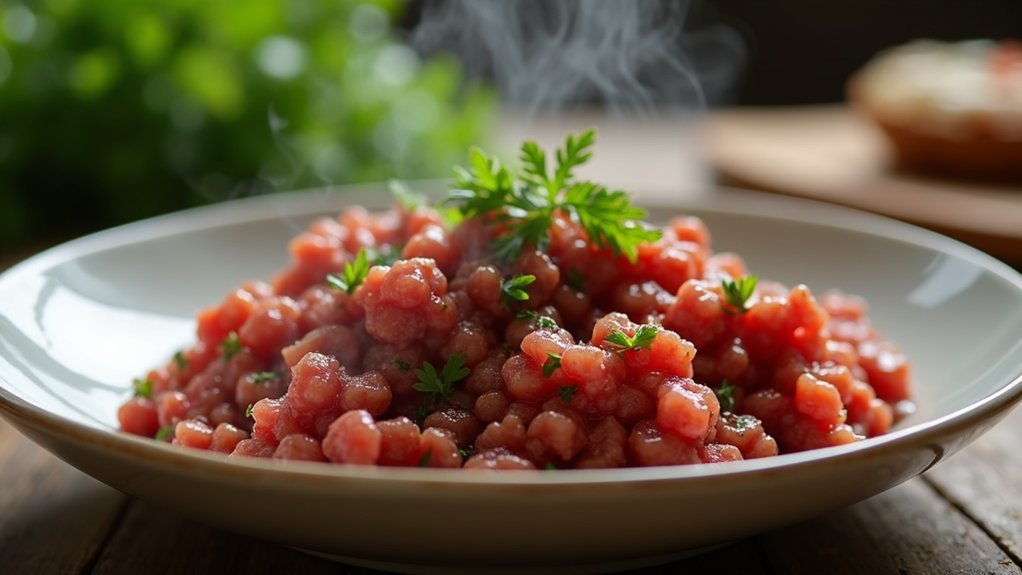
As you progress in your recovery from wisdom teeth removal, you can typically reintroduce ground beef into your diet around Day 5 post-surgery.
Make certain the beef is cooked thoroughly and maintains a soft texture for easy chewing. Season it well, but avoid spicy flavors to prevent irritation to the healing tissue.
Ensure the beef is well-cooked and soft for easy chewing, while avoiding spicy seasonings to protect healing tissue.
While eating, steer clear of chewing on the side of the surgery site to reduce discomfort. Ground beef serves as a valuable protein source essential for healing during this post-surgery phase.
If you experience pain while eating, switch back to softer food options and consult your dentist for guidance.
Tips for Preparing Ground Beef Post-Surgery
When preparing ground beef post-surgery, choose lean cuts to minimize fat content, which can be harder to digest.
Make sure to cook it thoroughly and keep it soft to avoid irritation at the surgical site.
Pairing the beef with soft sides like mashed potatoes or sauces can enhance both flavor and ease of consumption.
Choose Lean Ground Beef
Choosing lean ground beef is essential for a smooth recovery after wisdom teeth removal. It minimizes grease and fat, making it easier to digest.
Here are some tips for preparing ground beef:
- Opt for lean cuts to reduce discomfort.
- Cook thoroughly and crumble the beef for a soft texture that’s easy to chew.
- Combine with soft ingredients like mashed potatoes or well-cooked pasta for balanced nutrition.
- Avoid hard toppings, like crispy onions or nuts, that can irritate healing tissues.
Always allow the ground beef to cool to a lukewarm temperature to prevent irritation during your recovery.
Cook Thoroughly and Softly
Cooking ground beef thoroughly and softly is essential for your recovery after wisdom teeth removal.
Make sure to cook it to an internal temperature of 160°F to eliminate harmful bacteria. Opt for lean ground beef to reduce fat and enhance digestibility.
Utilize soft cooking methods, like simmering in sauces or stews, to promote tenderness and moisture. Avoid spices or irritating seasonings; gentle flavors are more suitable during healing.
After cooking, shred or finely chop the beef to create smaller, softer bites that are easier to chew and swallow, minimizing stress on your surgery site while ensuring a nutritious meal.
Pair With Soft Sides
Pairing ground beef with soft sides is essential for a smooth recovery after wisdom teeth removal.
To guarantee a gentle meal experience, consider these options:
- Mashed Potatoes: Creamy and easy to swallow, they complement ground beef well.
- Well-Cooked Vegetables: Softened carrots or squash add nutrition without irritation.
- Rice or Quinoa: These grains provide a soft texture, enhancing the meal.
- Puréed Soups: A flavorful option that won’t require chewing.
Avoid adding spices or crunchy ingredients immediately after surgery, as they can irritate your healing mouth.
Enjoy your meal while prioritizing comfort!
Other Soft Protein Alternatives
After wisdom teeth removal, you might want to contemplate several soft protein alternatives to ground beef that can support your healing process.
Eggs are a fantastic option; they’re packed with protein and easy to prepare in various ways.
Tofu also serves as a nutritious, soft protein alternative, blending seamlessly into smoothies or soups.
Additionally, Greek yogurt offers a creamy texture and essential nutrients, making it ideal for recovery.
These soft protein alternatives can provide the necessary nutrients for your healing while minimizing discomfort.
Always prioritize your comfort level and choose foods that are gentle on your healing mouth during this time.
Monitoring Your Body’s Response
While reintroducing ground beef into your diet post-wisdom teeth removal, it’s important to monitor your body’s response closely.
Pay attention to the following:
- Pain: Notice any discomfort while chewing or swallowing; revert to soft foods if needed.
- Texture: Confirm ground beef is finely minced and well-cooked for easier chewing.
- Gradual Increase: Slowly increase your intake, balancing protein to support recovery.
- Symptoms: If swelling or pain re-emerges, contact your dentist for dietary guidance.
Being attentive to these factors will help facilitate a smoother recovery while enjoying nutritious options like ground beef.