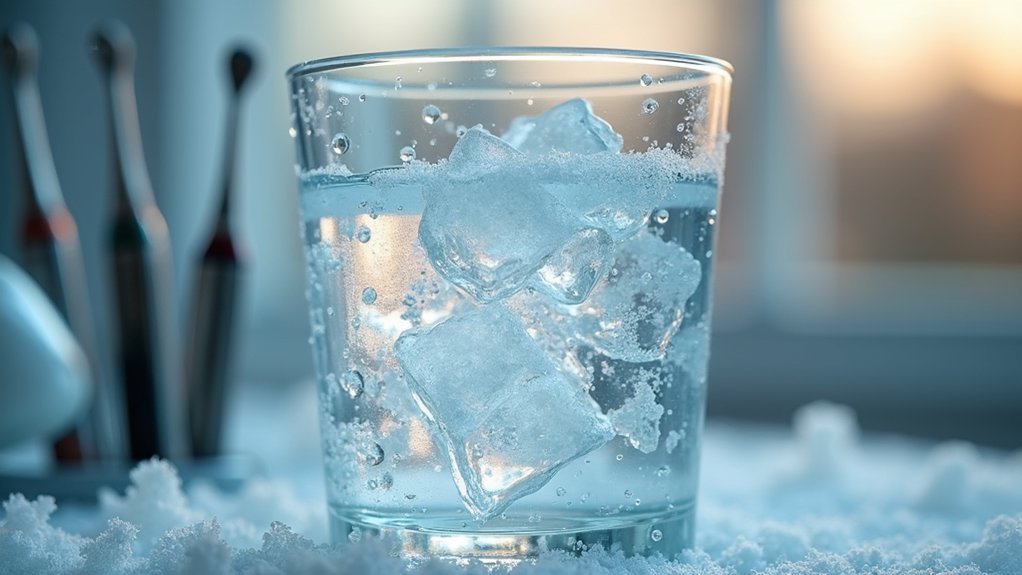

Cold water isn’t necessarily bad for your teeth, but it can cause discomfort if you’ve got sensitivity or weakened enamel, often from gum recession or enamel erosion. Sudden temperature changes can lead to sharp pain by contracting the exposed dentin. To mitigate this, you can gradually introduce cold beverages, use a straw, or opt for lukewarm water. There’s more to understand about managing sensitivity and maintaining oral health as you navigate cold drink consumption.
Key Takeaways
- Cold water does not directly harm tooth enamel but can trigger sensitivity in individuals with weakened enamel or dental issues.
- Sudden temperature changes from cold water can lead to microfractures in enamel over time, increasing sensitivity and risk of cracks.
- Gradual exposure to cold beverages and using straws can mitigate discomfort and protect teeth from direct contact with cold liquids.
- Moderation is essential; lukewarm water is gentler on sensitive teeth and minimizes the risk of discomfort from extreme temperatures.
- Staying hydrated is crucial for oral health, and cold water can promote fluid intake and saliva production, which protects teeth.
Understanding Tooth Sensitivity and Cold Water
Tooth sensitivity can be a frustrating experience, especially when it comes to consuming cold water. If you have sensitive teeth, drinking cold beverages might trigger sharp pain due to the contraction of fluid in microscopic tubules connected to your nerves.
This sensitivity often stems from dental issues like enamel erosion, gum recession, or damaged fillings, leading to exposed dentin.
To manage discomfort, consider using desensitizing toothpaste, which blocks these tubules and reduces pain responses. Additionally, a gradual shift to cooler temperatures and using straws can help mitigate the impact of cold water on your sensitive teeth.
Effects of Cold Water on Dental Health
While cold water isn’t inherently harmful to your teeth, it can have notable effects on your dental health, particularly for those with sensitivity or weakened enamel.
Cold water may trigger discomfort due to tooth sensitivity, causing sharp pain when fluid in the dentin tubules contracts. Additionally, extreme temperature changes can weaken enamel over time, increasing the risk of cracks or chips.
Cold water can cause discomfort for sensitive teeth, leading to sharp pain and potential enamel weakening over time.
If you have existing dental issues like enamel erosion or gum recession, cold water can exacerbate these problems.
Practicing good oral hygiene and enjoying cold beverages in moderate consumption can help protect your dental health and minimize discomfort.
Enamel Erosion and Temperature Changes
When you consume cold water, rapid temperature changes can impact your enamel’s integrity.
These fluctuations may lead to microfractures, making your teeth more vulnerable to decay over time.
To protect your enamel, consider balancing the temperature of your beverages and avoiding extreme contrasts.
Effects of Temperature Fluctuations
Consuming cold water after hot foods can lead to significant effects on your dental health due to temperature fluctuations.
Rapid temperature changes cause your dental structure to contract and expand, potentially leading to stress fractures. This can exacerbate enamel erosion, making your teeth more susceptible to decay.
If you already have existing dental issues, you might experience heightened sensitivity and discomfort from cold water, as it stimulates nerves in sensitive teeth.
Consistent exposure to extreme temperatures increases the risk of enamel wear, which can further compromise your dental health.
Protecting your teeth from such fluctuations is essential for maintaining their integrity.
Enamel Protection Strategies
To protect your enamel from erosion and the damaging effects of temperature changes, it’s essential to adopt effective strategies that can fortify your dental health.
Maintain a consistent oral hygiene routine by brushing with fluoride toothpaste, which strengthens enamel and defends against erosion. Rinsing with warm saltwater after consuming acidic beverages helps neutralize acidity, reducing the risk of damage.
Practicing moderation is key; limit your intake of very cold or hot drinks to minimize the impact on your teeth.
Why Hydration Is Important for Oral Health
Hydration plays an important role in maintaining your oral health, as it directly impacts saliva production, which is essential for neutralizing harmful acids in your mouth.
Adequate hydration helps rinse away sugars and acids, reducing the risk of enamel erosion and tooth decay. Staying well-hydrated prevents dry mouth, a condition that can lead to dental issues like gum disease and cavities.
Additionally, proper hydration supports healing after dental procedures, promoting overall health. Maintaining balanced pH levels in your mouth through hydration is significant for preventing bad breath and oral discomfort, ensuring your smile stays bright and healthy.
Risks of Extreme Temperatures on Teeth
While enjoying your favorite cold beverages can be invigorating, extreme temperatures can pose significant risks to your dental health.
Cold water can trigger tooth sensitivity, especially in those with worn-down enamel or gum recession, exposing the dentin. Rapid temperature changes stress your teeth, leading to cracks or chips over time.
Consistent exposure to these extremes may cause enamel erosion, increasing the likelihood of dental issues. To minimize discomfort and protect your teeth, consider opting for lukewarm water.
Best Practices for Drinking Cold Water
When drinking cold water, moderation is key to protecting your teeth.
Consider using temperature moderation techniques, like opting for room temperature drinks or gradually introducing cold beverages.
Additionally, utilizing protective dental products can help fortify your enamel and reduce sensitivity.
Temperature Moderation Techniques
To enjoy cold water without discomfort, consider implementing temperature moderation techniques that can protect your teeth. Start by making a gradual shift to colder beverages to minimize sensitivity to cold water. When drinking, utilize a straw to limit direct contact with your teeth, reducing the risk of enamel erosion. Alternatively, opt for lukewarm water as a gentler hydration option. Maintain good oral hygiene by using desensitizing toothpaste and schedule regular dental checkups to monitor your enamel health and receive personalized advice.
| Technique | Benefits |
|---|---|
| Gradual Shift | Reduces temperature shock |
| Utilize a Straw | Protects enamel |
| Lukewarm Water | Gentle on sensitive teeth |
| Regular Checkups | Monitors enamel health |
Protective Dental Products
Using protective dental products can greatly enhance your comfort when drinking cold water. Incorporating desensitizing toothpaste into your routine effectively blocks microscopic tubules in dentin, helping to reduce sensitivity.
A soft-bristled toothbrush minimizes enamel erosion while ensuring proper oral hygiene, especially around sensitive areas. Regular fluoride treatments strengthen enamel and provide additional protection against sensitivity and decay.
Drinking cold beverages through a straw can also limit direct contact with teeth. Finally, scheduling consistent dental check-ups allows for early detection and management of any issues, ensuring your oral care remains ideal when consuming cold drinks.
Managing Tooth Sensitivity
Managing tooth sensitivity can be challenging, especially if you find cold water triggers discomfort.
Tooth sensitivity often arises from exposed dentin beneath the enamel, leading to sharp sensations when consuming cold beverages. To alleviate this, consider using desensitizing toothpaste, which helps block the tubules in dentin, reducing discomfort.
Additionally, practice a gradual shift to colder drinks, allowing your teeth to acclimate and minimize sensitivity. Regular dental checkups are essential for maintaining your oral health and identifying any underlying issues that may contribute to discomfort.
When to Consult a Dentist
When should you consider consulting a dentist about your tooth sensitivity? If you experience persistent sharp pain after consuming cold water, it may indicate underlying dental issues that need professional evaluation.
Visible damage, such as cracks and chips, also warrants a visit to prevent further complications. Additionally, gum recession causing dentin exposure can increase sensitivity, and a dentist can offer treatment options for this concern.
If you notice a significant rise in tooth sensitivity or discomfort with cold beverages, seek dental advice. Regular dental checkups are essential for detecting early signs of enamel erosion and maintaining your overall oral health.