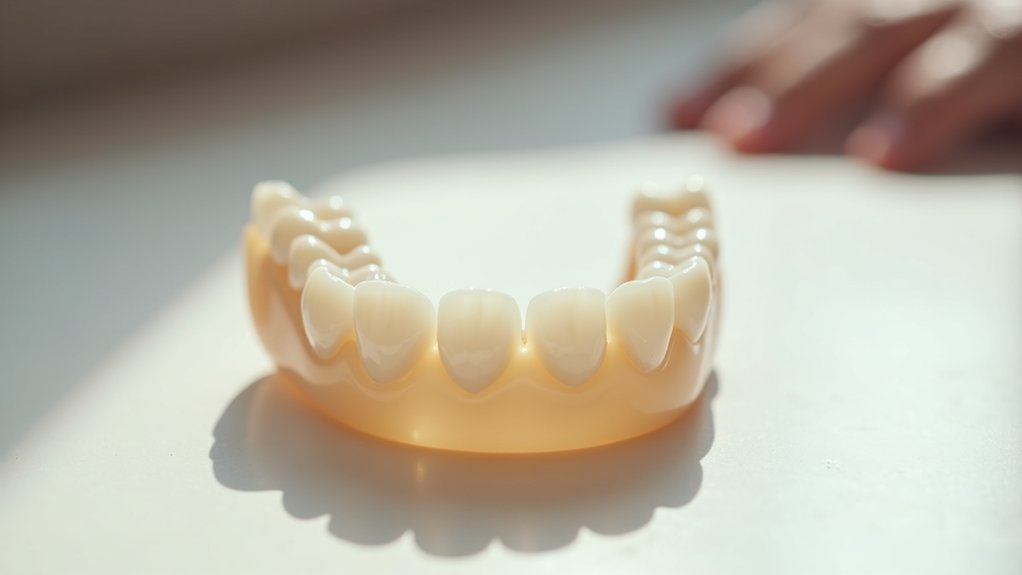

If your dentures look like buck teeth, it’s likely due to misalignment caused by an improper fit. This can happen from changes in your jawbone, bone resorption, or uneven wear. Ill-fitting dentures may exaggerate certain features, affecting both comfort and confidence. Regular adjustments with your dentist are essential for maintaining an ideal fit and natural appearance. If you’re curious about what steps you can take to improve your denture aesthetics, there’s more to explore.
Key Takeaways
- Misalignment often occurs due to ill-fitting dentures caused by bone resorption or changes in jaw structure over time.
- Uneven wear of dentures can lead to a protruding appearance, resembling buck teeth.
- Regular adjustments by a dentist are crucial to maintain proper alignment and prevent exaggerated features.
- Changes in facial structure and gum health can affect how dentures sit and appear, contributing to the buck teeth look.
- Timely communication with your dentist about discomfort or aesthetic concerns can enhance comfort and correct misalignment.
Common Causes of Denture Misalignment
When it comes to denture misalignment, several factors can contribute to the issue, and understanding these can help you avoid the frustrating appearance of buck teeth.
Ill-fitting dentures often stem from an improper bite or changes in your jawbone structure due to bone resorption. As time passes, dentures can shift, leading to uneven wear that may create a protruding effect.
Additionally, temporary dentures may exacerbate misalignment if not properly adjusted during healing.
Regular visits to your dental office for necessary adjustments and open communication with your dentist are vital for maintaining proper alignment and aesthetic appearance.
The Importance of Proper Denture Fitting
Proper denture fitting is essential for both comfort and appearance.
When your dentures don’t fit right, you may experience misalignment, leading to an unflattering look often described as “buck teeth.”
Regular adjustments not only enhance your smile but also support your facial structure, ensuring you feel confident and comfortable with your dentures.
Effects of Misalignment
Misalignment of dentures can greatly impact not just your appearance but also your overall oral health.
When dentures aren’t fitted properly, they can create an exaggerated appearance of buck teeth, where the upper front teeth protrude excessively. This misalignment disrupts the natural bite relationship, leading to a distance greater than 4 millimeters between your upper and lower teeth, which can cause remaining teeth to shift.
Such shifts can lead to functional issues and affect your facial aesthetics. Regular adjustments with your dentist are essential to maintain balance, ensuring your dentures provide a natural smile and ideal oral health.
Aesthetic Considerations
How can the right fit of your dentures greatly enhance your smile?
Properly fitting dentures play an essential role in maintaining your facial structure and overall appearance. Ill-fitting dentures can lead to the exaggerated appearance of buck teeth, disrupting natural alignment.
A well-designed denture supports your lips and cheeks, preventing a sunken look. Custom-fit dentures, crafted from accurate measurements, help avoid the dreaded “denture face.”
To guarantee ongoing comfort and aesthetics, regular dental visits are critical for check-ups and adjustments, keeping your dentures aligned and your smile radiant.
Invest in your smile; it’s important for both appearance and confidence.
Importance of Adjustments
While it’s easy to overlook the importance of regular adjustments, they’re essential for maintaining the comfort and appearance of your dentures. Proper denture fitting helps prevent issues like protruding front teeth and guarantees your custom-fit dentures look natural.
Consider these key benefits of adjustments:
- Maintain a comfortable fit as your mouth changes over time.
- Enhance your overall appearance by preventing exaggerated features.
- Guarantee ideal alignment for improved function.
Regular follow-ups with your dentist allow for timely adjustments, guaranteeing your dentures remain visually appealing and functional, so you can smile confidently.
How Dentures Impact Facial Aesthetics
When dentures aren’t fitted properly, they can dramatically alter your facial aesthetics, often leading to an unflattering appearance. Ill-fitting dentures may create a “monkey mouth” look, resembling buck teeth, while also affecting the balance of your lips and cheeks.
Properly designed dentures support facial structure, preventing a sunken look and the dreaded “denture face.” If dentures are too large or small, they disrupt the neutral zone, compromising aesthetic harmony.
For ideal results, consider dental implants or regular adjustments. Achieving a custom fit is essential for maintaining a natural, pleasing appearance and enhancing your overall confidence.
Signs Your Dentures May Need Adjustments
If you notice any discomfort or aesthetic concerns with your dentures, it’s vital to recognize the signs that indicate they may need adjustments.
Look for these key indicators:
- A noticeable gap between your upper and lower teeth when biting down
- Difficulty closing your lips comfortably without strain
- Excessive protrusion of front teeth affecting speech or smile
Regularly communicating with your dentist about these issues is important.
Adjustments can greatly enhance both comfort and appearance, preventing an exaggerated look similar to buck teeth.
Don’t hesitate to seek help to guarantee your dentures serve you well.
Steps to Achieve a Natural Denture Appearance
Achieving a natural denture appearance involves careful planning and collaboration with your dentist to guarantee a comfortable and aesthetic fit.
Start with custom-fit dentures designed from accurate measurements and a thorough jaw analysis, ensuring proper alignment.
Utilize quality materials, like those with Nanopearl technology, to enhance durability and prevent an unnatural look.
Incorporate a “try-in” phase for necessary modifications, ensuring the final product closely resembles natural teeth.
Regular adjustments are key; communicate openly with your dentist about your aesthetic preferences to address any concerns promptly.
Together, you can achieve an appearance that complements your facial features beautifully.
When to Consult Your Dentist for Help
If you notice your dentures creating an exaggerated overbite or making your teeth look excessively protruded, it’s time to consult your dentist.
Communicating your concerns about your dentures’ appearance is essential for achieving the look you desire.
Timely adjustments can prevent discomfort and guarantee that your dentures fit well and look natural.
Signs of Denture Issues
While wearing dentures can restore your smile and improve functionality, it’s crucial to recognize when something isn’t right.
Look out for these signs indicating potential denture issues:
- Significant protrusion of dentures or difficulty closing your lips
- Noticeable gaps between your upper jaw and lower dentures when biting
- Jaw, face, or neck pain linked to denture fit or alignment
If you experience any of these symptoms, consult your dentist promptly.
Timely adjustments can enhance your comfort and guarantee proper function, allowing you to enjoy your dentures without worry.
Don’t hesitate to seek help for any concerns regarding your denture fit!
Importance of Timely Adjustments
Timely adjustments to your dentures are essential for maintaining both comfort and aesthetics, as neglecting to address fit issues can lead to exaggerated appearances, like “buck teeth.”
When you notice discomfort, pressure spots, or changes in how your dentures look, it’s important to consult your dentist without delay.
Regular follow-up appointments are vital for fine-tuning fit and alignment, greatly improving your facial appearance.
If you experience misalignment or an overbite, proactive communication with your dentist can facilitate timely modifications, preventing long-term cosmetic concerns.
Communicating Concerns Effectively
Have you noticed that your dentures are making your smile look less natural? It’s essential to communicate your concerns effectively to your dentist.
When discussing your dentures, consider mentioning:
- Specific dissatisfaction with their appearance
- Any discomfort or issues related to your bite
- Your expectations for aesthetics, especially before important events
Being proactive guarantees your dentist understands your needs for adjustments.
Regular follow-ups and open dialogue about the fit and appearance of your dentures can enhance both functionality and aesthetics.
Don’t hesitate to voice your concerns; your comfort and confidence are paramount.