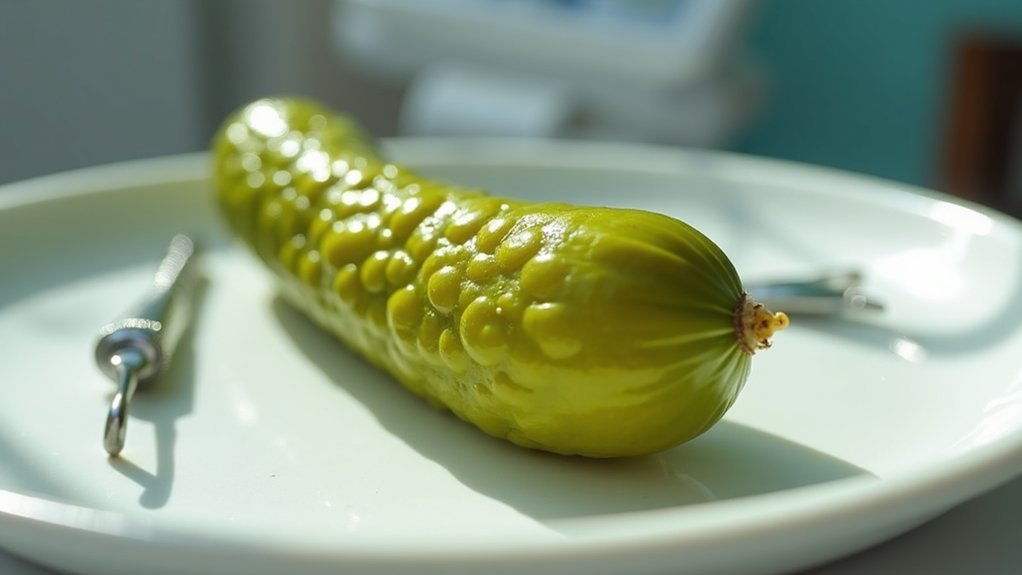

Pickles can be bad for your teeth due to their high acidity from vinegar, which erodes enamel. This erosion increases your risk of tooth decay and sensitivity, especially if you consume pickles frequently. Always wait at least 30 minutes before brushing your teeth after eating pickles to avoid further damage. Pairing them with non-acidic foods can help protect your enamel. If you want to know more about how pickles impact dental health, keep exploring.
Key Takeaways
- Pickles are acidic, which can erode tooth enamel and increase the risk of decay and sensitivity.
- Consuming pickles more than once daily significantly raises the risk of enamel wear by 85%.
- It’s essential to wait at least 30 minutes after eating pickles before brushing your teeth.
- Pairing pickles with non-acidic foods, like cheese, can help mitigate their harmful effects.
- Regular dental check-ups are crucial for detecting early signs of enamel erosion caused by acidic foods.
Why Are Pickles Bad for Teeth?
Pickles, with their tangy crunch, might be a favorite snack, but they can pose serious risks to your dental health. Their acidic nature, primarily due to vinegar, can erode tooth enamel over time, increasing the likelihood of decay and sensitivity.
Studies reveal that consuming pickles more than once daily raises the risk of enamel wear by 85%. To protect your oral health, it’s essential to wait at least 30 minutes after eating pickles before brushing your teeth.
Additionally, pairing them with non-acidic foods can help mitigate their harmful effects, allowing you to enjoy this snack while safeguarding your smile.
Effects of Enamel Erosion
When enamel erosion occurs, you may experience increased tooth sensitivity, making it uncomfortable to enjoy hot, cold, or sweet foods. The impact on your dental health can be significant.
- Thinning enamel leads to a yellowish appearance.
- Increased risk of tooth decay due to compromised protection.
- Once lost, enamel can’t regenerate.
- Preventive care and moderation in acidic food consumption are essential.
- Regular dental check-ups help detect early signs of erosion.
Being aware of these effects will empower you to take proactive steps to protect your teeth and maintain ideal dental health.
Safeguard Your Smile From Pickles
Maintaining strong enamel is vital for overall dental health, especially when enjoying acidic foods like pickles. To safeguard your smile, avoid brushing your teeth immediately after eating pickles; wait at least 30 minutes to prevent enamel erosion.
Pairing pickles with non-acidic foods, like low-fat cheese, can neutralize their acidic effects. Chewing sugarless gum with xylitol boosts saliva production, further protecting your enamel.
Staying hydrated by drinking water or consuming dairy products after eating pickles helps rinse away harmful acids.
Finally, regular dental check-ups are important for early detection of any enamel erosion, ensuring effective dental care.
Can I Still Eat Pickles?
Yes, you can still enjoy pickles, but moderation is key to protecting your teeth.
Pairing them with non-acidic foods can help offset their acidity and reduce the risk of enamel erosion.
Moderation Is Essential
While pickles can be a tasty addition to your diet, enjoying them in moderation is essential for your dental health.
Frequent consumption can greatly increase the risk of enamel erosion. To protect your teeth, consider these tips:
- Limit pickles to once a day.
- Pair pickles with non-acidic foods.
- Wait at least 30 minutes before brushing.
- Rinse with water or chew sugarless gum afterward.
- Schedule regular dental check-ups.
Pairing With Non-Acidic Foods
To enjoy pickles without compromising your dental health, pairing them with non-acidic foods can make a significant difference. Foods like low-fat cheese or broccoli help neutralize acidity, supporting a low pH balance in your mouth. This practice protects the softer enamel from erosion, allowing you to savor pickles safely.
Additionally, consider consuming pickles with fruits like mango, which can also mitigate their acidic effects. Drinking water or dairy while enjoying pickles washes away the acid, further enhancing your dental protection.
Signs of Weakened Enamel
You might notice signs of weakened enamel if you experience increased tooth sensitivity, particularly to hot or cold foods and drinks.
Discoloration, such as a yellowish tint to your teeth, can occur as the underlying dentin becomes more visible due to enamel erosion.
Additionally, if your teeth are more prone to chips and fractures, it’s essential to assess your enamel health and seek professional advice.
Tooth Sensitivity Indicators
How can you tell if your tooth enamel is weakening? Recognizing tooth sensitivity indicators is vital for maintaining your oral health.
Pay attention to these signs:
- Increased sensitivity to hot or cold foods and drinks
- Pain when consuming sweet or acidic foods
- A higher likelihood of chips or fractures in teeth
- A yellowish appearance as dentin becomes visible
- Regular discomfort after eating
If you notice these symptoms, it’s essential to visit your dentist.
Early detection of enamel erosion can help prevent further damage and promote better dental health.
Take action now to protect your smile!
Discoloration and Weakness
As enamel weakens, discoloration becomes more pronounced, signaling a potential issue that needs attention. Yellowish dentin exposure indicates enamel erosion, which can also increase tooth sensitivity. You may notice that hot or cold foods trigger discomfort, a sign your enamel is compromised. Regular dental visits help monitor enamel health and catch any issues early.
| Signs of Weakened Enamel | Consequences |
|---|---|
| Discoloration | Increased cavity risk |
| Tooth sensitivity | Vulnerability to fractures |
| Enamel erosion | Need for restorative care |
Addressing these signs can prevent further complications.
Are There Pickles That Won’t Harm Teeth?
Are there pickles that can actually be beneficial for your teeth? Yes, certain pickles can promote oral health, particularly those containing L. plantarum K41, a strain found in Sichuan pickles. This probiotic may help reduce cavities while enduring the pickling process.
Certain pickles, like Sichuan pickles with L. plantarum K41, may actually promote oral health and reduce cavities.
Here are some considerations:
- Fermented pickles with healthy bacteria can inhibit tooth decay.
- Sichuan pickles show promise but should be consumed in moderation.
- Most pickles remain highly acidic, risking enamel damage.
- Pair pickles with non-acidic foods for better dental health.
- Always balance your diet to protect your teeth while enjoying pickles.
Dental Care Recommendations
While pickles can offer some dental benefits, maintaining ideal oral health requires a thorough approach to dental care. Here are key recommendations to support your dental hygiene:
| Action | Frequency | Purpose |
|---|---|---|
| Schedule dental checkups | Twice a year | Monitor enamel health |
| Professional cleanings | Every six months | Remove plaque and tartar |
| Fluoride treatments | As recommended | Strengthen enamel over time |
| Use soft-bristled toothbrush | Daily | Clean teeth without damage |
About the Author
Dr. James D. Geer is a dedicated dentist committed to enhancing your dental health. With a Doctor of Dental Surgery degree from the University of Texas at Houston, he focuses on building relationships and open communication with his patients.
- Emphasizes the importance of the outer layer of the tooth that protects your enamel
- Offers modern techniques and technologies in his practice
- Pursues ongoing education to stay informed
- Provides a variety of dental services
- Welcomes consultations to address your specific needs
You can trust Dr. Geer to prioritize your dental health with professionalism and care.