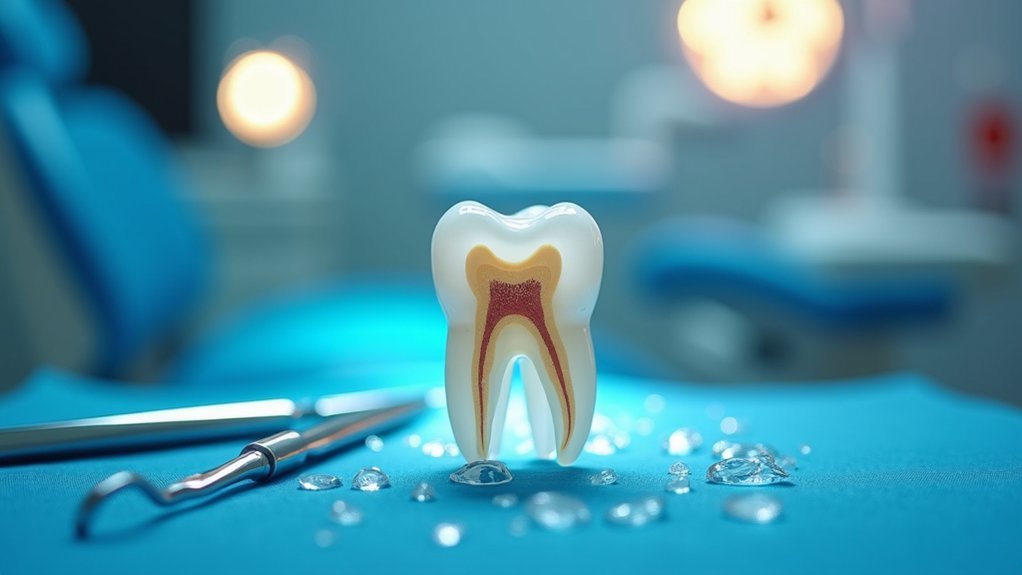

Yes, root canal-treated teeth are generally harder to extract. Their structural integrity is compromised, making them more brittle and susceptible to fractures. Previous restorative materials can obscure natural anatomy, complicating the procedure. Additionally, inflammation or infection heightens extraction difficulty. Specialized tools and techniques are often necessary, and surgical expertise is important to manage these complex extractions effectively. For insights into the extraction process and potential complications, you might want to explore more on this topic.
Key Takeaways
- Root canal-treated teeth have compromised structural integrity, making them more brittle and prone to fracture during extraction.
- Restorative materials from previous treatments can obscure natural tooth anatomy, complicating the extraction process.
- Inflammation or infection around root canal teeth can increase extraction difficulty and risk complications.
- Specialized instruments and techniques are often necessary for extracting root canal-treated teeth compared to regular teeth.
- Oral surgeons have advanced training to manage the complexities of extracting root canal teeth, improving outcomes.
Understanding Root Canal Treatment
When a tooth becomes severely damaged or infected, understanding root canal treatment is essential for preserving your natural teeth.
Understanding root canal treatment is crucial for saving severely damaged or infected teeth.
This dental procedure aims to save the tooth by removing the infected pulp and nerves from the root canals. The dentist cleans and seals the area to maintain the natural tooth structure, preventing the need for extraction.
Root canal treatment is indicated for deep decay, multiple dental procedures, or cracks exposing the pulp to infection.
After treatment, a dental crown often protects the root canal-treated tooth, though it may introduce potential complications if extraction of root canal becomes necessary in the future.
The Extraction Process
After undergoing root canal treatment, you might find yourself facing the possibility of tooth extraction due to complications such as fractures or persistent infections.
The extraction process for root canal-treated teeth can be complex, as alterations in tooth structure, including brittleness and filling materials, complicate removal.
Dental restorations like crowns may increase resistance, requiring specialized tools and advanced techniques to navigate calcified canals.
Inflammation or infection in surrounding tissues necessitates careful management to minimize trauma.
Your dentist will employ effective methods to guarantee a successful extraction, prioritizing the integrity of surrounding tissues while addressing the challenges posed by the weakened tooth structure.
Challenges With Extracting Root Canal Teeth
Extracting root canal-treated teeth presents unique challenges due to compromised structural integrity and the presence of restorative materials like crowns or posts.
These factors increase resistance during removal and heighten the risk of fractures.
Additionally, inflammation or infection in surrounding tissues can complicate the extraction process and recovery, making experienced dental professionals essential for successful outcomes.
Compromised Structural Integrity
Because root canal-treated teeth often lose their nerve and blood supply, their structural integrity can be considerably compromised, leading to increased brittleness.
This brittleness makes them more prone to fracture during the extraction process. The removal of the infected pulp alters the tooth’s anatomy, which can complicate navigation of the roots, especially if calcified canals are present.
Additionally, the presence of filling materials from the root canal procedure may create a rigid structure, necessitating specialized tools or techniques for effective removal.
Careful handling becomes essential to avoid damaging surrounding tissues during extraction of a compromised structural integrity root canal-treated tooth.
Presence of Restorative Materials
When restorative materials like crowns or posts are present on a root canal-treated tooth, they pose significant challenges during extraction. The rigid structure of these dental restorations increases resistance in the extraction process, often complicating the procedure.
- Filling materials can make the tooth less flexible and more prone to fracture.
- Restorative materials may obscure the tooth’s natural anatomy, complicating the extraction approach.
- The altered structural integrity often necessitates specialized tools for effective extraction.
These factors can lead to a more complex extraction experience, requiring careful planning and technique to guarantee successful removal while minimizing complications.
Infection and Inflammation Risks
Infection and inflammation surrounding a root canal tooth can considerably complicate the extraction process, increasing the risk of complications.
When infection is present, it may spread to adjacent structures, requiring careful attention during the dental procedure to guarantee complete removal of infected tissues.
Inflammation can heighten sensitivity and pain, making the extraction more challenging for both you and your dentist.
If an infection exists, postponing the extraction until it’s resolved is vital to minimize risks.
Proper assessment and management of these factors are essential for achieving a successful outcome when extracting root canal teeth, ensuring a safe and effective procedure.
Comparing Difficulty: Root Canal vs. Regular Teeth Extraction
Though both root canal and regular teeth extractions aim to remove problematic teeth, they present distinct challenges that can affect the extraction process.
- Root canal-treated teeth often have compromised structural integrity, making them more brittle.
- Specialized instruments and techniques are usually needed to tackle complexities from dental restorations.
- Complications may arise from the altered structure, which can obscure the tooth’s natural anatomy.
In general, extracting root canal teeth can be more difficult due to these factors, requiring careful consideration of the surrounding tissues and techniques to remove them effectively.
Expect a more complex dental procedure compared to regular teeth extractions.
Factors Affecting Extraction Difficulty
Extracting root canal-treated teeth involves various factors that can considerably influence the procedure’s difficulty.
The compromised structural integrity of a root canal tooth makes it more brittle, complicating the extraction process. Additionally, filling materials and dental restorations, such as crowns, can increase resistance and require advanced techniques to avoid fractures.
Altered anatomy from previous treatments raises the risk of root fractures, necessitating careful manipulation. Moreover, inflammation or infection in surrounding tissues can exacerbate extraction difficulty, impacting both the ease and success of the procedure.
Understanding these factors is essential for effective planning and execution during tooth extractions.
Tools and Techniques in Tooth Extraction
When you’re extracting a tooth, specialized instruments like forceps and elevators are vital for traversing complex cases, especially those involving root canal-treated teeth.
Advanced surgical techniques, including the use of surgical burs and piezoelectric devices, help minimize trauma to surrounding tissues.
Selecting the appropriate tools and methods is essential for ensuring a successful extraction with minimal complications.
Specialized Extraction Instruments
In modern dentistry, specialized extraction instruments play a crucial role in ensuring the safe and efficient removal of root canal-treated teeth.
These tools enhance precision and minimize trauma during the extraction process.
- Periotomes help sever periodontal ligaments, easing the extraction.
- Sectioning techniques allow you to divide brittle teeth into smaller pieces, preventing fractures.
- Surgical burs and piezoelectric devices provide advanced options for challenging extractions.
Advanced Surgical Techniques
Utilizing advanced surgical techniques can greatly improve the outcomes of tooth extractions, particularly for root canal-treated teeth.
Experienced dental professionals often rely on precise surgical techniques and specialized instruments, such as surgical burs and piezoelectric devices, to navigate the unique anatomy of these teeth.
Sectioning techniques can facilitate extracting a root by dividing the tooth into smaller pieces, minimizing the risk of fracturing.
Tailored approaches, including the use of periotomes, help manage the challenges of extraction while minimizing trauma to surrounding tissues.
Importance of Surgical Expertise
While many general dentists can perform tooth extractions, the importance of surgical expertise becomes clear, especially when dealing with root canal-treated teeth.
Oral surgeons possess advanced training and specialized techniques vital for managing these complex extractions. Their expertise helps preserve surrounding bone, essential for future implants, and minimizes complications like leaving tooth fragments or damaging adjacent teeth and nerves.
Oral surgeons bring specialized expertise to complex extractions, ensuring bone preservation and minimizing complications for optimal outcomes.
- Advanced training in oral and maxillofacial procedures
- Specialized instruments designed for altered tooth anatomy
- Ability to adapt techniques based on tooth condition
Collaborating with an oral surgeon guarantees a safer, more effective extraction process for root canal teeth.
Potential Complications During or After Extraction
Although tooth extraction is a common procedure, several potential complications can arise during or after the extraction of root canal-treated teeth. Understanding these risks helps you prepare for the procedure and promote smoother healing.
| Complication | Description | Impact on Healing |
|---|---|---|
| Infection | Risk of infection at the extraction site | Delayed healing |
| Damage | Possible damage to nearby teeth or nerves | Increased discomfort |
| Dry Socket | Loss of blood clot causing persistent pain | Extended recovery time |
Be aware of swelling, bruising, and temporary difficulty in mouth opening, all of which may affect your comfort and healing.