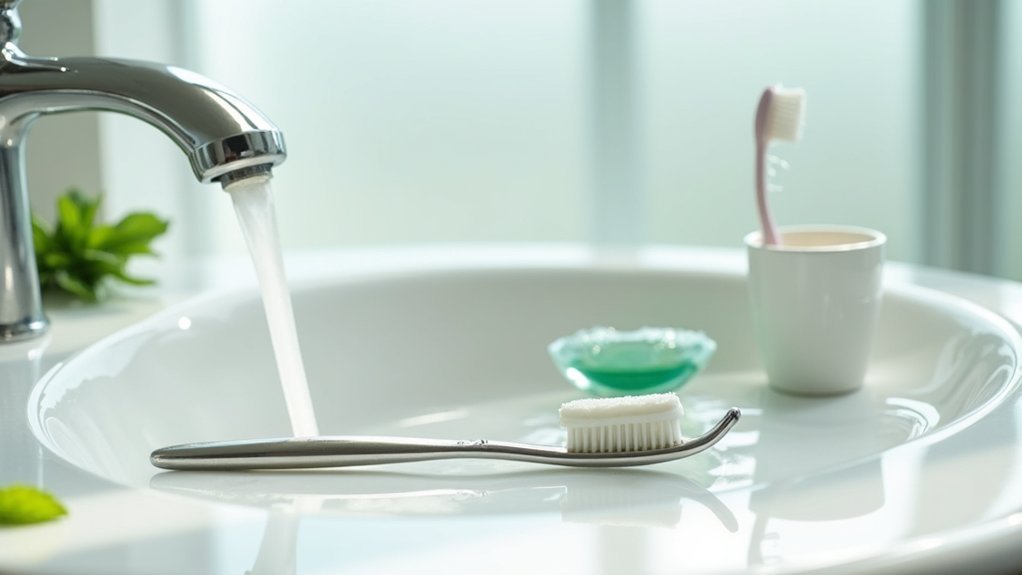

You should wait a few hours after scaling before brushing your teeth to allow your gums to recover properly. Brushing too soon can irritate your gums and may cause discomfort or bleeding. When you do resume brushing, use a soft-bristled toothbrush and gentle circular strokes to protect sensitive areas. It’s important to follow any specific aftercare instructions from your dental professional to guarantee ideal gum health. Discover more about post-scaling care to aid your recovery.
Key Takeaways
- Wait a few hours after scaling before brushing to allow gums to recover.
- Use a soft-bristled toothbrush and gentle circular strokes to avoid irritation.
- Avoid flossing for at least 24 hours to support gum healing.
- Choose fluoride toothpaste for enamel remineralization and sensitivity relief if needed.
- Focus on gentle oral hygiene practices to prevent plaque buildup during recovery.
Understanding the Importance of Post-Scaling Care
When you undergo dental scaling, understanding the importance of post-scaling care is essential for your recovery.
Proper oral hygiene plays a significant role in healing your gums. You should wait a few hours before brushing to minimize irritation. When you do brush, use a soft-bristled toothbrush and gentle strokes to avoid aggravating sensitive areas.
Following the advice of dental professionals guarantees you maintain ideal gum health and prevents plaque buildup.
The Right Time to Brush After Scaling
After dental scaling, it’s important to wait a few hours before brushing your teeth to allow your gums to recover from any swelling or sensitivity.
Brushing too soon can irritate your gums, leading to discomfort or even bleeding.
Once the waiting period is over, use a soft-bristled toothbrush and gentle techniques to protect your sensitive gums and promote healing.
Wait After Treatment
It’s important to give your gums time to recover following a scaling treatment before resuming your brushing routine.
Wait at least a few hours after scaling to minimize irritation and swelling. Immediate brushing can increase sensitivity, which might peak within 48 to 72 hours post-treatment.
Dental professionals typically recommend using a soft-bristled toothbrush and gentle strokes to avoid further gum irritation.
Additionally, it’s wise to wait about 24 hours before flossing to support healing.
Prioritizing oral hygiene through careful brushing and rinsing is essential for your gums’ recovery and overall dental health.
Gentle Brushing Techniques
Allowing your gums to recover is just the first step in maintaining oral health after scaling.
After a few hours, you can resume brushing, but it’s essential to do so gently. Use a soft-bristled toothbrush to prevent further irritation.
Employ gentle, circular strokes, avoiding aggressive motions that could aggravate your gums and lead to recession. This gentle approach supports the healing process and promotes long-term gum health.
Always follow your dentist’s specific aftercare instructions regarding timing and technique for brushing.
Prioritizing these gentle brushing techniques guarantees ideal recovery and helps maintain your overall oral health.
Recommended Brushing Techniques
When you’ve just undergone scaling, using the right brushing techniques is essential for maintaining oral health and comfort.
Opt for a soft-bristled toothbrush to gently clean your teeth, minimizing irritation to sensitive gums. Employ gentle, circular strokes to avoid aggravating any swelling or sensitivity.
It’s best to wait at least a few hours after scaling before brushing, allowing your gums to recover from any trauma. Brush slowly and deliberately, ensuring thorough cleaning without discomfort.
Finally, rinse your mouth thoroughly with water after brushing to remove any residual toothpaste and debris for ideal gum health and effective oral hygiene practices.
Choosing the Right Toothbrush and Toothpaste
When choosing a toothbrush and toothpaste after scaling, it’s vital to opt for a soft-bristled toothbrush to protect your sensitive gums.
Pair it with fluoride toothpaste to shield your teeth from decay and aid in enamel remineralization.
If you’re experiencing increased sensitivity, consider a toothpaste specifically formulated for that purpose, ensuring your oral care routine remains effective and comfortable.
Soft-Bristled Toothbrush Importance
Choosing the right toothbrush and toothpaste is essential after scaling, as it directly impacts your oral health and comfort.
A soft-bristled toothbrush minimizes irritation to sensitive gums, preventing discomfort and bleeding. By employing gentle brushing techniques, you can effectively clean your teeth while supporting the healing of gum tissue.
Opt for a toothbrush with a comfortable grip and a small head for ideal cleaning efficiency, allowing you to reach all areas without excessive pressure.
Pairing your soft-bristled toothbrush with fluoride toothpaste promotes enamel remineralization, ensuring your teeth remain protected and fostering your overall oral health in the recovery phase.
Fluoride Toothpaste Benefits
Fluoride toothpaste offers significant benefits, especially after dental procedures like scaling, as it effectively strengthens tooth enamel and helps prevent decay.
By incorporating it into your oral care routine, you promote enamel remineralization, which aids recovery and enhances your overall oral health.
Pairing fluoride toothpaste with a soft-bristled toothbrush is essential, especially if your gums are sensitive post-treatment.
If you experience sensitivity, consider using a toothpaste designed specifically for that purpose.
Remember to rinse your mouth thoroughly after brushing to eliminate any residual paste, ensuring you maximize the benefits of fluoride and maintain ideal dental health between checkups.
Proper Brushing Technique
Selecting the right toothbrush and toothpaste is essential for maintaining ideal oral health, especially after dental treatments like scaling.
Choose a soft-bristled toothbrush to minimize irritation and protect sensitive gums. Opt for fluoride toothpaste to help remineralize enamel and guard against decay.
When brushing, use gentle strokes in a circular motion to clean effectively without aggravating gum sensitivity. After scaling, wait a few hours before brushing to allow any swelling to subside, promoting better healing.
Finally, rinse thoroughly with water to eliminate residual toothpaste and debris, ensuring the best oral hygiene for your teeth and gums.
Flossing After Scaling: When to Resume
After scaling, it’s vital to give your gums time to heal before resuming flossing. Waiting about 24 hours helps reduce irritation and discomfort.
Here’s how to reintroduce flossing effectively:
- Wait at least 24 hours to allow your gums to stabilize post-scaling.
- Use wax-coated floss to minimize irritation during flossing.
- Start gently, gradually increasing pressure as your gums heal.
- Maintain a consistent routine to support oral health and prevent plaque buildup.
Dietary Considerations Post-Scaling
To promote ideal healing after scaling, it’s crucial to pay attention to your diet. Focus on a diet and eating plan rich in soft, nutrient-dense foods like fruits, vegetables, and whole grains to support healthy gums.
Limit snacking to once or twice daily to maintain oral health and minimize irritation. Avoid hard, crunchy, hot, cold, chewy, spicy, and acidic foods for at least 48 hours post-scaling.
Rinse your mouth thoroughly after meals to eliminate food particles and maintain hygiene. Staying hydrated by drinking plenty of water will facilitate healing and reduce the risk of infection in treated areas.
Scheduling Follow-Up Appointments
How often should you schedule follow-up appointments after scaling?
Regular follow-ups are essential for monitoring gum health and ensuring your oral health stays on track.
Consider these guidelines for scheduling:
- Every six months for routine dental check-ups and cleaning.
- As recommended for personalized follow-up appointments based on your scaling results.
- After multiple sessions if you have significant periodontal disease.
- Anytime you notice changes in your gum health or overall oral condition.