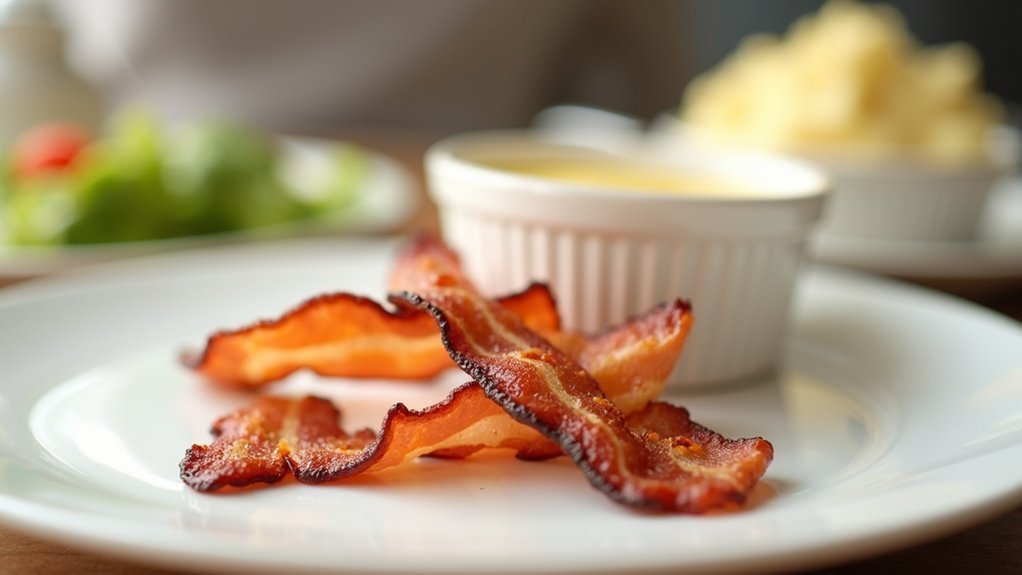

After wisdom teeth removal, you should avoid eating bacon for at least 1–2 weeks. Chewy foods can exert pressure on healing tissues and risk complications like dry socket. Instead, focus on a soft food diet that includes options like yogurt and scrambled eggs. These alternatives are gentle on your mouth while providing essential nutrients for recovery. If you want to know more about what to eat during your healing process, continue exploring.
Key Takeaways
- Avoid eating bacon for at least 1–2 weeks post-surgery to prevent complications like dry socket.
- Chewy foods like bacon can irritate healing tissues and dislodge essential blood clots.
- Focus on a soft food diet, including yogurt and mashed potatoes, for optimal recovery.
- After a week, you may introduce finely chopped or soft-cooked bacon in small amounts.
- Always consult your dentist or oral surgeon before resuming hard or chewy foods.
Understanding Post-Operative Care
After your wisdom teeth removal, it’s vital to prioritize post-operative care to guarantee a smooth recovery.
During the first week, focus on a soft food diet to avoid irritating the surgical area. Foods like yogurt, applesauce, and smoothies are ideal as they provide essential nutrients without causing discomfort.
Avoid hard or crunchy foods to prevent dry socket, a painful complication. It’s important to eat nutrient-dense meals to support tissue regeneration.
Why to Avoid Chewy Foods
While you may be tempted to indulge in your favorite chewy foods, it’s crucial to avoid them during your recovery from wisdom teeth removal. Chewy foods can exert pressure on healing tissues, risking injury and prolonging your recovery time. They may irritate surgical sites and even dislodge blood clots essential for healing, increasing the risk of complications like dry socket. Additionally, discomfort from jaw stiffness can make chewing difficult. To guarantee a smooth recovery, steer clear of chewy items for at least 1–2 weeks post-surgery.
| Risks of Chewy Foods | Impact on Healing | Recommended Duration |
|---|---|---|
| Increased pain | Delayed recovery | 1–2 weeks |
| Blood clot dislodgment | Potential dry socket | |
| Irritation of sites | Longer inflammation |
Safe Alternatives to Bacon
If you’re looking for safe alternatives to bacon during your recovery from wisdom teeth removal, there are plenty of options that can satisfy your cravings without compromising your healing process.
Try soft-cooked fish like salmon or crab cakes, which are high in protein and easy to chew. You can also enjoy soft scrambled eggs or creamy mashed potatoes for added nutrition.
Yogurt is another excellent choice, offering a smooth texture that supports digestive health.
Mashed avocado can be a delicious spread on soft bread after a few days, providing healthy fats and helping to prevent dry sockets.
Monitoring Your Recovery
Monitoring your recovery is essential for ensuring a smooth healing process after wisdom teeth removal. Keep an eye on your extraction sites for signs of complications, such as increased swelling, persistent bleeding, or severe pain.
Stick to soft foods for the first week to minimize irritation. Regularly check for unusual symptoms, like excessive discharge, and consult your oral surgeon if needed.
Track your recovery stages, noting that swelling typically peaks around days 2–3. Maintain a journal documenting pain levels and dietary adherence to discuss during follow-up appointments, allowing for personalized advice and better recovery management.
When to Resume Normal Eating
After your wisdom teeth removal, knowing when to resume normal eating is essential for a smooth recovery.
Understanding when to return to regular eating after wisdom teeth removal is crucial for a successful recovery.
For the first few days, stick to soft foods like yogurt or scrambled eggs to speed up recovery and avoid complications.
You should wait at least 1–2 weeks before attempting to eat hard foods, including bacon, as they can dislodge blood clots and risk dry socket.
After about a week, if you’re comfortable, you can introduce finely chopped or soft-cooked bacon in small amounts.
Always consult your dentist or oral surgeon to guarantee you’re fully healed before reintroducing difficult-to-chew foods.