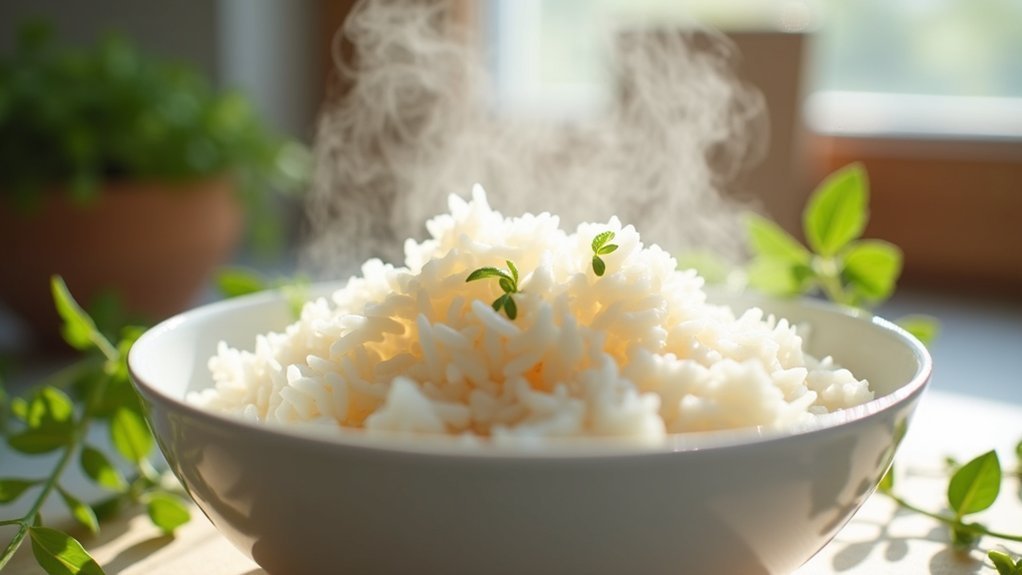

Yes, you can eat rice a week after wisdom teeth removal, but make certain it’s very soft and well-cooked. Overcooked varieties, like jasmine or basmati, are easier on sensitive gums. Start gently and monitor your comfort as you reintroduce it. Remember to follow your dentist’s instructions carefully to avoid complications. Proper care during your recovery is essential, and understanding the right steps can help guarantee a smooth healing process. More tips on your diet are available.
Key Takeaways
- It is advisable to wait at least one week post-surgery before reintroducing rice into your diet.
- Start with overcooked, soft rice to minimize pressure on sensitive gums.
- Softer rice varieties like jasmine or basmati are recommended for easier consumption.
- Monitor your comfort level when eating rice and check for any irritation at extraction sites.
- Always consult your oral surgeon for personalized dietary recommendations during recovery.
Why Rice Is a Popular Post-Wisdom Teeth Removal Food
After wisdom teeth removal, you might find that rice stands out as an excellent food choice for recovery.
Its mushy consistency, especially when overcooked, provides a gentle option for your sensitive mouth, minimizing discomfort during the healing process.
Rice is a versatile comfort food that can be prepared as porridge or with broth, enhancing its appeal and ease of consumption.
Rice serves as a soothing comfort food, easily transformed into porridge or broth for effortless eating.
Rich in carbohydrates, it offers essential energy needed for recovery while being easy on extraction sites.
The Importance of Following Your Dentist’s Instructions
Choosing the right foods, like rice, is only part of a successful recovery following wisdom teeth removal. Following your dentist’s instructions during your post-operative recovery is vital for healing.
A diet after wisdom teeth removal typically emphasizes soft foods to protect your healing gums and avoid hard foods that could dislodge blood clots. These clots are essential for preventing complications such as dry socket and infection. Ignoring your dentist’s guidance can prolong recovery and increase discomfort.
Regular consultations help tailor your diet to your healing progress, ensuring you shift smoothly back to a regular diet while maintaining good oral hygiene.
The First Few Days: Sticking to Soft Foods
In the first few days after your wisdom teeth removal, it’s crucial to stick to soft foods to ease discomfort and promote healing.
Foods like yogurt, creamy soups, and mashed potatoes are ideal, as they require little to no chewing.
Additionally, staying hydrated is essential, but remember to avoid straws to protect your healing sites.
Recommended Soft Foods
While you’ve just undergone wisdom teeth removal, focusing on soft foods is crucial for your recovery.
In the initial days, stick to options like yogurt, smoothies, and creamy soups to minimize discomfort and promote healing. Avoid hard foods, which can disturb blood clot formation and lead to complications like dry socket.
Recommended soft foods include mashed potatoes, applesauce, and scrambled eggs, as they require minimal chewing.
As your healing stages progress, you can gradually reintroduce slightly firmer foods. Soft, well-cooked rice might be acceptable later, but make sure it’s mushy to keep your post-surgery diet safe and effective.
Importance of Hydration
Hydration plays a vital role in your recovery after wisdom teeth removal, especially during the first few days when you’re sticking to soft foods.
Drinking plenty of fluids, primarily water, is essential to avoid dehydration and promote healing. High-water-content soft foods like smoothies and broths can also aid hydration while providing necessary nutrients.
Remember to avoid straws, as the suction can dislodge blood clots, increasing the risk of complications like dry socket.
Monitoring your fluid intake is important; adequate hydration can help control swelling and enhance your comfort during this initial healing phase around the surgical site.
When Can You Start Eating Rice After Wisdom Teeth Removal?
Wondering when you can start eating rice after your wisdom teeth removal?
It’s generally recommended to wait at least one week post-surgery before reintroducing rice into your diet.
Begin with overcooked, soft rice to minimize pressure on your healing gums and avoid discomfort. Softer varieties like jasmine or basmati are ideal, as they’re easier to chew and digest.
Start with overcooked, soft rice like jasmine or basmati to ease pressure on healing gums and ensure comfort.
As you progress in your healing, you can gradually shift to slightly less overcooked rice between 10 to 14 days after surgery.
Always consult your oral surgeon for personalized guidance on when it’s safe to resume eating rice after wisdom teeth removal.
Tips for Eating Rice Post-Surgery
When you’re ready to eat rice post-surgery, focus on softer varieties like jasmine or basmati.
These options are easier on your gums and help prevent discomfort.
Always monitor how you feel while eating; if you notice any pain, switch back to softer foods until you heal fully.
Choose Soft Rice Varieties
Choosing the right type of rice after wisdom teeth removal can considerably impact your comfort during recovery. Opt for soft rice varieties to ease your eating experience.
Consider these tips:
- Select jasmine or basmati rice for easier chewing.
- Confirm the rice is well-cooked, achieving a mushy texture to protect your healing gums.
- Cook with extra water or broth for a porridge-like consistency that’s gentle on your mouth.
- Avoid spicy seasonings that could irritate extraction sites.
Always monitor for any pain or discomfort as you reintroduce rice into your diet, adjusting as needed to support your recovery period.
Monitor for Discomfort
As you start eating rice after wisdom teeth removal, it’s crucial to monitor for any discomfort that may arise.
Begin with overcooked, softer varieties to ease pressure on your healing gums. If you experience discomfort, consider delaying rice and opting for other soft foods instead.
Gradually shift to slightly firmer rice as your healing progresses over the next couple of weeks.
Maintain good oral hygiene by gently rinsing your mouth with warm salt water after meals to eliminate food particles and prevent irritation at the extraction site.
Always consult your dentist if you have concerns about your recovery or complications.
Monitoring Your Recovery
Monitoring your recovery after wisdom teeth removal is essential for ensuring a smooth healing process. Follow these steps:
Monitoring your recovery after wisdom teeth removal is crucial for a smooth healing process.
- Check comfort level: Assess how you feel when reintroducing foods like rice, starting with softer varieties.
- Observe extraction sites: Regularly look for food particles or irritation to maintain good oral hygiene.
- Record experiences: Keep track of any discomfort while eating rice to guide your dietary choices.
- Listen to your body: Follow your dentist’s dietary recommendations and be mindful of any signs of increased pain or swelling.