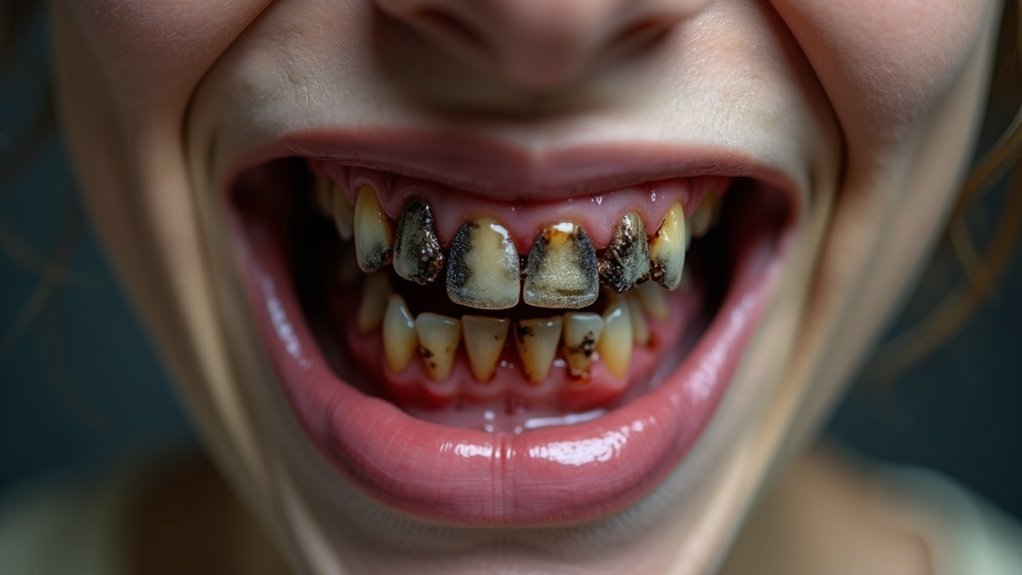

Yes, rotten teeth can cause a sore throat. Tooth infections introduce bacteria that may spread through shared nerve pathways, leading to inflammation in the throat. Symptoms like swollen lymph nodes and jaw pain often accompany throat discomfort, especially if an upper molar is infected. Prompt treatment is essential to prevent complications like abscesses and worsening throat pain. Understanding the connection and potential risks can help you take the necessary steps for effective oral health management.
Key Takeaways
- Rotten teeth can lead to infections that cause inflammation, potentially resulting in a sore throat.
- Bacteria from infected teeth may travel to the throat, triggering discomfort and swelling.
- Symptoms of tooth infections include persistent pain, swollen gums, and sometimes a sore throat.
- Prompt dental care is crucial to prevent infections from worsening and affecting the throat.
- Maintaining good oral hygiene can help prevent tooth decay and reduce the risk of throat pain.
The Connection Between Tooth Infections and Sore Throats
When you have a tooth infection, it’s not just your mouth that suffers; it can also lead to a sore throat. An infected tooth can cause inflammation in surrounding tissues, making you feel discomfort.
As the tooth infection spreads, bacteria can enter the throat via shared nerve pathways, resulting in a sore throat caused by irritation. Symptoms of an infected tooth often include swollen lymph nodes and facial swelling.
Prompt treatment is essential to prevent complications like dental abscesses, which can exacerbate throat pain. Understanding this connection highlights the importance of addressing dental issues before they affect your overall health.
Understanding Tooth Infections
Tooth infections typically stem from untreated cavities, allowing bacteria to invade the tooth pulp.
You may experience symptoms like persistent pain, swollen gums, and even fever, indicating the infection’s severity.
Recognizing these signs early can help prevent complications that might require more intensive treatment.
Causes of Tooth Infections
Numerous factors contribute to the development of tooth infections, primarily stemming from poor oral hygiene and untreated cavities. Understanding these causes can help prevent serious health issues.
Key contributors include:
- Untreated cavities, allowing bacteria to invade the tooth’s pulp
- Poor oral hygiene, leading to plaque and tartar buildup
- Impacted wisdom teeth, creating infection-prone gum tissue
If you neglect these issues, you might experience persistent tooth pain and, in severe cases, a sore throat due to bacterial infections.
Early dental intervention is essential to avoid complications like abscess formation and systemic health issues.
Symptoms of Tooth Infections
Recognizing the symptoms of a tooth infection is essential for timely intervention and treatment. You may experience persistent tooth pain, swollen gums, and bad breath, which indicate the presence of bacteria and possible pus.
Additionally, you might notice facial or jaw swelling, along with secondary symptoms like a sore throat, jaw pain, and difficulty swallowing. Fever can also accompany a tooth infection, signaling a potential spread that necessitates prompt dental evaluation.
Addressing these symptoms early is vital for maintaining your dental health and preventing serious complications, such as abscess formation and systemic health issues.
Causes of Tooth Infections
When bacteria invade the tooth pulp due to untreated cavities, it often sets the stage for a tooth infection.
Poor oral hygiene practices can exacerbate this risk, leading to various complications. Additionally, impacted wisdom teeth create infection-prone gum tissue.
Consider these causes:
- Untreated cavities allowing bacteria access to tooth pulp
- Infrequent brushing and flossing contributing to poor oral hygiene
- Compromised immune systems increasing susceptibility to infections
Recognizing these factors is vital for maintaining your oral health and preventing throat pain associated with dental issues.
Addressing these concerns can safeguard your overall health and well-being.
Signs of Tooth Infections
Tooth infections often manifest through a range of distinct signs that demand your attention.
You might experience persistent tooth pain, swelling in the gums, and a bad taste due to pus accumulation. Symptoms can include swollen lymph nodes, which may lead to sensations of a sore throat as the infection spreads.
If you notice a fever or facial swelling, it could indicate a more severe tooth infection, necessitating immediate dental evaluation.
Additionally, difficulty swallowing and sensitivity around the affected tooth can signal an underlying infection that might affect your throat.
Don’t ignore these signs, especially if untreated cavities are present.
How Dental Infection Spreads
Tooth infections can create direct pathways for bacteria to travel to your throat, leading to irritation and pain.
The close anatomical relationship between your upper molars and throat facilitates this spread, especially when inflammation is present.
Additionally, your immune response may worsen throat soreness as your body fights the infection, while nerve connections can cause confusion in pain signals, making you feel throat discomfort linked to your dental issues.
Pathways for Bacterial Spread
Dental infections can create numerous pathways for bacteria to spread, potentially leading to complications beyond the mouth.
When you have a tooth infection, especially in the upper molars, bacteria can infiltrate the bloodstream or lymphatic system, reaching the throat. This can result in:
- Sore throat symptoms from bacterial spread.
- Inflammation extending to surrounding tissues, causing throat pain or sinusitis.
- A compromised immune system, increasing susceptibility to throat infections.
Recognizing these pathways highlights the importance of addressing dental infections promptly to prevent further complications, including painful throat issues that may arise from seemingly localized dental problems.
Nerve Connection Misinterpretation
Infections within the mouth can lead to complex interactions between nerves that may confuse pain signals, resulting in discomfort that radiates to the throat. A tooth infection can cause inflammation, prompting the immune response to affect nearby structures.
The nerve connections between your mouth and throat can misinterpret signals, making you feel throat pain when the source is actually dental. Additionally, bacteria from the infection can travel to the throat, causing irritation and exacerbating symptoms like sore throat and difficulty swallowing.
This connection complicates your clinical picture, as a weakened immune system increases vulnerability to further throat infections.
Immune Response Impact
When bacteria invade the mouth, they can easily create pathways that lead to the throat, triggering an immune response that exacerbates irritation and pain. The close proximity of dental structures allows this spread, increasing your risk of throat pain.
- A compromised immune response heightens susceptibility to secondary infections.
- Pain signals from a tooth infection may misfire, causing throat discomfort.
- Signs of a spreading tooth infection include fever, facial swelling, and difficulty swallowing.
Being aware of these connections helps you understand the importance of addressing tooth infections promptly to prevent severe complications.
The Role of Inflammation
Inflammation plays an essential role in the body’s response to infection, especially in cases of rotten teeth.
When you have a tooth infection, localized inflammation in the gums can irritate surrounding tissues, potentially triggering a broader inflammatory response that contributes to a sore throat.
The proximity of decayed teeth means that swelling can easily affect your throat area. Additionally, inflammation may lead to swollen lymph nodes in your neck, mimicking sore throat symptoms.
If you leave untreated dental issues unaddressed, persistent inflammation can compromise your oral health, leading to complications that may require immediate dental intervention.
How Sore Throats Can Occur From Tooth Infections
The presence of a tooth infection can lead to unexpected complications, such as a sore throat.
A tooth infection can surprisingly cause complications like a sore throat, highlighting the importance of prompt dental care.
Infections in your teeth can irritate nearby tissues, causing referred pain in the throat area.
Here’s how tooth infections cause a sore throat:
- Bacteria from the infected tooth can spread, leading to throat inflammation.
- Proximity of upper molars to the throat increases the likelihood of sinusitis, manifesting as throat pain.
- Symptoms may include swollen lymph nodes and fever, indicating a systemic response.
Seeking prompt dental care is essential, as untreated tooth infections can escalate, making swallowing painful and increasing risks to your health.
Seeking Help for Tooth Infections
Recognizing the signs of a tooth infection is essential for your health, as prompt intervention can prevent serious complications.
If you experience symptoms like fever, facial swelling, or difficulty swallowing, seek dental help immediately; these may indicate that a tooth infection can spread, causing a sore throat. Ignoring these warning signs can lead to severe issues, including abscess formation.
Maintaining good oral hygiene and scheduling regular dental check-ups are vital in preventing tooth infections.
Professional dental treatment, such as drainage or root canal therapy, addresses the underlying issues and alleviates throat pain associated with infected teeth.
Don’t delay seeking care.