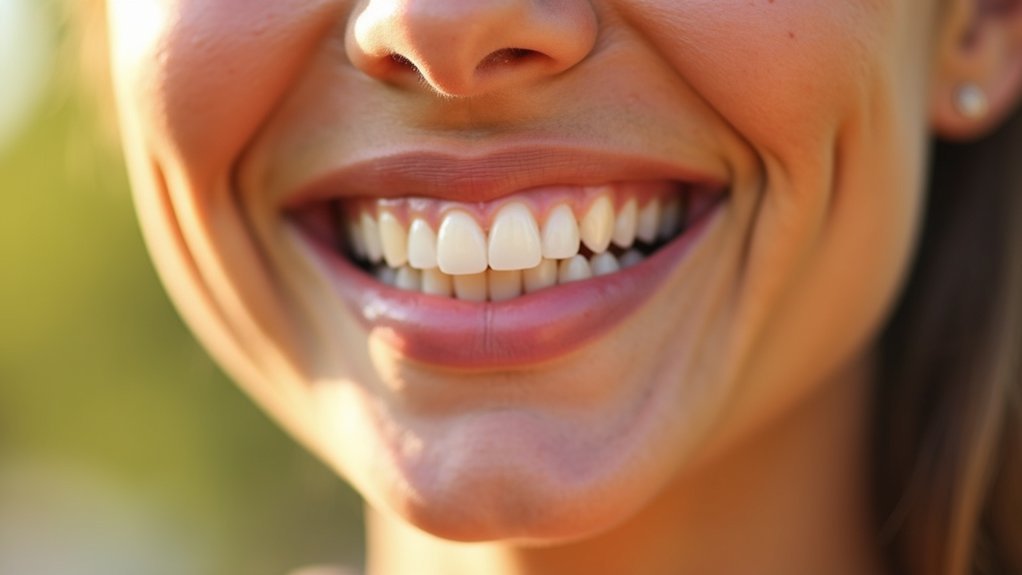

Weight loss can cause your teeth to shift due to changes in nutrition and jawbone density. Rapid dietary changes might lead to deficiencies in calcium and vitamin D, weakening your jaw structure and making your teeth less stable. Stress from dieting can increase bruxism, further contributing to misalignment. Signs like sensitivity or visible gaps in your smile may signal shifting teeth. Maintaining a balanced diet and proper oral care is essential, and there’s more you should know about protecting your teeth.
Key Takeaways
- Rapid weight loss can lead to nutritional deficiencies, affecting jawbone density and potentially causing teeth to shift.
- Insufficient calcium and vitamin D from restricted diets may weaken tooth stability and lead to misalignment.
- Stress from dieting can trigger bruxism, which exacerbates teeth shifting due to grinding and clenching.
- Changes in hydration levels during weight loss may affect saliva production, impacting oral health and tooth stability.
- Regular dental check-ups and a balanced diet are essential for maintaining oral health and preventing teeth from shifting during weight loss.
Factors Influencing Teeth Shifting During Weight Loss
When you undergo weight loss, several factors can influence the shifting of your teeth. Rapid dietary changes may lead to nutritional deficiencies, compromising tooth stability.
Insufficient calcium and vitamin D can weaken jawbone density, vital for supporting your teeth. Additionally, neglecting oral health routines while focusing on weight loss can increase the risk of dental issues, further contributing to tooth movement.
Stress from dieting might trigger bruxism, exacerbating misalignment. Maintaining a balanced diet and consistent oral care is essential to minimize these risks and guarantee your teeth remain stable throughout your weight loss journey.
How Weight Loss Affects Oral Health
Weight loss can greatly impact oral health, often in ways that aren’t immediately obvious.
As you lose weight, decreased jawbone density may compromise the stability of your teeth, increasing tooth mobility. Nutritional deficiencies from restrictive diets can weaken your jaw structure, while stress and anxiety may lead to bruxism, resulting in misalignment.
Additionally, changes in hydration levels can affect saliva production, essential for preventing tooth decay.
To safeguard your oral health during weight loss, regular dental check-ups are vital to monitor changes in your teeth and address any emerging issues promptly.
Prioritize a balanced diet to support overall health.
The Role of Nutrition in Dental Health
Nutrition plays a pivotal role in maintaining dental health, directly influencing the strength and stability of your teeth and gums.
To support oral health, consider the following:
- Calcium and Vitamin D: These nutrients are essential for jawbone density, vital during weight loss.
- Balanced Diet: A variety of whole foods rich in vitamins and minerals can prevent nutritional deficiencies that lead to tooth mobility.
- Antioxidants: Consuming antioxidants helps mitigate the negative effects of weight loss on dental stability.
Signs Your Teeth Are Shifting
Have you noticed any changes in your smile lately?
Teeth shifting can manifest as visible gaps or misalignment, often linked to changes in your jawbone density from weight loss. Increased sensitivity to hot or cold might indicate enamel damage, exposing nerve endings.
If your smile appears crooked or uneven, it could signal shifting, particularly if you’ve neglected dental care during dieting. Discomfort or pain in your teeth or gums may arise from movement, highlighting the importance of regular check-ups.
Ensuring proper nutritional support can help maintain your dental health and prevent further complications associated with shifting teeth.
Tips to Maintain Healthy Bone Density
To maintain healthy bone density, it’s essential to incorporate a balanced diet and regular physical activity into your routine. Here are three key tips:
- Consume calcium and vitamin D: These nutrients support bone density and tooth stability, important for jawbone health.
- Engage in weight-bearing exercises: Activities like walking or strength training improve bone density and promote overall health.
- Stay hydrated: Proper hydration aids saliva production, which is critical for oral health.
Additionally, aim for gradual weight loss and schedule regular dental check-ups to monitor bone health and address any potential issues related to tooth stability.