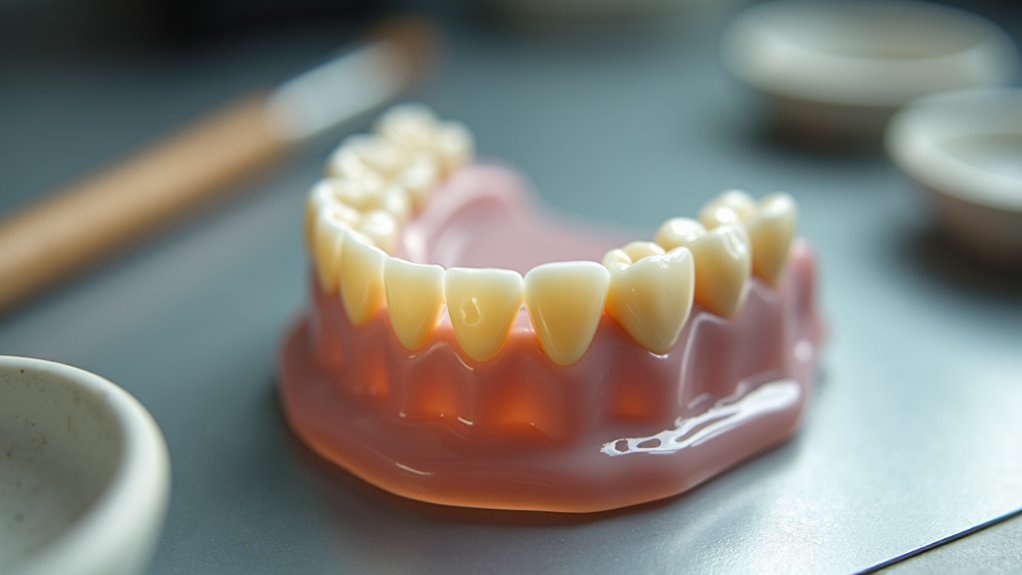

Yes, you can add teeth to a partial denture, but it depends on the material and condition of your existing dentures and remaining teeth. Acrylic dentures allow easier additions compared to cast metal ones. You’ll need a consultation with a dental prosthetist to evaluate your situation, discuss options, and determine the best approach. Understanding the process and cost is essential, so let’s explore how adding teeth works and what maintenance you’ll need afterward.
Key Takeaways
- Yes, it’s possible to add teeth to a partial denture, especially if it’s made from acrylic materials.
- The condition of remaining teeth and the denture’s fit influence the success of adding new teeth.
- Consulting a dental prosthetist is essential for evaluating options for adding teeth and necessary modifications.
- Costs for adding teeth typically start at $400 for the first tooth, with additional charges for extra teeth.
- Regular maintenance and adjustments are crucial to ensure the partial denture continues to fit properly after modifications.
Understanding Partial Dentures
When you lose one or more teeth, partial dentures can be an effective solution to restore both function and aesthetics.
These removable dental appliances replace missing teeth while preserving the integrity of your existing partial denture and remaining natural teeth. They come in various designs, including flexible options for comfort and traditional styles for more rigid support.
Maintaining the condition of your existing teeth is essential, as their health directly affects the effectiveness of the partial denture.
If you’re considering adding a tooth later, advancements in dental technology offer personalized solutions tailored to your specific needs.
Materials Used in Partial Dentures
Choosing the right materials for partial dentures is essential for their durability and comfort. Typically, a partial denture is made from Cast Metal or Acrylic.
Cast Metal offers strength and a rigid structure, making it a permanent choice. However, if you need to add teeth, Acrylic partial dentures are often preferred due to their ease of modification.
The chemical bonding in Acrylic allows for simpler adjustments and less risk of breakage compared to Cast Metal. Additionally, flexible materials like Valplast may complicate future modifications, so understanding the material’s properties is vital for effective and lasting dental solutions.
Factors Affecting Tooth Addition
When considering adding a tooth to a partial denture, the material of the denture plays a vital role in the feasibility of modifications.
Acrylic dentures usually allow for easier adjustments compared to cast metal or flexible options like Valplast.
Additionally, evaluating the condition of your remaining teeth is essential, as any decay or health issues can impact the success of the tooth addition.
Denture Material Considerations
Understanding the material of your partial denture is essential, as it directly influences the feasibility of adding new teeth.
Acrylic partials allow for simpler tooth addition due to their effective chemical bonding, while cast metal dentures may risk breakage due to weaker bonds.
The position of the tooth you’re adding matters too; front replacements can conflict with the existing denture framework.
Additionally, flexible dentures like Valplast typically don’t permit structural modifications, making them less suitable for tooth additions.
Consider these factors carefully to guarantee a successful outcome when enhancing your partial denture.
Remaining Teeth Condition
The condition of your remaining teeth plays a pivotal role in determining whether you can successfully add a tooth to your partial denture. If your remaining teeth are decayed or unstable, they might need extraction, impacting your overall dental health.
A thorough assessment of their condition helps evaluate their long-term viability and potential effects on modifying your partial denture. Additionally, the position of your remaining teeth can create conflicts with the existing framework, affecting fit and function.
Consulting a prosthetist guarantees you receive tailored recommendations based on your unique situation, guiding you on whether to add a tooth or explore alternative solutions.
Consultations for Adding Teeth
Consulting with a dental prosthetist is essential for evaluating the possibility of adding teeth to your existing partial dentures. This professional will assess your current dentures and the health of your remaining teeth.
Consulting a dental prosthetist is crucial for assessing the potential of adding teeth to your partial dentures.
Here’s what you can expect during your consultation:
- Evaluation of your existing dentures’ condition
- Discussion of options for adding a missing tooth
- Assessment of the health of remaining teeth
- Recommendations for modifications or replacements
- Guidance on long-term dental health and aesthetics
Prompt consultations can help restore both functionality and aesthetics, ensuring your dental needs are met effectively.
Don’t hesitate to seek professional advice!
Cost Considerations for Tooth Addition
When considering adding a tooth to your partial denture, you’ll find the basic cost is around $400, with each additional tooth priced at $120.
Payment options like Afterpay can make this more manageable, allowing you to split the cost into interest-free installments.
Keep in mind, the total may vary based on the denture material and any necessary consultations.
Basic Addition Cost
Adding a tooth to your partial denture typically costs around $400, with each additional tooth on the same day priced at about $120. Understanding the cost to add a missing tooth is vital for planning your dental care.
Here are some key points to keep in mind:
- Payment options like Afterpay are available.
- Initial tooth addition requires $100, with $30 for each extra tooth.
- Immediate service minimizes wait times.
- Costs vary based on denture materials.
- Consult a dental prosthetist to ascertain feasibility.
Make informed decisions to enhance your smile while managing costs effectively.
Additional Teeth Pricing
Understanding the costs associated with adding teeth to your partial denture is essential for effective dental planning. The initial cost for an additional tooth is around $400, while adding more teeth on the same day costs $120 each. Here’s a quick overview:
| Tooth Addition | Cost |
|---|---|
| First Additional Tooth | $400 |
| Each Additional Tooth | $120 |
| Afterpay First Tooth Payment | $100 |
| Afterpay Additional Tooth Payment | $30 |
Pricing may vary based on materials and individual needs assessed by the dental lab.
Payment Options Available
Exploring payment options can greatly ease the financial burden associated with adding teeth to your partial denture. Understanding the cost and available plans guarantees you’re prepared for this important step in your dental care.
Consider these options:
- Discuss your treatment plan with your dentist for clarity on costs.
- The base cost for adding a tooth is $400, with subsequent teeth at $120 each.
- Afterpay offers a flexible payment solution.
- First tooth payment: $100, with four interest-free installments of $30 for each additional tooth.
- Immediate service means you won’t wait long for your new smile.
Process of Adding a Tooth
When you need to add a tooth to your partial denture, the process typically unfolds over two appointments on the same day.
During the morning appointment, your dentist will assess your existing denture, take impressions, and determine the appropriate shade for the new tooth.
In the afternoon, you’ll return for the fitting. Your dentist will provide a dental adhesive or resin to securely attach the artificial tooth, ensuring it fits properly.
After modification, adjustments are made for comfort. You might experience temporary discomfort, so follow the care instructions your dentist provides for ideal recovery and care of your denture.
Long-Term Care and Maintenance
To guarantee your partial denture remains comfortable and functional over time, regular care and maintenance are essential. Consider these tips for long-term care:
- Schedule regular dental check-ups to adjust fit after teeth extractions or changes.
- Clean daily with a soft-bristle toothbrush and non-abrasive cleaner to prevent plaque buildup.
- Avoid hard or sticky foods that could damage your dentures or dislodge any tooth added.
- Store your dentures in a soaking solution overnight to maintain their shape.
- Monitor the condition of your remaining natural teeth, as changes can impact the fit and function of your partial denture.