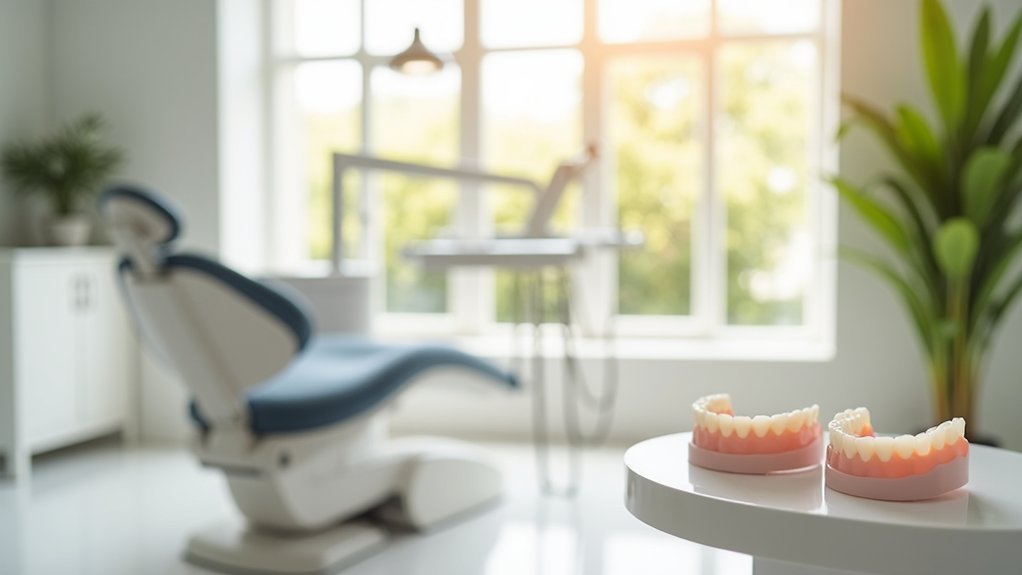

Yes, you can absolutely get dentures even if you have no teeth. Complete dentures are designed specifically to replace all missing teeth, restoring both function and aesthetics. They help improve chewing and speaking abilities, and provide support to your facial structure. Timely intervention is key to maintaining jawbone health and comfort. Your dentist will evaluate your needs and guide you through the process. Discover more about the benefits and types of dentures available to suit your needs.
Key Takeaways
- Yes, you can get complete dentures even if you have no teeth, as they are designed to replace all missing teeth.
- Complete dentures restore function and aesthetics, improving your ability to chew and speak effectively.
- Timely fitting of dentures is crucial to prevent complications and stimulate jawbone health.
- Regular follow-ups with a dentist ensure proper adjustments and comfort for your dentures.
- Dentists customize dentures to meet your unique oral health needs and enhance your facial appearance.
Understanding Complete Dentures
Complete dentures are a practical solution for those who’ve lost all their natural teeth. They’re designed to restore function and aesthetics, improving your ability to chew and speak.
Constructed from materials like acrylic resin or metal, complete dentures are customized to fit comfortably and naturally in your mouth. After any remaining teeth are removed and your gums have healed, these dentures support your cheeks and lips, enhancing your facial appearance.
Regular follow-up appointments with your dentist are essential for adjustments, ensuring your complete dentures remain comfortable and contribute positively to your overall dental health.
The Importance of Timely Denture Intervention
When you lose your teeth, timely intervention for dentures becomes vital to prevent complications that can arise from gaps in your smile.
Immediate denture fitting helps replace missing teeth, supporting your oral health while stimulating the jawbone. Delaying this process can lead to bone resorption, making future denture options more complex and potentially requiring invasive procedures.
Early intervention also enhances comfort and functionality, reducing the risk of slippage. Regular dental services for adjustments and relining in the initial months are fundamental to guarantee the best fit, helping you restore your smile effectively and confidently.
How Dentures Help With Jawbone Health
Dentures play an essential role in maintaining your jawbone health by providing the necessary stimulation to prevent bone resorption.
When you replace missing teeth with dentures, you help maintain jawbone density and reduce the risk of complications associated with weakened bone structure.
Regular adjustments guarantee your dentures continue to support your jawbone effectively, promoting long-term oral health.
Stimulating Jawbone Health
Although tooth loss can lead to significant jawbone deterioration, properly fitted dentures can play an essential role in maintaining your jawbone health. They provide the necessary pressure and stimulation to your gums and jawbone, helping to prevent further bone loss.
Custom-made dentures can support areas affected by jawbone shrinkage, mimicking the stimulation natural teeth once provided. Early intervention with dentures can also prevent painful complications associated with untreated bone loss.
Preventing Bone Resorption
Missing teeth can lead to significant jawbone resorption, but getting properly fitted dentures can be a key solution. Dentures provide essential pressure and stimulation to your gums and jawbone, slowing down bone resorption. Custom-made dentures fit securely, even with jawbone shrinkage, promoting better oral health. Regular relining guarantees a proper fit as resorption continues, helping protect your remaining natural teeth.
| Benefit of Dentures | Importance |
|---|---|
| Stimulates Jawbone | Prevents further resorption |
| Custom Fit | Adapts to jawbone changes |
| Supports Gums | Enhances overall mouth health |
| Protects Remaining Teeth | Preserves dental integrity |
| Promotes Confidence | Improves aesthetics and function |
Exploring Different Types of Dentures
When considering dentures, it’s crucial to understand the two main types: complete and partial dentures.
Complete dentures replace all missing teeth in your upper or lower jaw, while partial dentures fill gaps left by some missing teeth, allowing you to keep your healthy natural teeth.
Each type offers unique benefits tailored to your specific dental needs, ensuring comfort and functionality.
Complete Dentures Overview
Complete dentures offer an effective solution for individuals who’ve lost all their natural teeth, whether in the upper or lower jaw.
These custom-made full mouth restorations provide a functional and aesthetic remedy for tooth loss, enhancing both appearance and oral function.
Conventional complete dentures are typically placed after the gums have healed post-extraction, while immediate dentures can be inserted on the same day, though adjustments may be needed.
They help maintain facial structure and prevent the sunken look associated with tooth loss.
Regular check-ups and relining are essential to guarantee a proper fit as your jawbone changes over time.
Partial Dentures Benefits
Partial dentures offer significant benefits by effectively replacing a few missing teeth while utilizing your remaining healthy teeth for support.
These dental appliances, available as Removable or Fixed Partial Dentures, can enhance your ability to chew, improving nutrition and overall health. They’re a good option for those who aren’t fully edentulous and want to maintain a natural appearance.
The Role of a Dentist in Your Denture Journey
Although you might feel uncertain about your options after losing your teeth, a dentist is essential in guiding you through the denture journey. They evaluate your oral health by examining your gums and jawbone, ensuring dentures can help replace missing teeth effectively.
Your dentist customizes dentures to fit your unique needs, both aesthetically and functionally. Regular follow-ups are important for adjustments, keeping your dentures comfortable and effective over time.
Additionally, a dentist provides guidance on proper care and maintenance, which is critical for your long-term oral health. Trust their expertise to support you in this significant change.
Benefits of Dentures Beyond Aesthetics
While many people associate dentures primarily with aesthetics, their benefits extend far beyond just restoring a smile. Dentures improve chewing ability, enabling better nutrition and allowing you to enjoy a wider variety of foods. They enhance speech clarity and help protect your remaining teeth from excessive wear. Plus, custom-fit dentures can guarantee comfort even if you’ve experienced jawbone loss, helping to keep the bone intact.
| Benefit | Description | Impact on Life |
|---|---|---|
| Improved Chewing | Eat a wider variety of foods | Better nutrition |
| Enhanced Speech | Clearer communication | Increased confidence |
| Natural Appearance | Restores a full smile | Boosted self-esteem |
| Bone Preservation | Prevents jawbone shrinkage | Maintained facial structure |