
You shouldn’t use teeth whitening strips while wearing Invisalign. The strips can lead to uneven whitening around the attachments, making them more noticeable. Additionally, whitening products may potentially damage both the attachments and the aligners. It’s best to postpone any whitening treatments until after your Invisalign treatment is complete. Your orthodontist can provide personalized advice on the most effective whitening options for you, ensuring the best results for your smile. More helpful tips await!
Key Takeaways
- Using teeth whitening strips with Invisalign can lead to uneven results due to attachments that remain unchanged while surrounding teeth whiten.
- Whitening strips struggle to effectively penetrate around attachments, resulting in limited whitening effectiveness during treatment.
- Misuse of over-the-counter whitening products can damage both attachments and aligners, making them less safe.
- It is recommended to postpone any whitening treatments until after the removal of attachments for optimal results.
- Consult your orthodontist for personalized advice on whitening options that won’t interfere with your Invisalign treatment.
Understanding Invisalign and Its Treatment Process
When you consider Invisalign as a treatment option, it’s important to understand how the process works.
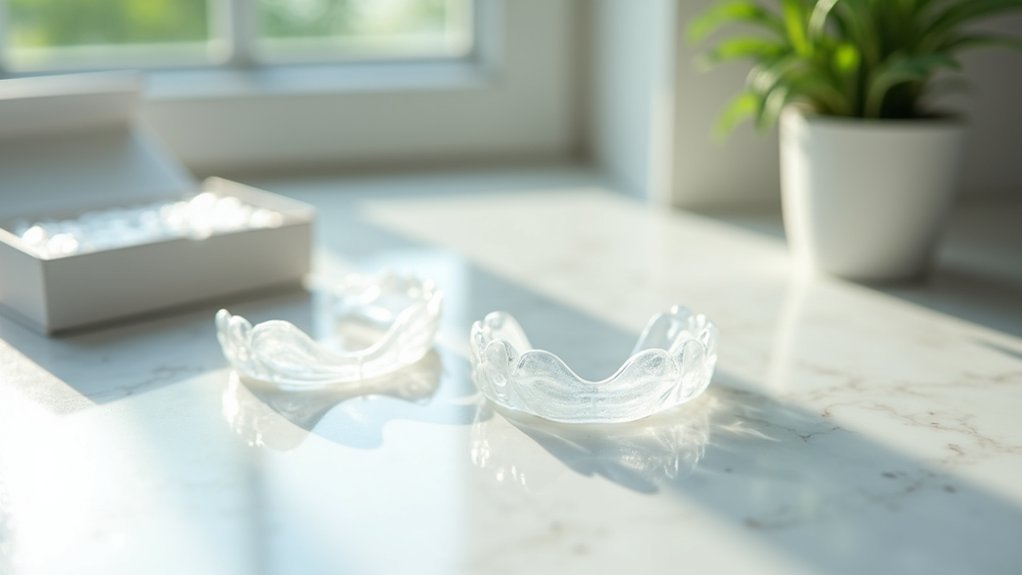
Invisalign treatment utilizes clear aligners made from a patented thermoplastic material, fitting snugly over your teeth for a discreet straightening experience. Depending on your needs, your orthodontist may add small, tooth-colored attachments to facilitate specific tooth movements.
Maintaining excellent oral hygiene is vital during this period, as food particles can become trapped under the aligners, leading to potential staining and decay. Regular dental check-ups help monitor your progress and guarantee you’re on track to achieving your desired results.
Following your orthodontist’s instructions enhances your experience.
The Effects of Whitening Strips on Invisalign Attachments
When using whitening strips during your Invisalign treatment, you might notice that the attachments on your teeth remain unchanged while the surrounding teeth whiten.
This can lead to increased visibility of the attachments, resulting in an uneven appearance.
It’s often recommended to postpone any whitening treatments until after your attachments are removed for the best results.
Impact on Attachment Visibility
Using whitening strips during your Invisalign treatment can greatly impact the visibility of attachments on your teeth.
When you use these strips, they may not effectively whiten areas covered by attachments, leading to uneven results. As the surrounding teeth become brighter, the contrast with the darker attachment areas can make them more noticeable.
This pronounced difference can detract from your overall smile aesthetic. To achieve uniform whitening, it’s best to consult your orthodontist and consider professional whitening treatments after your attachments are removed, ensuring a consistent look across all your teeth while maintaining your treatment’s integrity.
Limited Whitening Effectiveness
Though you may hope for a bright smile during your Invisalign treatment, whitening strips often fall short in effectiveness, particularly around attachments. The material of Invisalign attachments can hinder the penetration of whitening strips, resulting in uneven whitening. Furthermore, using these strips may compromise the integrity of your attachments and aligners, ultimately affecting your treatment outcomes.
| Issue | Effect on Teeth | Recommendation |
|---|---|---|
| Limited penetration | Uneven whitening | Avoid whitening strips |
| Increased attachment visibility | Whiter surrounding teeth | Consult a professional |
| Potential damage to attachments | Compromised treatment | Wait until post-treatment |
Professional Recommendations for Use
Although you may be enthusiastic to achieve a brighter smile during your Invisalign treatment, dental professionals typically advise against using whitening strips.
These over-the-counter whitening treatments often fail to penetrate attachments, leading to uneven results and increased visibility of the attachments.
Instead, it’s best to postpone professional teeth whitening until your Invisalign journey is complete. This guarantees an even and aesthetically pleasing outcome.
Always consult your orthodontist about the best timing and methods for whitening to avoid complications and guarantee your smile shines brightly after your treatment.
Prioritizing professional guidance will help you achieve the best results.
Professional Recommendations for Whitening During Treatment
When considering teeth whitening during your Invisalign treatment, it’s crucial to heed the advice of dental professionals.
Most recommend avoiding whitening strips, as they can result in uneven whitening, especially around attachments. These strips often fail to penetrate beneath the attachments, leading to noticeable color discrepancies once your treatment concludes.
Additionally, over-the-counter products may compromise your aligners’ integrity if misused. To achieve the best results, it’s wise to postpone any whitening procedures until after your treatment.
Always consult your orthodontist before starting any whitening efforts, ensuring a safe and effective approach tailored to your needs.
Limitations of Over-the-Counter Whitening Products
While over-the-counter whitening strips may seem like an easy solution, they often fall short in effectiveness, particularly around Invisalign attachments.
You might notice uneven results, as these products struggle to penetrate the tooth surface adequately.
For ideal whitening, considering professional alternatives is usually the best approach during your treatment.
Efficacy of Whitening Strips
Many people looking to brighten their smiles often consider over-the-counter whitening strips, but these products have significant limitations, especially during Invisalign treatment.
The efficacy of whitening strips is diminished when used with Invisalign attachments, as they can’t penetrate effectively beneath them, leading to uneven results. Additionally, applying strips around attachments can be challenging, resulting in dissatisfaction with the whitening outcome.
Moreover, using these strips may accentuate the visibility of attachments on your teeth. Many dental professionals recommend waiting until after your Invisalign treatment to guarantee a uniform, bright smile that enhances your overall appearance and confidence.
Attachment Impact on Whitening
Using whitening strips during Invisalign treatment introduces specific challenges, particularly due to the presence of attachments on your teeth.
These attachments can hinder the ability of whitening strips to adhere properly, leading to inconsistent whitening results. Furthermore, whitening strips may not effectively penetrate the areas beneath the attachments, resulting in uneven coloration.
As the surrounding teeth lighten, the visibility of attachments might increase, making them more noticeable. Over-the-counter whitening products often lack the efficacy needed during this treatment, which is why postponing professional whitening until after Invisalign is usually recommended for ideal results.
Recommended Professional Alternatives
Although over-the-counter whitening products may seem like a convenient option, they often fall short during Invisalign treatment due to their inability to address the unique challenges posed by attachments. Professional whitening options, provided by dental experts, guarantee compatibility with aligners, resulting in uniform results without compromising your treatment.
| Professional Solutions | Benefits | Considerations |
|---|---|---|
| Customized whitening gel | Even results | Requires dental visit |
| Timely treatment planning | Avoids complications | Post-Invisalign recommended |
| Expert guidance | best outcomes | Personalized approach |
| Reduced attachment visibility | Aesthetic improvement | Professional supervision |
| Enhanced confidence | Long-lasting effects | Tailored to your needs |
Safe Whitening Options for Invisalign Wearers
While you’re undergoing Invisalign treatment, it’s essential to choose safe whitening options that won’t compromise your progress.
Whitening strips aren’t recommended, as they may not effectively penetrate attachments and can cause uneven results. Instead, consider Invisalign’s professional whitening systems, designed to work safely with Invisalign aligners, using 10% carbamide peroxide for best results.
You can also use Invisalign’s at-home whitening pen during treatment, ensuring your aligners remain effective.
Always consult with your orthodontist before starting any whitening regimen to determine the safest and most effective method for achieving a bright smile after your treatment is complete.
Best Practices for Maintaining Tooth Color During Treatment
To maintain the color of your teeth during Invisalign treatment, it’s essential to adopt effective practices that prevent discoloration.
Instead of using teeth whitening strips, consider the Invisalign Professional Whitening System, which safely whitens teeth while you wear your aligners.
Rinse your teeth thoroughly before inserting aligners to avoid trapping food particles that can cause stains. Incorporating gentle whitening toothpaste and mouthwash into your daily routine can also help maintain a bright smile.
For personalized advice on maintaining tooth color, consult your Invisalign provider, who can guide you on ideal timing for any whitening treatments during your journey.
Post-Treatment Whitening Options for Optimal Results
Once you’ve completed your Invisalign treatment, exploring post-treatment whitening options can help you achieve an even brighter smile.
Completing your Invisalign treatment opens the door to post-treatment whitening options for a dazzling smile.
You can safely use whitening strips; however, consider professional whitening for more effective results. Remember to wait at least two weeks after removing aligners to allow your teeth to stabilize.
If you experience sensitivity, using desensitizing toothpaste can ease discomfort. Additionally, custom trays from your final aligners can enhance the whitening process with professional-grade gels.
- Illuminate your confidence
- Transform your smile
- Enhance your self-esteem
- Brighten your interactions
The Importance of Open Communication With Your Dentist
Achieving a brighter smile after your Invisalign treatment involves more than just effective whitening methods; it also requires clear communication with your dentist.
Open communication is essential to guarantee any teeth whitening treatments, including strips, don’t interfere with your aligners or overall treatment plan. By discussing your whitening goals, your dentist can tailor recommendations that prioritize your oral health and safety.
They can also address potential challenges, like uneven results from attachments. Regular consultations help monitor your progress, allowing timely adjustments.
Being transparent about any discomfort guarantees your dentist provides solutions that align with your aesthetic goals while safeguarding your dental health.