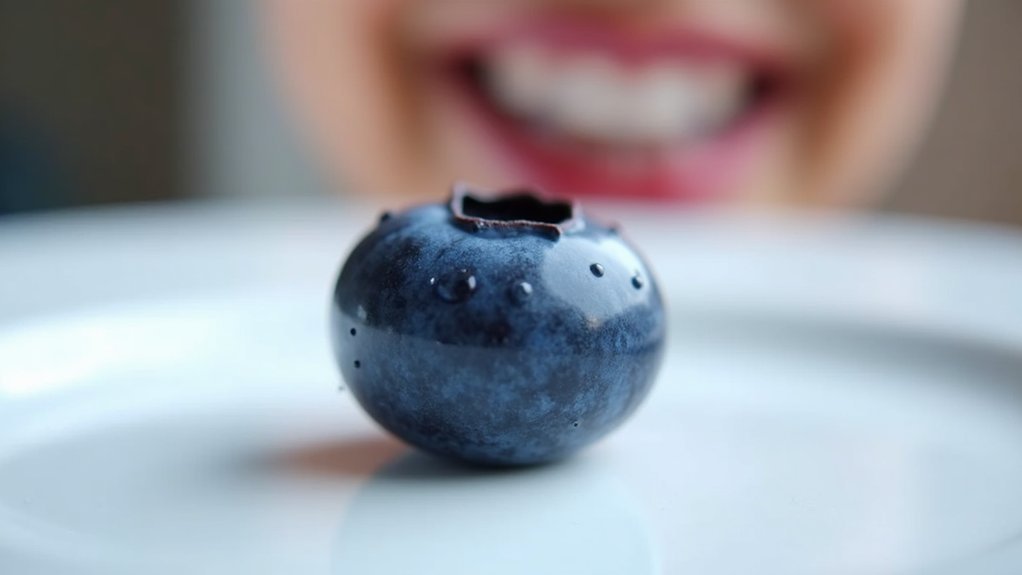

Blueberries won’t whiten your teeth; in fact, they can contribute to staining. Their chromogens and tannins can cling to your enamel, leading to discoloration. Plus, the acidity of blueberries can weaken enamel, increasing the risk of stains. While they offer health benefits like antioxidants, it’s important to rinse your mouth afterward to minimize staining. If you’re curious about caring for your smile, there are effective strategies and treatments available for maintaining tooth brightness.
Key Takeaways
- Blueberries do not whiten teeth; they contain chromogens that can cause staining on enamel.
- The tannins in blueberries increase the likelihood of discoloration by enhancing chromogen adhesion to teeth.
- Blueberries’ acidic nature can weaken enamel, further increasing the risk of tooth discoloration.
- Rinsing with water after eating blueberries helps minimize their staining effects on teeth.
- For whitening effects, focus on malic acid-rich fruits instead of blueberries.
Understanding Malic Acid and Its Effects on Teeth
While you might enjoy the taste of blueberries, it’s important to understand how malic acid, found in fruits like strawberries and apples, affects your teeth.
Malic acid is known for its ability to help with whitening your teeth by effectively removing surface stains. Incorporating malic acid-rich foods into your diet can support oral health by aiding in plaque removal and enhancing brightness.
However, remember that berries are acidic, and while blueberries offer antioxidants, they lack malic acid. For ideal dental care and a whiter smile, focus on consuming fruits high in malic acid rather than dark-colored berries.
The Staining Risks of Blueberries
Blueberries may be a delicious snack, but they also pose a risk to your teeth due to their chromogens, which can cling to enamel and cause staining.
The tannins in blueberries further enhance this adhesion, while their acidic nature can weaken enamel, making it more prone to discoloration.
To minimize these effects, consider rinsing your mouth with water after enjoying blueberries.
Chromogens in Blueberries
When enjoying the vibrant taste of blueberries, it’s important to be aware that these fruits contain chromogens—pigment compounds that can stick to tooth enamel and lead to staining.
Their deep color makes them particularly effective at causing discoloration, especially with frequent consumption. Additionally, the acidity of blueberries can weaken tooth enamel, increasing susceptibility to these pigments.
To protect your oral hygiene, consider rinsing your mouth with water after eating blueberries. This simple step can help wash away the chromogens, reducing the risk of staining while still allowing you to enjoy their delicious flavor and nutritional benefits.
Tannins and Staining
The presence of tannins in blueberries plays a significant role in the staining risks associated with these flavorful fruits.
These compounds enhance the adhesion of chromogens to your tooth enamel, increasing the likelihood of staining. The deep pigments found in blueberries can lead to noticeable discoloration on both natural and whitened teeth.
To combat this, it’s vital to incorporate a robust dental hygiene routine. Rinsing your mouth thoroughly after consuming blueberries can help minimize their staining effects.
Acidic Nature Effects
While tannins contribute greatly to the staining risks of blueberries, their acidic nature also plays a critical role in enamel health. The acid in blueberries can weaken enamel, making it easier for chromogens to adhere and cause staining.
This combination heightens the risk of discoloration over time. To protect your teeth, practice good dental hygiene. Rinsing your mouth with water after consuming blueberries helps wash away these compounds, while brushing afterward is essential to minimize staining effects.
Nutritional Benefits of Berries for Oral Health
Berries, especially blueberries, offer a range of nutritional benefits that can greatly enhance your oral health. Packed with antioxidants and flavonoids, blueberries help reduce inflammation in gums, promoting overall wellness.
Their natural sugars provide energy for beneficial oral bacteria, supporting a balanced oral microbiome. Rich in vitamin C, blueberries are essential for maintaining healthy gums and preventing gum disease.
Their high water content stimulates saliva production, washing away food particles and neutralizing acids, which helps combat tooth decay. With a low glycemic index, blueberries are a healthier fruit choice, making them a fantastic option in your whitening remedies.
Preventive Measures to Minimize Staining From Berries
Enjoying the numerous health benefits of blueberries doesn’t have to come at the expense of your smile. Implement these preventive measures to minimize staining from berries:
| Action | Benefit | Tips |
|---|---|---|
| Rinse with water | Washes away staining compounds | Swish for better coverage |
| Incorporate dairy products | Neutralizes acids, protecting enamel | Aim for daily intake |
| Use a straw | Reduces direct contact with teeth | Perfect for beverages |
Effective Treatment Options for Tooth Staining
When it comes to treating tooth staining, you have several effective options at your disposal.
Whitening toothpaste can help lift surface stains, while professional dental treatments offer more dramatic results.
Additionally, home remedies can be a convenient way to maintain your smile, but their effectiveness may vary.
Whitening Toothpaste Options
To effectively combat tooth staining caused by foods like blueberries, many people turn to whitening toothpaste as a practical solution.
These toothpastes typically contain abrasives such as silica or baking soda to scrub away surface stains. They often include whitening agents like hydrogen peroxide or carbamide peroxide that penetrate tooth enamel for deeper stain removal.
Some formulations incorporate blue covarine, creating an optical illusion that makes teeth appear whiter immediately.
For the best results, choose a whitening toothpaste with the American Dental Association Seal of Acceptance, ensuring safety and efficacy in achieving brighter, healthier teeth.
Professional Dental Treatments
While whitening toothpaste can effectively reduce surface stains, professional dental treatments offer more potent solutions for tooth discoloration.
In-office whitening procedures use stronger agents, delivering noticeable results in one visit. Regular professional cleaning removes plaque and surface staining, maintaining your teeth’s brightness and overall health.
Dentists often recommend custom-fitted whitening trays for at-home use, allowing you to apply professional-grade gel conveniently. For faster, more dramatic results, some offices offer laser whitening treatments that enhance gel effectiveness.
For persistent stains, a combination of treatments may be suggested, ensuring you achieve and sustain your desired level of whiteness.
Home Remedies Effectiveness
Although many people turn to home remedies for whitening teeth, their effectiveness can vary considerably.
While some remedies may help reduce staining, others, like blueberries, are known to cause discoloration due to their chromogens and tannins.
To counteract staining, rinse your mouth with water or consume dairy products after eating acidic foods. This can neutralize acids and protect enamel, keeping your teeth healthier.
However, relying solely on home remedies isn’t enough. Routine dental check-ups and professional cleanings are essential for managing any tooth discoloration effectively, ensuring your smile remains bright and healthy over time.
Tips for Enjoying Berries While Maintaining a Bright Smile
Enjoying blueberries can be a delightful addition to your diet, but it’s important to be mindful of their potential to stain your teeth.
Here are some tips to help you maintain a bright smile:
- Rinse your mouth with water immediately after consuming blueberries to wash away staining compounds.
- Pair blueberries with dairy products like yogurt or cheese, which help neutralize acids and protect enamel.
- Use an Electric Toothbrush to maintain a consistent oral hygiene routine, combating plaque and tartar effectively.
With these tips, you can savor blueberries while keeping your teeth healthy and bright!