
Retainers aren’t effective for teeth grinding, known as bruxism. They lack the cushioning and durability required to handle grinding pressure, leading to potential cracks and discomfort. Using retainers as mouthguards can cause misalignment and may worsen your symptoms. For proper protection of your teeth during sleep, consider custom-made night guards designed specifically for bruxism. If you’re curious about the best options for managing bruxism or what alternatives exist, there’s more to explore on this topic.
ok this is YOUR TEST PHRASE so we can check if this is it.
Key Takeaways
- Retainers are not designed to withstand the forces of teeth grinding, making them ineffective for bruxism management.
- Using retainers for grinding may lead to cracks and fractures, compromising their fit and effectiveness.
- Retainers lack the necessary cushioning to protect teeth from the pressure of grinding.
- Misalignment of teeth can occur over time if retainers are improperly used as mouthguards.
- Custom night guards are recommended for effective bruxism management, offering better protection and comfort.
What Is Teeth Grinding (Bruxism)?
Teeth grinding, or bruxism, is a common yet often overlooked movement disorder that occurs when you unconsciously clench or grind your teeth, typically during sleep or in response to stress.
Symptoms of bruxism include jaw pain, dull headaches, and increased tooth sensitivity, which can lead to significant dental issues like worn enamel or chipped teeth.
To protect your teeth, consider consulting a professional who can recommend dental appliances tailored to your needs.
It’s essential to recognize the impact of bruxism not just on yourself but also on your partner, as the disruptive noises can affect their sleep quality.
Can Orthodontic Retainers Help With Teeth Grinding?
Orthodontic retainers aren’t designed to handle the forces of teeth grinding, which can put them at risk of damage.
Using a retainer as a makeshift mouthguard may lead to misalignment and discomfort, as they’re not built for heavy clenching.
It’s best to consult a professional for effective solutions, like custom night guards, to manage bruxism properly.
Retainer Functionality Limitations
While retainers serve an important role in maintaining tooth alignment after orthodontic treatment, they aren’t equipped to address the issues associated with teeth grinding, or bruxism.
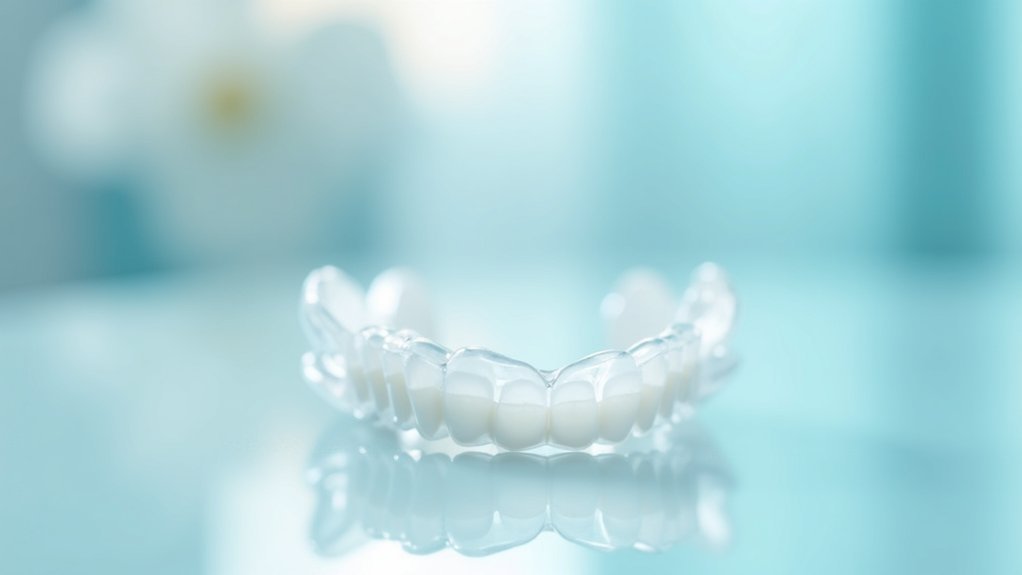
Retainers like Hawley or Essix can’t withstand the excessive forces of grinding, leading to cracks or wear that compromise their function. They lack the cushioning effect necessary to protect teeth from the pressure caused by grinding.
Using a retainer as a mouthguard may cause discomfort and potential misalignment. For effective bruxism management, a custom-made night guard is recommended, as it’s specifically designed to absorb grinding pressure and protect teeth.
Risks of Retainer Damage
Using retainers for teeth grinding poses significant risks that can compromise their integrity and effectiveness.
Orthodontic retainers aren’t designed for the forces of bruxism, leading to potential damage such as:
- Cracks and fractures in the retainer
- Worn-down surfaces that affect fit
- Misalignment of your teeth over time
- Reduced effectiveness in maintaining tooth alignment
- Increased discomfort during use
Instead of using a retainer, consider a night guard specifically designed to absorb grinding pressure.
Consulting your dentist guarantees you choose the right appliance for your needs, protecting both your teeth and your retainer from unnecessary damage.
Alternative Solutions for Bruxism
If you’re struggling with bruxism, seeking effective alternatives is crucial for protecting your teeth and jaw.
Instead of using orthodontic retainers, consider a night guard, specifically designed to absorb the forces from grinding your teeth. This prevents damage and guarantees your teeth don’t shift back to their original positions.
A professional evaluation can help you determine if you need a night guard or other mouthguards tailored to your situation.
Using retainers for this purpose can lead to discomfort and counteract their original function.
Prioritize your dental health by exploring appropriate solutions for managing bruxism symptoms.
Can I Wear a Mouthguard Over a Retainer at Night?
Can you wear a mouthguard over a retainer at night? Generally, it’s not recommended, as the pressure from grinding or clenching can damage your retainer.
Instead, consider these options:
- Alternating nights for mouthguard and retainer use
- Consulting a dentist or orthodontist for personalized advice
- Wearing retainers for at least 22 hours post-treatment
- Exploring TMJ splints as an alternative
- Focusing on methods to protect your teeth while maintaining alignment
Treating Bruxism at an Orthodontist Alexandria, VA
When you visit an orthodontist in Alexandria, VA, they’ll help identify the underlying causes of your bruxism and assess any damage caused by grinding.
They can recommend customized treatment solutions, like custom night guards, to effectively manage your symptoms.
Addressing these issues early is essential to prevent further complications and guarantee your orthodontic treatment remains effective.
Identifying Bruxism Causes
Understanding the causes of bruxism is essential for effective treatment, especially when considering orthodontic care. Various factors contribute to teeth grinding, and identifying them can guide your next steps:
- Stress and anxiety
- Abnormal bites
- Sleep apnea
- Jaw fatigue
- Morning headaches
An evaluation by an orthodontist can uncover these underlying issues, preventing further dental damage and misalignment.
Addressing bruxism before using retainers is vital, as grinding can hinder orthodontic effectiveness. Custom night guards can protect your teeth while ensuring that retainers maintain alignment post-treatment, ultimately improving your oral health and comfort.
Customized Treatment Solutions
Given the complexity of bruxism, seeking customized treatment solutions from an orthodontist in Alexandria, VA, is vital for effectively managing this condition.
During your examination, the orthodontist can identify the causes of your teeth grinding and assess any damage. Tailored solutions may include custom night guards, which are essential for protecting your teeth while you sleep.
Additionally, using retainers post-braces works best when bruxism is addressed. Treatment options may encompass stress management techniques and TMJ splints.
Regular follow-ups guarantee that your orthodontist can monitor your progress and adjust your treatment plan for ideal oral health.
Difference Between Night Guards and Retainers
Although both retainers and night guards are dental appliances, they serve distinct purposes that cater to different needs.
- Night guards absorb pressure from grinding
- Retainers maintain teeth alignment post-orthodontics
- Night guards protect your teeth from damage
- Retainers are thinner and unsuitable for bruxism
- Night guards alleviate symptoms like jaw soreness
Understanding these key differences is essential.
Recognizing the differences between retainers and night guards is crucial for optimal dental health.
Using a retainer for teeth grinding might lead to cracks or wear, ultimately resulting in damage to your teeth.
Always consult with a dental professional to guarantee you choose the right appliance for your specific situation.
Custom Made vs. Store Bought Night Guards
When it comes to choosing a night guard for teeth grinding, the decision often boils down to whether to opt for a custom-made appliance or a store-bought version.
Custom-made night guards provide superior comfort, fitting the unique shape of your teeth and using higher quality materials for enhanced durability.
In contrast, store-bought options often come from generic molds, leading to discomfort and inadequate protection.
A professional dental consultation guarantees that your custom guard addresses your specific grinding patterns, ultimately offering significant oral health benefits.
With a lifespan of 5 to 10 years, custom guards outperform store-bought alternatives, which wear down quickly.