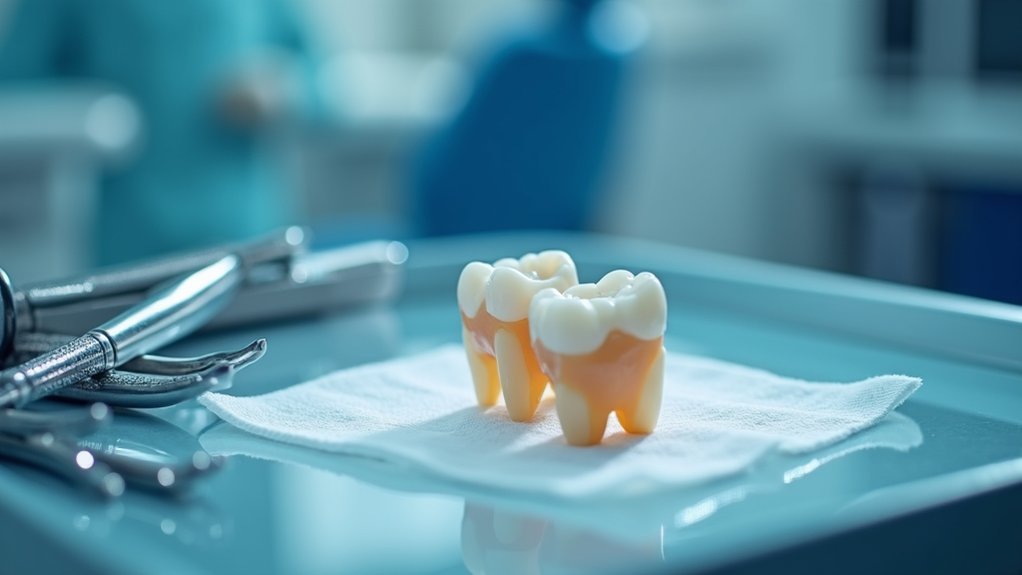

The number of teeth that can be safely extracted at one time varies based on your overall health, the extraction’s complexity, and your dentist’s expertise. Typically, healthy patients can have two to four teeth removed during a straightforward procedure. If conditions are ideal, up to six or eight may be manageable. However, health issues can limit this to just one or two extractions. Understanding the specifics of your situation can help you prepare for your appointment effectively.
Key Takeaways
- Healthy individuals can typically have two to four teeth removed in a single visit for uncomplicated procedures.
- Up to six or eight teeth may be extracted if they are accessible and the procedure is straightforward.
- Patients with moderate health issues may be limited to four or five extractions at once.
- Severe health conditions often necessitate staggered extractions, limiting the number to one or two teeth.
- Surgical extractions usually restrict the number of teeth that can be removed to one or two due to complexity.
Reasons for Tooth Extraction
When a tooth becomes severely decayed or damaged, it often requires extraction to prevent further complications. Tooth extractions are essential for maintaining oral health, especially when infections from damaged teeth threaten neighboring structures.
Severe periodontal disease can complicate treatment, making extraction a viable option for long-term health. Additionally, tooth decay may necessitate removal, particularly when repairs aren’t feasible.
In some cases, you might need multiple teeth extracted to address overcrowding or prepare for future restorations, such as implants or dentures. Prioritizing dental care guarantees a streamlined recovery and better-fitting dental prosthetics, enhancing overall patient outcomes.
Factors Influencing the Number of Teeth Extracted
When considering tooth extractions, your overall health plays a critical role in determining how many teeth can be safely removed at once.
Additionally, the type of extraction—whether simple or surgical—will influence this number, as more complex procedures typically limit extractions to one or two teeth.
Understanding these factors will help you and your dentist make informed decisions about your treatment plan.
Patient Health Considerations
Patient health considerations play an essential role in determining how many teeth can be safely extracted at one time. Your overall health, medical conditions, and oral hygiene greatly influence the number of extractions. For patients with good oral hygiene and no complicating conditions, up to six or eight teeth may be extracted in one visit. In contrast, patients with severe health issues often require staggered extractions. The complexity of surgical extractions typically limits the number to one or two. Below is a table summarizing these factors:
| Health Status | Max Extractions | Extraction Type |
|---|---|---|
| Good Oral Hygiene | 6-8 | Simple |
| Moderate Conditions | 4-5 | Simple |
| Severe Health Issues | 1-2 | Surgical |
| Complicated Cases | 1 | Surgical |
Type of Extraction
The type of extraction greatly influences how many teeth can be safely removed in one sitting. Simple extractions typically allow for the removal of multiple teeth, while surgical extractions often limit you to one or two due to their complexity.
The location of the teeth, such as molars, may require staged extractions. Anesthesia type also plays a role; local anesthesia permits more extractions compared to general anesthesia used in complex cases.
Additionally, your dentist’s experience and specialization can affect the number of teeth extracted, with oral surgeons often handling more extractions effectively, ensuring ideal oral care throughout the process.
General Guidelines for Extractions
While each extraction case varies, general guidelines suggest that healthy patients can typically have two to four teeth removed in a single visit for uncomplicated procedures.
However, you might tolerate up to six or eight extractions if the teeth are accessible and the process is straightforward.
Consider these factors:
- Type of extraction (surgical extractions limit to one or two)
- Overall health and medical history
- Dentist’s experience and skill level
- Personalized extraction limits established during consultation
Always consult your dentist to determine the safest approach tailored to your unique needs. Your comfort and health are paramount.
Preparing for Your Extraction Appointment
Preparing for your extraction appointment involves several key steps that can greatly impact the success of the procedure and your recovery. Consult with your dentist to create a personalized treatment plan and follow any pre-operative care instructions, which may include fasting if sedation is planned. Arrange for someone to assist with post-operative care and transportation, as driving post-sedation isn’t recommended. Guarantee you allocate adequate recovery time in your schedule, considering possible swelling and discomfort. Familiarize yourself with the extraction procedure by discussing it with your dentist to alleviate anxiety.
| Step | Action | Purpose |
|---|---|---|
| Consultation | Discuss treatment plan | Address specific needs |
| Pre-operative care | Follow instructions, fasting if needed | Prepare for sedation |
| Post-operative care | Arrange assistance | Guarantee safe recovery |
| Recovery time | Schedule time off | Manage discomfort and swelling |
Tooth Extraction Aftercare
After your tooth extraction, effective pain management and proper healing are essential for recovery.
You’ll need to follow specific guidelines, such as dietary restrictions and applying ice packs, to minimize discomfort and support the healing process.
Staying vigilant for any complications will guarantee you seek timely care if needed.
Post-Extraction Pain Management
Effective post-extraction pain management is essential for a smooth healing process. To minimize discomfort and promote healing, follow these guidelines:
- Avoid eating or drinking for at least two hours to stabilize the blood clot.
- Use over-the-counter pain relievers as directed by your dentist to manage pain effectively.
- Apply ice packs to your cheek for 15-20 minutes to reduce swelling and numb the area.
- Refrain from using straws for at least 24 hours to prevent dislodging the blood clot, which can lead to complications like infection.
Monitor your recovery closely and consult your dentist if you experience severe pain or unusual symptoms.
Healing and Recovery Tips
Following a tooth extraction, your body needs time to heal properly, and adhering to aftercare instructions is essential for a smooth recovery. Focus on consuming soft foods and staying hydrated to support good health during this period. Avoid brushing or rinsing for at least 12 hours to protect the blood clot. Ice packs can help reduce swelling and discomfort in the initial days. Remember to follow your dentist’s aftercare guidelines and attend follow-up appointments for ideal healing.
| Tip | Purpose | Duration |
|---|---|---|
| Avoid eating/drinking | Blood clot formation | First 2 hours |
| Soft foods | Prevent irritation | Several days |
| Ice packs | Reduce swelling | Initial recovery |
| No brushing/rinsing | Protect blood clot | First 12 hours |
Importance of Open Communication With Your Dentist
How can open communication with your dentist enhance your experience when considering tooth extractions? By discussing your specific needs, you’ll better understand the extraction decisions.
- Clarify the number of teeth needing extraction and the reasons behind it.
- Explore alternative treatment options to make informed choices.
- Gain insight into factors affecting your patient health and expectations.
- Discuss post-extraction care to prepare for recovery.
Establishing a trusting relationship through open communication fosters confidence, ensuring a comfortable extraction experience and promoting better outcomes for your oral health.
Don’t hesitate to voice your concerns; it’s essential for your well-being.