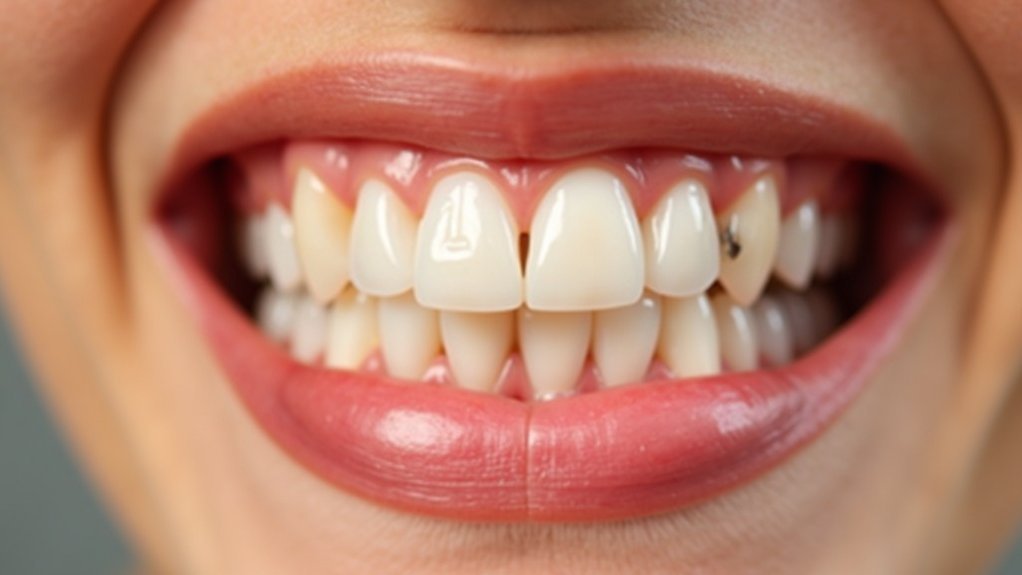

To know if you have a cavity between your teeth, watch for signs like increased sensitivity to hot, cold, or sweet foods, dull aches or sharp pains when chewing, and any visible dark spots or holes in tight spaces. You might also notice persistent bad breath or an unpleasant taste due to bacteria. Regular checkups can help detect cavities early on. Keep exploring to learn about detection methods and effective treatment options for cavities.
Key Takeaways
- Look for increased sensitivity to hot, cold, or sweet foods as a potential sign of cavities between teeth.
- Notice any dull aches or sharp pains while chewing, which may indicate decay in interproximal areas.
- Check for visible holes, pits, or dark spots between teeth, as these can signify advanced cavities.
- Be aware of persistent bad breath or an unpleasant taste, often caused by bacterial buildup from cavities.
- Schedule regular dental checkups, as many cavities may be asymptomatic and detectable only through professional evaluation and X-rays.
Understanding Interproximal Cavities
Have you ever wondered how cavities form in those tight spaces between your teeth? Interproximal cavities develop where plaque accumulates, eroding enamel and leading to tooth decay.
These cavities often remain hidden, making regular dental check-ups essential for early detection. You might experience symptoms of cavities like tooth sensitivity or discomfort while chewing, and you may notice dark spots between teeth.
Poor oral hygiene, such as skipping daily flossing and consuming sugary foods, increases your risk.
Early intervention with fluoride treatments and dental fillings can restore your tooth’s shape and function, preventing the need for more extensive procedures later on.
Common Signs and Symptoms
Interproximal cavities can be tricky to detect, as they often develop in hard-to-see areas between teeth. You might notice increased sensitivity to hot, cold, or sweet foods, which signals potential tooth decay.
Dull aches or sharp pains while chewing could indicate a cavity’s presence. Additionally, persistent bad breath or an unpleasant taste may arise from bacterial buildup related to decay.
Look for visible holes, pits, or dark spots between teeth, as these can signify advanced interproximal cavities. Since some cavities are asymptomatic, regular dental checkups and routine dental examinations are essential for early detection and effective treatment.
Causes and Risk Factors
When plaque accumulates in the tight spaces between your teeth, it can lead to interproximal cavities. Poor oral hygiene, like infrequent brushing and skipping flossing, greatly raises your risk of cavities in these areas.
The frequent consumption of sugary foods fuels bacteria that produce decay-causing acids, further heightening your risk. Statistics show that over 26% of U.S. adults have untreated cavities, with low-income children facing double the risk.
Additionally, factors such as dry mouth, low fluoride exposure, and crowded teeth contribute to ineffective plaque removal, increasing vulnerability to interproximal cavities and dental issues.
Diagnosis and Detection Methods
To diagnose cavities effectively, dentists rely on visual examination techniques to spot signs of decay, such as discoloration.
X-ray imaging plays an essential role in revealing hidden cavities between teeth that aren’t visible during these exams.
Additionally, evaluating your dental history and oral hygiene habits helps provide a thorough view of your cavity risk.
Visual Examination Techniques
How can you be sure that your teeth are cavity-free? A thorough visual examination by your dentist is key. They’ll look for signs of cavities, like discoloration or visible holes between teeth.
During dental checkups, they’re also evaluating your enamel’s strength; softness can indicate early tooth decay. Regular checkups, typically every six months, help catch interproximal cavities early.
Keep in mind, visual exams have limitations; X-rays are crucial for detecting hidden cavities in tight spaces. Your dentist will also consider your oral hygiene habits and dental history to evaluate your cavity risk accurately.
Stay proactive about your dental health!
X-ray Imaging Importance
Why is X-ray imaging vital for dental health? It’s important for detecting interproximal cavities that standard exams might miss. Bitewing X-rays specifically target tight spaces between teeth, revealing hidden decay and aiding your dentist in evaluating cavities’ extent. Regular dental checkups, including X-rays, guarantee early detection and intervention, preventing extensive damage. Studies show that about 25% of cavities are only visible through X-ray imaging, underscoring its role in thorough dental care. Dentists recommend X-rays every 1-2 years based on individual risk factors.
| X-ray Type | Purpose | Frequency Recommended |
|---|---|---|
| Bitewing | Detect interproximal cavities | Every 1-2 years |
| Periapical | Evaluate tooth roots and surrounding | As needed |
| Panoramic | View full mouth overview | Every few years |
Patient History Assessment
Understanding your dental history is essential for effective cavity detection and prevention. A thorough patient history assessment involves discussing your oral hygiene habits, dietary practices, and previous dental issues that may indicate vulnerability to cavities.
Your dentist will inquire about signs and symptoms like sensitivity to hot or cold and pain while chewing. Regular dental check-ups enable dentists to monitor your oral health and detect cavities in hard-to-reach areas early.
Additionally, bitewing X-rays provide vital insights into interproximal cavities that may go unnoticed during visual inspections, ensuring timely dental treatments for any decay present.
Treatment Options for Cavities
When cavities are detected early, you can often benefit from conservative treatment options that help restore your dental health.
Early detection of cavities allows for conservative treatments that can significantly improve your dental health.
Here are some common approaches for interproximal cavities:
- Fluoride Treatments: These promote remineralization of the enamel before serious intervention is needed.
- Dental Fillings: If decay progresses, fillings (composite or amalgam) restore the tooth’s shape after removing the decayed portion.
- Root Canal Therapy: For extensive damage, this treats infection within the pulp, often followed by a dental crown for protection.
Regular dental checkups are essential for timely detection and treatment of cavities, preventing further complications like tooth extraction.
Prevention Strategies
To prevent cavities effectively, daily flossing and regular dental checkups are essential.
Flossing removes plaque and food particles from between teeth, reducing the risk of decay.
Scheduling checkups every six months allows your dentist to identify potential issues early, ensuring your oral health remains ideal.
Daily Flossing Importance
Flossing daily is essential for maintaining ideal oral health, as it targets plaque and food particles that your toothbrush can’t reach. Incorporating this practice into your routine helps prevent cavities and gum disease.
Here’s why you should prioritize daily flossing:
- It removes plaque and food, reducing the risk of interproximal cavities.
- Regular flossing minimizes bad breath caused by bacteria buildup.
- It contributes to strong and healthy gums, lowering symptoms to watch for as cavity progresses.
Regular Dental Checkups
Regularly scheduling dental checkups is essential for effective cavity prevention. These visits allow your dentist to catch interproximal cavities early, utilizing visual examinations and bitewing X-rays to detect hidden decay. Professional cleanings remove plaque buildup, greatly lowering your risk for cavities in hard-to-reach areas. Additionally, your dentist can offer personalized oral hygiene tips and recommend fluoride treatments to strengthen your enamel.
| Checkup Frequency | Key Benefits | Recommended Actions |
|---|---|---|
| Every 6 months | Early cavity detection | Routine examinations |
| Regular cleaning | Reduces plaque buildup | Maintain oral hygiene |
| Personalized care | Strengthen enamel | Follow dentist’s advice |
Importance of Regular Dental Checkups
While you might think your teeth are healthy, many cavities can remain hidden without the help of a professional.
Regular dental checkups are essential for early detection of asymptomatic interproximal cavities. Here’s why you should visit your dentist every six months:
- Identify hidden cavities: Dentists use bitewing X-rays to spot issues not visible to the naked eye.
- Prevent plaque buildup: Professional cleanings remove plaque, reducing the risk of cavities in hard-to-reach areas.
- Ensure peak oral health: Consistent visits contribute to long-term cavity prevention and overall dental wellness.
Prioritize your dental health today for a brighter tomorrow!
When to Consult a Dentist
Knowing when to consult a dentist is essential for maintaining your oral health, especially if you notice changes that could indicate a cavity.
If you experience tooth pain, sensitivity, or discomfort while chewing, it’s time to visit your dentist. Visible signs like dark spots or holes between teeth should prompt an immediate dental appointment.
Additionally, persistent bad breath or an unpleasant taste, despite good oral hygiene, may signal decay.