
If your teeth feel soft, it’s likely due to enamel erosion rather than actual softness. This can happen from consuming acidic foods, neglecting oral hygiene, or having nutritional deficiencies. You might also be experiencing tooth sensitivity or see visible discoloration. It’s important to maintain a balanced diet and good dental hygiene, as well as consult your dentist if issues persist for tailored advice and treatment options. Explore further to understand how you can protect your dental health.
Key Takeaways
- “Soft teeth” often refer to weakened enamel, not actual softness; enamel erosion is the primary concern.
- Frequent consumption of acidic foods and poor oral hygiene can weaken enamel, making teeth feel sensitive.
- Signs of enamel erosion include tooth sensitivity, discoloration, and rough texture, indicating underlying dental issues.
- Regular dental check-ups are vital for early detection and prevention of enamel-related problems.
- Good oral care practices, including brushing with fluoride toothpaste and a balanced diet, can strengthen teeth.
Understanding the Concept of “Soft Teeth”
Have you ever wondered why your teeth feel different, almost as if they’re soft? This sensation often indicates weakened enamel, which makes your teeth more vulnerable to decay and sensitivity.
The term “soft teeth” is misleading; it refers to the erosion of enamel rather than actual softness. When enamel thins, the softer inner layers of your teeth become exposed, increasing your risk of cavities.
The notion of “soft teeth” actually refers to enamel erosion, exposing vulnerable inner layers and increasing cavity risk.
Factors like poor oral health care, sugary diets, and acid reflux can contribute to this erosion.
Regular dental check-ups are crucial for spotting early signs and ensuring your teeth remain strong and healthy for years to come.
Common Causes of Weakened Enamel
Your enamel can weaken for several reasons, including frequent consumption of acidic foods and beverages that erode its protective layer.
Additionally, neglecting proper oral hygiene can lead to plaque buildup, allowing harmful bacteria to thrive and produce damaging acids.
Nutritional deficiencies, particularly in calcium and vitamin D, further compromise enamel strength and overall dental health.
Acidic Food Consumption
When you consume acidic foods and beverages, such as citrus fruits and soda, the pH in your mouth can drop considerably, leading to weakened enamel.
This frequent exposure can soften enamel, making your teeth more vulnerable to tooth decay.
To protect your dental health, consider these tips:
- Limit intake of acidic foods and drinks.
- Rinse your mouth with water after consuming acidic items.
- Wait at least 30 minutes before brushing your teeth to avoid damaging softened enamel.
Poor Oral Hygiene
While it’s easy to overlook the importance of maintaining a consistent oral hygiene routine, neglecting it can lead to serious consequences for your dental health. Poor oral hygiene fosters plaque and bacteria, which contribute to enamel erosion and dental decay. Regular brushing and flossing help prevent these issues, while infrequent dental check-ups can allow problems to worsen undetected.
| Consequence | Description | Prevention |
|---|---|---|
| Enamel Erosion | Deterioration of protective tooth layer | Brush twice daily |
| Dental Decay | Cavities caused by bacteria | Floss regularly |
| Bacterial Growth | Increased plaque buildup | Regular dental visits |
| Gum Disease | Infection of gum tissues | Maintain consistent care |
| Bad Breath | Odor from bacterial growth | Rinse with mouthwash |
Nutritional Deficiencies
Nutritional deficiencies can greatly impact your dental health, particularly when it comes to the strength of your enamel. A lack of essential nutrients can lead to weak enamel, making your teeth more vulnerable to decay.
Key factors include:
- Vitamin D: Insufficient levels impair calcium absorption, important for strengthening enamel.
- Vitamin C: A deficiency can lead to gum disease, increasing inflammation and harming overall dental health.
- Calcium and Phosphorus: Low intake of these minerals exacerbates enamel weakness, especially during significant developmental periods.
Addressing these nutritional deficiencies is essential for maintaining strong, healthy teeth.
Signs and Symptoms of Dental Weakness
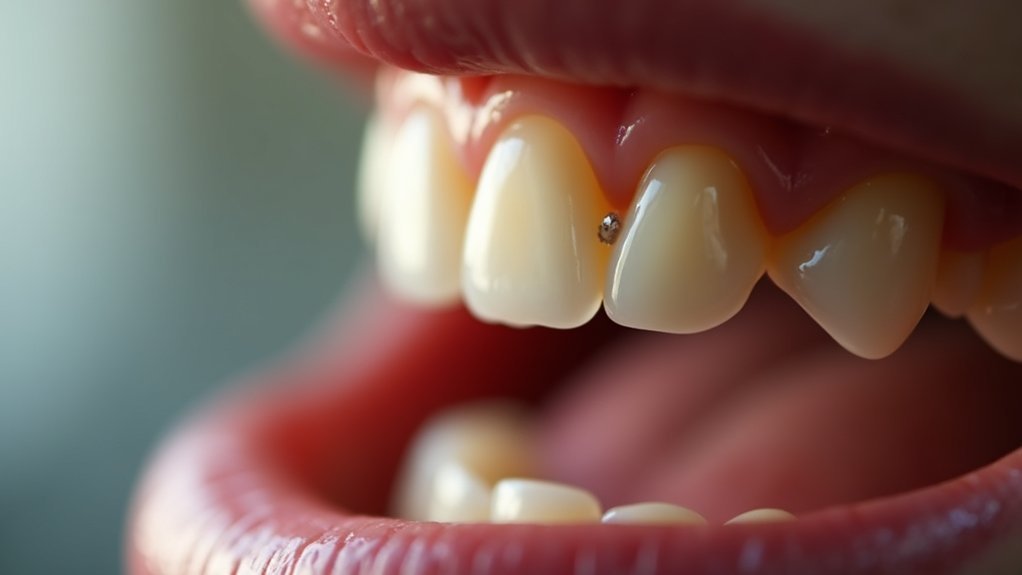
You might notice visible tooth discoloration, like brown spots or banding, indicating weakened enamel.
Increased sensitivity when consuming hot, cold, or sweet foods can also signal dental weakness.
Recognizing these symptoms early can help you take proactive steps to maintain your oral health.
Visible Tooth Discoloration
Visible tooth discoloration can be a clear indicator of dental weakness, often signaling underlying enamel issues.
You might notice:
- Brown spots or banding, which indicate weakened enamel and increased decay risk.
- Dull teeth or a rough texture, suggesting enamel erosion due to a poor diet.
- Changes in color from excessive acidic or sugary food consumption, further weakening your tooth enamel.
Recognizing these early signs is essential, as they can lead to more severe problems like sensitivity and cavities.
Regular dental check-ups can help address visible tooth discoloration and underlying enamel weaknesses before they worsen.
Increased Sensitivity Levels
As enamel wears down, increased sensitivity levels can become a noticeable and uncomfortable issue for many individuals. You might experience discomfort when consuming hot, cold, or sweet foods, signaling potential enamel erosion.
Heightened sensitivity while chewing or biting can indicate underlying dental issues stemming from poor oral hygiene. Additionally, watch for abnormal appearances like brown spots or banding on your teeth, which could further suggest enamel weakness.
Sensitivity may result from factors such as acid reflux or sugary diets. Regular dental check-ups are essential to identify these signs early and address potential decay or weakening of your enamel.
Misconceptions Surrounding “Soft Teeth”
While many people reference “soft teeth,” this term is actually a misnomer that can lead to confusion about dental health. You might think your teeth feel soft, but they aren’t physically changing.
The term “soft teeth” is misleading; teeth don’t actually soften, but dental health can be affected by various factors.
Here are common misunderstandings:
- Pregnancy or diabetes don’t directly cause soft teeth; they may affect oral health.
- Poor dental hygiene and nutrition are the primary culprits behind decay, not softening.
- Genetic factors influence enamel strength, but habits like brushing and diet play a larger role.
Understanding these misconceptions helps you prioritize proper care for strong, healthy teeth and dispels confusion about dental health.
The Impact of Diet and Nutrition on Tooth Health
How does your diet influence the health of your teeth? Your dietary choices play a vital role in maintaining strong teeth. A diet high in sugars and acids fosters bacteria growth, leading to enamel erosion and increased sensitivity.
Consuming acidic foods, like citrus fruits and sodas, gradually erodes enamel, contributing to that “soft” feeling. Additionally, malnutrition, especially vitamin D and calcium deficiencies, weakens enamel, making your teeth more susceptible to decay.
To combat this, drink fluoridated water to neutralize acids and supply essential minerals, promoting better tooth health and overall well-being. Prioritizing nutrition is key to protecting your smile.
Effective Practices to Strengthen Teeth
To effectively strengthen your teeth, implementing a consistent oral care routine is essential. Here are three effective practices you should adopt:
Implementing a consistent oral care routine is key to effectively strengthening your teeth.
- Brush Twice Daily: Use fluoride toothpaste to reinforce enamel and prevent decay, especially if you experience soft teeth.
- Floss Daily: This removes plaque and food particles, reducing cavities and promoting overall dental health.
- Balanced Diet: Focus on calcium and vitamin D to support strong enamel and minimize erosion.
Additionally, consider a nightguard to protect against grinding and schedule dental check-ups every six months for preventative care and early detection of issues.
When to Seek Professional Dental Care
When should you consider reaching out to a dental professional? If you’re experiencing persistent tooth sensitivity or pain, it’s essential to consult a dentist to uncover any issues affecting your enamel or overall dental health.
Schedule an appointment if you notice unusual changes like discoloration, abnormal wear, or signs of decay.
Regular dental check-ups, ideally every six months, are important for early detection of enamel erosion and other concerns.
If you have a history of acid reflux or suspect you might be grinding your teeth, don’t hesitate to seek professional advice to prevent further damage and maintain your oral health.