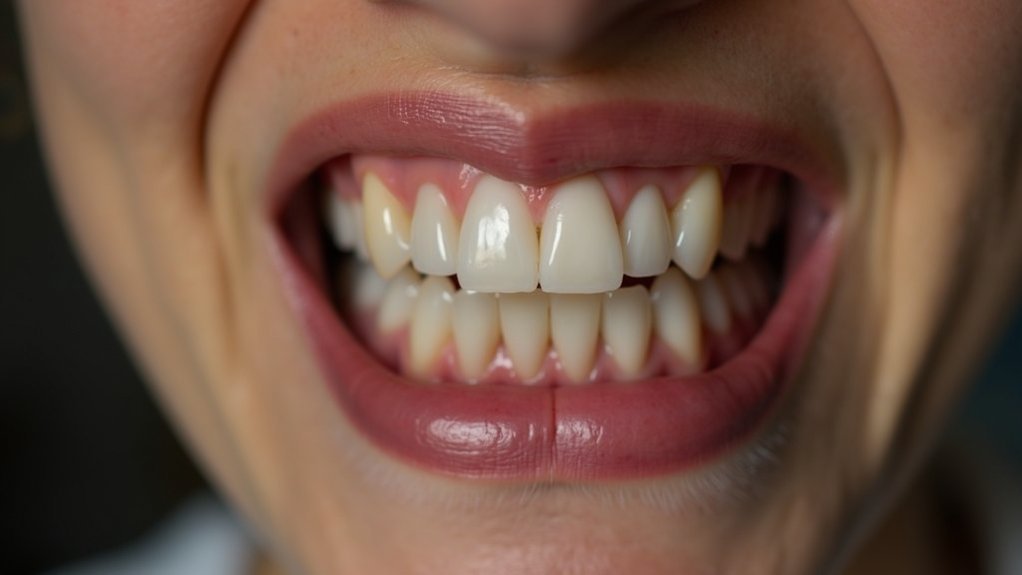

If your teeth feel tight, it could be due to several reasons. Bruxism, or teeth grinding, and jaw clenching often lead to discomfort and tension. Misalignment or overcrowding can create pressure among teeth, while gum disease may cause inflammation and irritation. Stress and anxiety can exacerbate these sensations as well. Understanding these factors is essential for addressing the issue effectively. There’s more to explore on managing tightness in your teeth effectively.
Key Takeaways
- Tightness in teeth can result from bruxism, which involves grinding or clenching teeth often due to stress or anxiety.
- Misalignment or crowding of teeth may cause adjacent teeth to push against each other, creating a sensation of tightness.
- Gum irritation and inflammation can lead to discomfort, resulting in a tight feeling in the teeth.
- Poor oral hygiene practices can exacerbate tightness, leading to gum disease and other dental issues.
- Regular dental check-ups are essential for identifying underlying problems and preventing complications related to tightness in teeth.
Common Causes of Tightness in Teeth
When you experience tightness in your teeth, it’s often due to various underlying factors that contribute to this discomfort.
Bruxism, or teeth grinding, frequently occurs during stress or sleep, increasing pressure on your teeth. Misalignment or crowding can exacerbate this sensation, as adjacent teeth push against each other.
Gum disease may also play a role, with inflammation causing discomfort in the gums, affecting your oral health. Additionally, dental trauma can destabilize teeth, leading to a tight feeling as protective mechanisms engage.
Finally, stress-related jaw clenching can induce muscle tension, further contributing to tooth sensitivity and discomfort.
The Impact of Gum Disease
Gum disease can considerably impact your oral health, leading to symptoms like swollen gums, bleeding, and a distinct tightness in your teeth.
Understanding the causes of gum disease is vital, as neglecting it can result in gum recession and loss of bone support.
Exploring treatment options early on is essential to prevent further complications and maintain your dental well-being.
Symptoms of Gum Disease
Although many people may not realize it, symptoms of gum disease can have a profound impact on oral health and overall well-being. Recognizing these early signs is essential for maintaining your dental health:
- Bleeding gums during brushing or flossing indicate inflammation.
- Tooth mobility may develop as gum recession exposes tooth roots.
- Persistent bad breath signals underlying plaque buildup.
If left untreated, gum disease can escalate, leading to severe consequences like tooth loss.
Prioritizing oral hygiene and scheduling regular dental check-ups can help prevent these issues and maintain healthy gums, ultimately safeguarding your smile and confidence.
Causes of Gum Disease
Understanding the causes of gum disease is essential for effective prevention and treatment.
Primarily, gum disease, or periodontal disease, arises from plaque buildup—a sticky film of bacteria that leads to swollen gums and inflammation. If you neglect your oral hygiene, plaque hardens into tartar, exacerbating the condition.
Over 47% of adults aged 30 and older experience symptoms, such as increased tooth mobility due to bone loss. Untreated, it can progress from gingivitis to periodontitis, risking tooth loss and systemic health issues like heart disease.
Factors like smoking, hormonal changes, and diabetes can further heighten your risk of developing gum disease.
Treatment Options Available
When gum disease progresses, it can lead to significant discomfort and complications, making timely treatment essential.
A thorough treatment plan may include:
- Professional dental cleanings to remove plaque and tartar.
- Scaling and root planing that addresses deeper infections and helps restore gum health.
- In severe cases, surgical interventions like flap surgery or bone grafting to repair gum recession.
Regular dental check-ups are important for early detection, preventing tooth loss and reducing discomfort.
Maintaining good oral hygiene through consistent brushing and flossing is also essential in managing gum disease and alleviating that tight feeling in your teeth.
Understanding Bruxism and Its Effects
Bruxism, characterized by involuntary teeth grinding, often stems from stress or anxiety, leading to symptoms such as jaw tightness and headaches.
If you experience these signs, it’s essential to understand that untreated bruxism can lead to significant dental issues and discomfort.
Effective treatment options, including custom mouth guards and stress management techniques, can help alleviate the condition and protect your oral health.
Causes of Bruxism
Although many people may not realize it, bruxism is often driven by underlying stress and anxiety, which can manifest as involuntary teeth grinding or jaw clenching. This condition affects many and can lead to significant dental issues.
Key causes include:
- High stress levels that trigger teeth grinding.
- Anxiety, which can exacerbate muscle tension and jaw clenching.
- Poor dental care habits that fail to address existing dental issues.
Long-term bruxism can result in tooth sensitivity, loose teeth, and TMJ disorders, causing pain and limited jaw movement.
Implementing effective stress management techniques and dental care is essential for prevention.
Symptoms and Treatment Options
Understanding the symptoms and treatment options for bruxism is essential for managing this often-overlooked condition.
If you experience teeth grinding, tightness in your teeth, tooth sensitivity, or jaw pain, you may be suffering from bruxism. These symptoms arise from the excessive force on your teeth, often exacerbated by stress and anxiety.
Treatment options include custom dental mouth guards designed to protect your teeth during sleep and dental alignment trays to correct any misalignment issues.
Addressing bruxism early is vital, as untreated cases can lead to significant dental problems, including fractures and temporomandibular joint disorders.
Misalignment and Crowding Issues
When teeth are misaligned or crowded, they can exert uneven pressure during biting and chewing, leading to a notable sensation of tightness in your jaw and teeth.
Common issues include:
- Misalignment: Orthodontic problems like overbite, underbite, or crossbite disrupt natural function, increasing discomfort.
- Crowding: Teeth competing for space create pressure, exacerbating feelings of tightness.
- Teeth Grinding: Stress-related habits can intensify jaw tension and discomfort caused by misalignment.
Seeking orthodontic evaluation is essential to identify suitable treatments, such as braces or aligners, to correct misalignment and alleviate discomfort associated with crowded teeth.
Stress and Its Role in Tooth Tightness
Stress greatly contributes to the sensation of tightness in your teeth, often manifesting through bruxism—an unconscious grinding or clenching of teeth.
During stressful times or intense concentration, you might clench your jaw, leading to tooth damage and discomfort. Research indicates that psychological stress is a significant factor in bruxism, which exacerbates feelings of tightness.
Clenching your jaw during stress can cause tooth damage and intensify feelings of tightness.
As you grind, misalignment may occur, further enhancing this sensation as your teeth shift from their normal positions.
To effectively manage this issue, consider incorporating relaxation techniques and consult a professional to alleviate the tightness and discomfort associated with bruxism.
When to Seek Professional Dental Help
How can you tell if your tooth tightness warrants professional attention? If you experience persistent tightness or pressure for more than a few weeks, consult your dentist. Early intervention can prevent complications like tooth damage or TMJ disorders.
Here are three key indicators to seek help:
- Accompanying Symptoms: If tightness is paired with tooth pain, sensitivity, or swelling.
- Underlying Causes: Concerns like bruxism or gum disease may require tailored treatment plans.
- Regular Dental Check-Ups: Consistent visits help monitor your oral health and catch issues early on.
Don’t delay in addressing these concerns!
Prevention Strategies for Tight Teeth
To effectively prevent tightness in your teeth, it’s essential to incorporate a multifaceted approach that addresses both physical and psychological factors.
Utilize stress relief techniques such as mindfulness or yoga to reduce bruxism and jaw clenching. Regular dental check-ups can identify misalignment or crowding that may cause teeth to feel loose.
Wearing a custom dental mouth guard at night helps mitigate the effects of grinding. Additionally, maintaining proper oral hygiene, including gentle brushing with a soft-bristled toothbrush, can prevent gum irritation, further alleviating the sensation of tightness and promoting overall dental health.