
Laughing gas, or nitrous oxide, works by calming your central nervous system, reducing anxiety and pain during wisdom teeth extractions. It quickly enters your bloodstream, providing rapid relaxation and altering your perception of discomfort. This sedative lets you remain conscious while making the experience more comfortable. Recovery is swift, allowing you to resume your activities soon after treatment. If you’re curious about the benefits, administration, and safety measures associated with laughing gas, there’s more to explore.
Key Takeaways
- Nitrous oxide calms the central nervous system to alleviate anxiety and pain during wisdom teeth extraction.
- It enters the bloodstream quickly, providing rapid relaxation and a sense of euphoria.
- The gas dulls sensory perceptions, enhancing pain management during the procedure.
- Patients remain conscious and can communicate, allowing for a more comfortable experience.
- Effects wear off quickly, enabling patients to return to normal activities shortly after treatment.
What Is Laughing Gas?
Laughing gas, scientifically known as nitrous oxide (N₂O), serves as an essential tool in dentistry, particularly during procedures like wisdom teeth extraction.
This colorless, odorless gas is administered through a mask, allowing you to breathe normally. The sedative effects of nitrous oxide effectively reduce anxiety and provide pain relief, making your dental experience more comfortable.
You’ll feel the effects within minutes, enabling quick recovery post-procedure. Importantly, nitrous oxide is considered one of the safest sedation options, with minimal side effects when administered by trained professionals.
This guarantees that patients can return to their everyday activities promptly and safely.
Common Uses in Dentistry
While various sedation options exist, nitrous oxide stands out for its effectiveness in managing patient comfort during dental procedures.
Commonly known as laughing gas, nitrous oxide is particularly beneficial during wisdom teeth extraction, as it helps alleviate anxiety and alters pain perception.
Nitrous oxide, or laughing gas, effectively eases anxiety and pain perception during wisdom teeth extractions.
Administered through a small mask, it provides rapid inhalation and calming effects within minutes, ensuring you remain awake and responsive while feeling relaxed.
This safe and effective method not only enhances patient cooperation but also results in minimal recovery time, allowing you to return to normal activities shortly after the procedure.
How Does It Work as a Sedative?
Nitrous oxide functions as a sedative by effectively calming the central nervous system, which reduces both anxiety and pain during dental procedures. When inhaled, laughing gas quickly enters your bloodstream, providing rapid relaxation and pain relief. It alters your perception of time and discomfort, fostering a sense of ease. Additionally, nitrous oxide increases neurotransmitter release, creating mild euphoria that helps manage fear. This safe sedation option allows you to feel at ease without lasting effects, enabling you to return to normal activities shortly after treatment.
| Nitrous Oxide Effects | Description |
|---|---|
| Reduces Anxiety | Calms the central nervous system |
| Pain Relief | Provides rapid pain alleviation |
| Mild Euphoria | Alters perception of discomfort |
| Quick Recovery | Effects wear off quickly |
Benefits of Laughing Gas for Wisdom Tooth Treatment
For those facing wisdom tooth extraction, the benefits of nitrous oxide as a sedative become increasingly apparent.
Laughing gas effectively reduces anxiety, creating a comfortable experience for patients with dental fears. It enhances pain management by dulling senses and decreasing pain perception, making the procedure more tolerable.
The effects of nitrous oxide set in quickly, allowing for prompt treatment and minimizing pre-procedure stress. Recovery is swift; patients often resume daily activities shortly after their dental appointment.
Ultimately, laughing gas improves patient satisfaction by facilitating a relaxed and efficient wisdom tooth treatment, making it a preferred sedation option for many.
How Is Laughing Gas Administered?
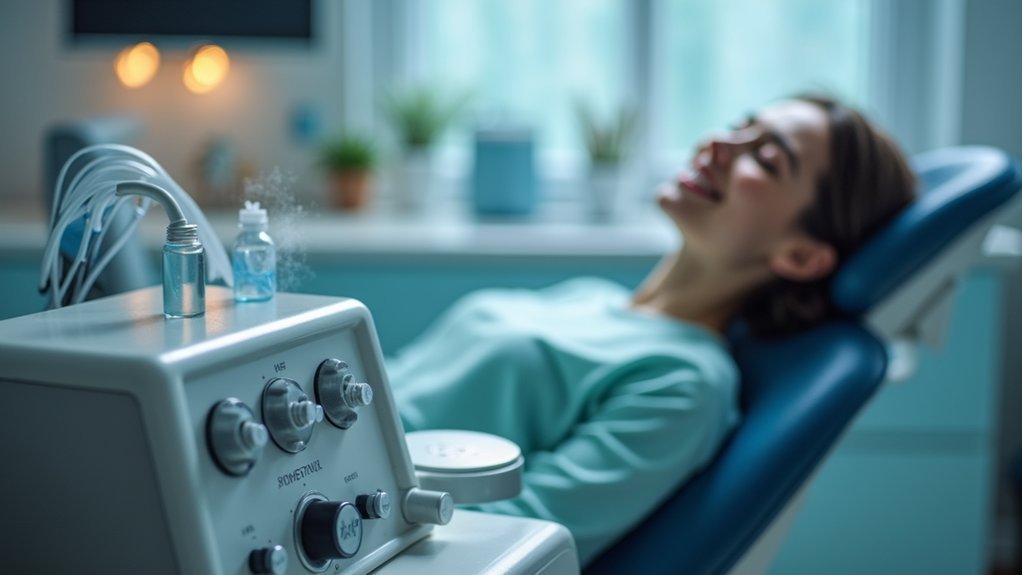
When you prepare for your wisdom tooth extraction, a small mask will be placed over your nose to administer laughing gas.
The dental team will monitor your essential signs continuously while adjusting the flow of nitrous oxide to guarantee your comfort and desired level of sedation.
This careful process allows you to experience quick relief from anxiety and discomfort during the procedure.
Mask Placement Procedure
Administering laughing gas involves a straightforward mask placement procedure that enhances patient comfort during wisdom tooth extraction.
A small mask is placed over your nose, allowing you to inhale nitrous oxide mixed with oxygen easily. You’ll be instructed to breathe normally, enabling the gas to enter your system gradually.
The machine connected to the mask controls the flow, ensuring a safe delivery tailored to your needs. As the dentist monitors your response, they can make flow adjustments for ideal comfort and anxiety relief.
The effects of laughing gas are felt within minutes, providing quick relief during your dental treatment.
Continuous Monitoring Protocols
To guarantee a safe and effective experience with laughing gas, dental professionals implement continuous monitoring protocols throughout the procedure.
Nitrous oxide is administered via a mask, allowing you to breathe normally while sedation takes effect. Your essential signs, including heart rate and oxygen saturation, are continuously monitored to guarantee your safety and comfort.
Before starting, the dentist reviews your medical history to identify any contraindications. As you respond to the gas, dental professionals adjust the flow of nitrous oxide accordingly, ensuring you receive the precise dosage needed for ideal sedation while maintaining your well-being during the procedure.
Safety Measures and Monitoring
While using laughing gas for wisdom teeth extraction can be highly effective, safety measures and monitoring are essential to guarantee a smooth experience.
Before administration, the dentist reviews your medical history to identify any concerns.
During the procedure, the team closely monitors your crucial signs, such as heart rate and oxygen saturation, ensuring your safety and comfort.
Nitrous oxide is delivered in controlled amounts, allowing adjustments based on your response.
Continuous monitoring helps detect side effects immediately, and emergency protocols are in place to manage any rare adverse reactions, reinforcing the overall safety profile of nitrous oxide as a sedation option.
What Patients Can Expect?
When you arrive for your wisdom teeth extraction, expect a small mask to be placed over your nose, which allows you to breathe in nitrous oxide comfortably.
This laughing gas works quickly, effectively reducing dental anxiety and enhancing patient comfort. You’ll remain awake and able to follow your dentist’s instructions, promoting clear communication throughout the procedure.
Dentists monitor your essential signs and adjust the gas flow to guarantee safety. Once the mask is removed, the effects wear off quickly, allowing you to resume normal activities shortly after your appointment.
Nitrous oxide is a safe option for managing anxiety during dental procedures.
Potential Side Effects and Considerations
When considering laughing gas for your wisdom teeth procedure, it’s important to be aware of potential side effects like mild nausea and dizziness, which typically resolve quickly.
You’ll also need to discuss any existing health conditions with your dentist, as certain factors may affect your suitability for this treatment.
Monitoring your critical signs during the procedure is necessary to guarantee your safety and comfort.
Common Side Effects
Although laughing gas is generally safe and well-tolerated, it’s important to be aware of potential side effects that may arise during its use.
Common side effects include:
- Mild nausea – A temporary discomfort that usually resolves quickly.
- Dizziness – Some patients may feel lightheaded after administration.
- Headaches – These can occur but are typically short-lived.
While allergic reactions to nitrous oxide are rare, monitoring is essential for patient safety.
Individuals with respiratory issues or a history of substance abuse may not be suitable candidates for laughing gas, highlighting the importance of understanding its overall safety profile.
Patient Considerations
How can you guarantee that laughing gas is a safe option for your wisdom teeth extraction? Start by discussing your medical history with your dental team.
They’ll assess potential contraindications, especially if you have respiratory issues like COPD or a history of mental health conditions. Nitrous oxide is generally safe, but side effects such as mild nausea or dizziness can occur and typically resolve quickly.
Continuous monitoring assures your comfort throughout the procedure. By addressing these patient considerations, you can make informed decisions about using laughing gas as a sedation option during your wisdom teeth extraction.
Safety Precautions
While nitrous oxide is widely regarded as a safe sedation option for wisdom teeth extraction, it’s crucial to be aware of potential side effects and specific considerations that may affect your experience.
- Discuss your medical history thoroughly to identify any contraindications.
- Be mindful of potential risks, especially if you have respiratory issues or a history of substance abuse.
- Expect continuous monitoring of essential signs during the procedure to guarantee patient safety and prompt adjustments if needed.