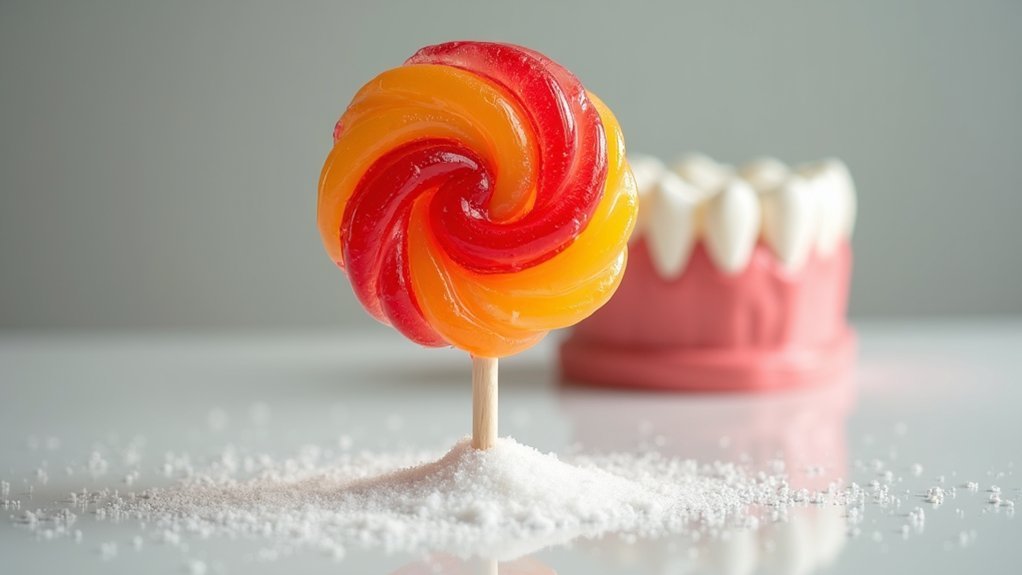

Lollipops are indeed bad for your teeth. Their high sugar content feeds harmful bacteria, which leads to acid production that erodes your enamel and increases cavity risk. The sticky nature traps sugar, making it hard to clean your teeth. Additionally, sour lollipops are more acidic, worsening the damage. To satisfy your sweet cravings without harming your dental health, it’s essential to explore healthier alternatives. Discover more about maintaining your oral hygiene after enjoying treats.
Key Takeaways
- Lollipops are high in sugar, which feeds harmful bacteria and leads to tooth decay.
- Their sticky nature traps sugar on teeth, making cleaning difficult and increasing cavity risks.
- Sour lollipops can be more damaging due to their higher acidity, accelerating enamel erosion.
- Hard candies, including lollipops, expose teeth to prolonged sugar, enhancing the risk of cavities.
- Alternatives like dark chocolate or sugar-free gum can satisfy sweet cravings without harming dental health.
The Dangers of Lollipops for Dental Health
While lollipops might seem like harmless treats, their impact on dental health can be quite severe.
These sugary delights primarily consist of sugar, which feeds harmful bacteria in your mouth. This leads to acid production that erodes tooth enamel, increasing the risk of tooth decay.
The prolonged dissolution time of lollipops means you’re exposed to sugar and acid for longer, heightening cavity risks. Sour varieties are even worse due to their high acidity.
The extended melting time of lollipops increases sugar and acid exposure, significantly raising the risk of cavities, especially with sour types.
Additionally, the sticky nature of lollipops can trap sugar in crevices, making cleaning difficult. Regular consumption can ultimately lead to significant long-term dental issues, including decay and gum disease.
How Stickiness Affects Tooth Decay
When you enjoy a sticky lollipop, that sugary residue can cling to your teeth, creating a perfect feast for harmful bacteria.
This accumulation promotes increased bacterial activity, which leads to acid production that erodes your tooth enamel over time.
Understanding how stickiness impacts tooth decay is essential for maintaining your dental health.
Sugar Residue Accumulation
How does the stickiness of lollipops contribute to tooth decay? The sugar residue from these sticky candies clings to your teeth, extending sugar exposure and increasing the risk of cavities.
As it lingers, bacteria thrive on this residue, producing harmful acids that erode tooth enamel. Unlike less sticky treats, lollipops can be challenging to wash away with saliva, making it essential to brush your teeth after enjoying them.
The longer the sugars remain in contact with your teeth, the higher the likelihood of developing dental issues. Awareness of this can guide better choices for oral health and help others maintain strong teeth.
Increased Bacterial Activity
The stickiness of lollipops greatly boosts bacterial activity in your mouth, creating an environment ripe for tooth decay. When lollipops cling to your teeth, they lead to prolonged exposure to sugar, allowing harmful bacteria to thrive. This results in increased acid production, which erodes tooth enamel and heightens the risk of cavities.
| Stage | Effect on Bacteria | Risk Level |
|---|---|---|
| Sugar Exposure | Bacteria multiply rapidly | High |
| Acid Production | Enamel erosion | Very High |
| Plaque Formation | Tooth decay | Critical |
Be mindful of these risks to protect dental health.
The Role of Hard Candies in Enamel Erosion
When you enjoy hard candies, you’re exposing your teeth to high sugar levels for an extended period.
This sustained sugar presence encourages bacteria to produce acids that can erode enamel considerably.
As a result, frequent consumption not only risks enamel wear but also heightens your chances of developing cavities.
Sugar Content and Risks
While enjoying a lollipop might seem like a harmless treat, its high sugar content poses significant risks to your dental health. Lollipops and hard candies primarily consist of sugar, which bacteria convert into harmful acids that increase cavity risks.
The longer you suck on these candies, the more your teeth are exposed to sugar, raising the potential for enamel erosion. Sour varieties heighten the threat with added acidity. Additionally, biting hard candies can chip teeth, compounding the risks.
Regular consumption creates a cumulative effect, as sticky residues prolong sugar exposure, making it essential to be mindful of these treats for better dental health.
Acid Production Effects
Hard candies, including lollipops, aren’t just a sugary indulgence; they greatly impact your dental health through acid production. Here’s how:
- Hard candies dissolve slowly, prolonging sugar exposure and increasing acid production by bacteria.
- This prolonged sugar presence can upset the acid balance, accelerating tooth enamel breakdown.
- Frequent consumption of these candies considerably contributes to enamel erosion, heightening cavity risk.
- Their stickiness leaves residue, hindering saliva’s ability to wash away sugars and acids effectively.
Understanding these effects can help you make informed choices about hard candies and protect your tooth enamel from potential damage.
Alternatives to Lollipops for Satisfying Sweet Cravings
If you’re looking to satisfy your sweet cravings without the drawbacks of lollipops, there are several healthier alternatives that can delight your taste buds.
Dark chocolate, with its lower sugar content, not only satisfies your sweet tooth but also helps strengthen tooth enamel thanks to its antioxidants.
Dark chocolate is a delicious way to indulge your sweet cravings while benefiting your dental health with its antioxidants.
Sugar-free gum, especially those with xylitol, promotes saliva production, washing away harmful bacteria.
Fresh fruits like apples or pears deliver natural sweetness and fiber, making them nutritious choices.
For a creamy option, consider yogurt or plant-based treats without added sugars.
Nuts combined with dark chocolate offer crunch and protein, reducing stickiness.
The Importance of Moderation in Candy Consumption
Moderation in candy consumption is essential for maintaining both oral and overall health.
To protect your teeth and well-being, consider these points:
- High sugar content in lollipops can increase acid production, leading to tooth decay.
- The long dissolution time exposes your teeth to sugar, heightening dental risks.
- Limiting lollipop intake helps maintain a balanced diet, avoiding excessive sugar consumption.
- Being aware of oral health risks encourages you to seek safer alternatives.
Tips for Maintaining Oral Hygiene After Candy
After enjoying a few lollipops, keeping your mouth clean becomes a priority to prevent tooth decay. Here are some tips to maintain your oral health after consuming sweets:
| Action | Benefit |
|---|---|
| Chew sugar-free gum | Increases saliva, washes away sugar |
| Eat crunchy vegetables | Neutralizes sugars and promotes hygiene |
| Drink water | Rinses away residual sugars and acids |
| Brush and floss | Removes plaque and food particles |
| Use fluoride toothpaste | Strengthens enamel against sugary treats |
Consulting Your Dentist for Personalized Advice
How can you guarantee your candy habits aren’t harming your teeth? Consulting your dentist is essential for personalized advice.
Here are four reasons to seek their expertise:
- Assess your unique dental health and risks associated with lollipops.
- Receive tailored strategies to minimize lollipop impact on your teeth.
- Discover healthier alternatives like sugar-free candies or dark chocolate.
- Learn proper oral hygiene practices, including effective brushing techniques post-candy.
Regular visits help monitor tooth enamel and overall oral health, ensuring you maintain a balanced approach to candy consumption while prioritizing your dental well-being.
Your dentist is your best ally in this journey.