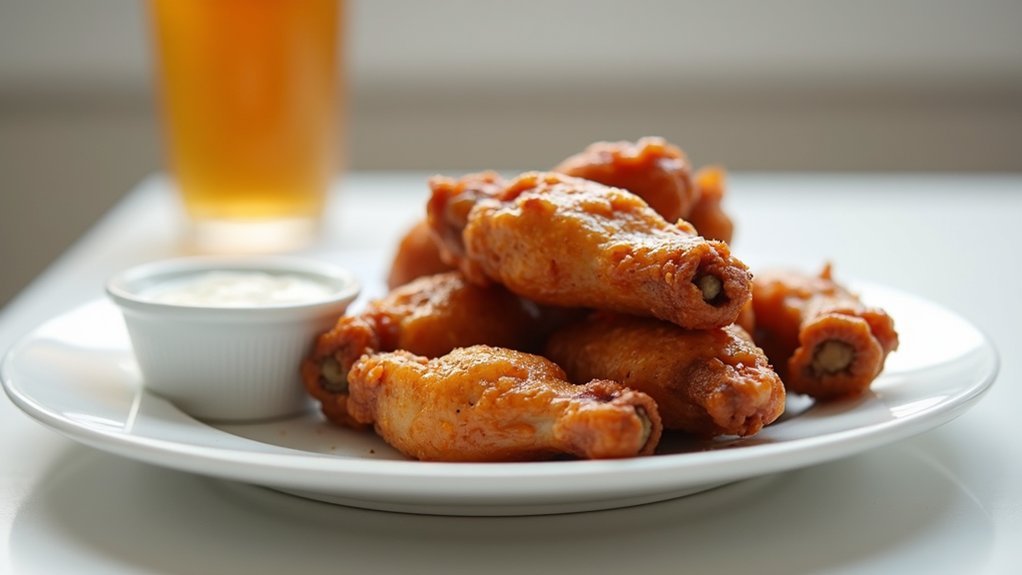

Eating wings after wisdom teeth removal isn’t advisable. Their tough texture can cause pain and disrupt your healing. Bones and skin pose choking hazards and may lodge in extraction sites. You should focus on soft foods for at least a week after surgery to minimize strain on your jaw and avoid complications. If you’re curious about the best foods to eat during your recovery, you might want to explore some recommended options.
Key Takeaways
- Avoid eating wings for at least a week post-surgery due to their tough texture and potential choking hazards.
- Wings require significant jaw movement, which can strain healing areas and disrupt recovery.
- Spicy or saucy wings may irritate sensitive extraction sites, complicating the healing process.
- Focus on a soft food diet immediately after surgery to ensure proper healing and minimize discomfort.
- Gradually reintroduce wings only after a week, starting with boneless, well-cooked options and mild sauces.
Understanding the Risks of Eating Wings After Surgery
When you’ve just had your wisdom teeth removed, it’s crucial to understand the risks associated with eating wings too soon. The tough, fibrous texture can cause pain and disrupt your recovery process.
Bones and skin pose choking hazards and may lead to particles lodging in extraction sites, increasing infection risk. Chewing wings requires significant jaw movement, straining your healing areas.
Additionally, spicy or saucy flavors can irritate sensitive sites, prolonging discomfort and healing. It’s best to avoid solid foods, including wings, for at least a week post-surgery, focusing instead on softer alternatives that support your recovery.
The Importance of a Soft Food Diet
Since a soft food diet is essential after wisdom teeth removal, it plays a significant role in minimizing discomfort and promoting healing. By sticking to soft foods, you can avoid eating anything that might irritate the extraction sites or dislodge blood clots important for recovery.
Here are some key benefits of maintaining a soft food diet:
- Reduces strain on your jaw.
- Minimizes the risk of complications like dry socket.
- Aids in proper healing without disruption.
- Eases the chewing and swallowing process.
Prioritizing soft foods for the first 24-48 hours is crucial for a smooth recovery.
Recommended Foods for Immediate Recovery
After wisdom teeth removal, focusing on easy-to-eat, soft foods is vital for a smooth recovery.
Stick to a soft diet during the first 24-48 hours to minimize irritation and pain. Foods to eat include yogurt, smoothies, and mashed potatoes, which require minimal chewing.
During the initial recovery, opt for a soft diet like yogurt, smoothies, and mashed potatoes to ease discomfort.
Avoid anything crunchy or tough, like chicken wings, as these can complicate healing. Make sure your meals are room temperature or cool to protect the healing blood clot.
Hydration is important, but avoid using straws and very cold drinks to prevent dry socket.
Gradually reintroduce soft, easy-to-chew foods as your sensitivity decreases.
Signs of Complications to Watch For
What signs should you look for to identify complications after wisdom teeth removal? Recognizing these symptoms early can help you seek prompt care.
- Severe pain that worsens instead of improving, possibly indicating dry socket or infection.
- Unexplained swelling or redness around the extraction site, signaling a potential infection.
- Persistent bad taste or foul odor in your mouth, which could mean trapped food particles or infection.
- Difficulty opening your mouth or jaw stiffness that doesn’t improve, indicating possible complications.
If you notice any of these signs, consult your dentist immediately for evaluation.
When It’s Safe to Reintroduce Solid Foods
Once you’ve navigated the initial healing phase following wisdom teeth removal, you may start considering when to safely reintroduce solid foods into your diet.
It’s essential to stick with soft foods for at least 24-48 hours to guarantee proper healing and to avoid dislodging the blood clot.
Typically, you can begin introducing solid foods, like chicken wings, around one week post-surgery, depending on your comfort level and healing process.
You can usually start eating solid foods, such as chicken wings, about a week after surgery, based on your healing progress.
Start with soft-cooked options that require minimal chewing.
Always listen to your body; if you feel pain or discomfort, revert to softer items until you’re fully healed.
Tips for Gradually Adding Wings Back Into Your Diet
As you begin to reintroduce wings into your diet, it’s critical to take a measured approach to guarantee your healing process remains on track.
Follow these tips for a smooth shift:
- Wait at least one week post-surgery before trying wings.
- Start with boneless, well-cooked wings to minimize chewing and avoid irritation.
- Choose soft, small pieces and monitor any discomfort during and after eating.
- Opt for mild, non-spicy sauces to prevent irritation of your healing gums.
Maintaining Oral Hygiene During Recovery
Maintaining oral hygiene after wisdom teeth removal is essential for your recovery.
You should use gentle brushing techniques to clean your teeth without disturbing the extraction sites, and it’s best to avoid mouthwash during the initial healing phase.
Gentle Brushing Techniques
After wisdom teeth removal, it’s important to keep your mouth clean while being gentle on your healing gums.
Here are some gentle brushing techniques to maintain your oral hygiene without disturbing the extraction site:
- Use a soft-bristled toothbrush to avoid irritation.
- Avoid brushing directly on the extraction area for the first few days.
- Rinse with warm salt water instead of brushing near the extraction site to keep it clean.
- Brush the rest of your teeth lightly, ensuring comfort while cleaning all surfaces.
Always consult your oral surgeon for personalized advice on when to resume normal brushing techniques.
Avoid Mouthwash Early
While you may be keen to keep your mouth fresh after wisdom teeth removal, it’s important to avoid mouthwash in the first 24 hours. This precaution helps the blood clot stabilize, minimizing the risk of dislodging it.
Rinsing too vigorously, even with mouthwash, can disrupt healing and lead to complications like dry socket.
After the first day, you can maintain oral hygiene by using a gentle, alcohol-free mouthwash, avoiding irritation at the extraction site.
Always consult your oral surgeon for specific recommendations tailored to your recovery progress, ensuring you protect your healing while maintaining proper oral hygiene.