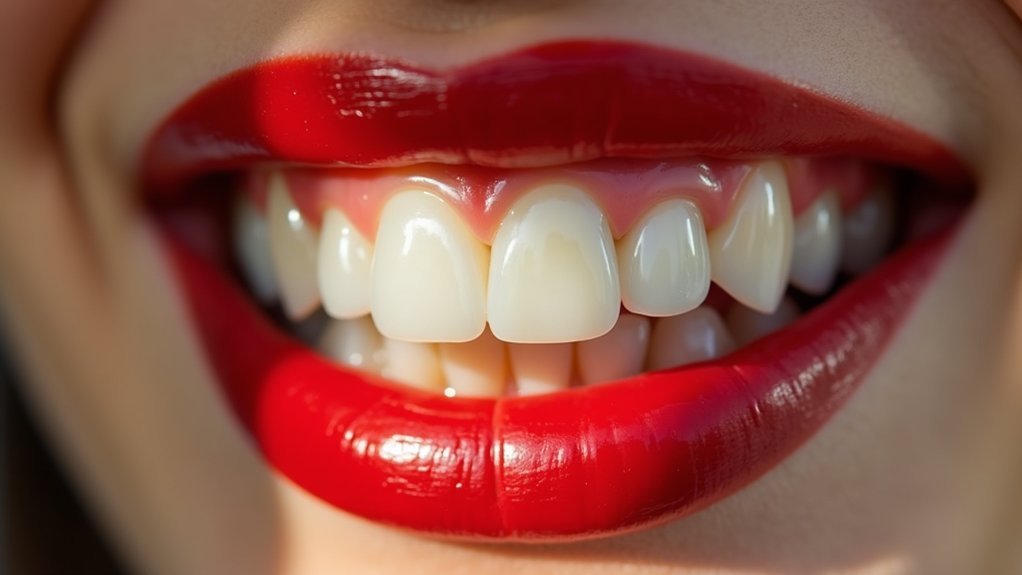

Yes, teeth can be too white, resulting in an unnatural bluish appearance and increased dental risks. Over-bleaching may compromise enamel, raising the chance of decay and causing tooth sensitivity. Aiming for a shade that harmonizes with your natural features is essential. Professional treatments can help achieve this balance safely. Maintaining your desired whiteness requires good oral hygiene and regular check-ups. To understand more about achieving and preserving the perfect shade, keep exploring the topic.
Key Takeaways
- Over-bleaching can cause an unnatural bluish-white appearance, indicating teeth may be too white.
- Excessive whitening compromises enamel integrity, increasing the risk of tooth decay.
- Aiming for a shade that harmonizes with the whites of the eyes prevents overly bright results.
- Professional treatments ensure a natural appearance while achieving a brighter smile without overdoing it.
- Maintaining a balanced shade requires routine care and avoiding staining foods to prevent unnatural whiteness.
Understanding the Risks of Over-Whitening
While achieving a bright, white smile can be appealing, it’s essential to understand the risks associated with over-whitening your teeth.
Over-bleaching can create an unnatural look, often resulting in a bluish-white appearance. Excessive whitening compromises your enamel’s integrity, increasing the likelihood of tooth decay and causing temporary tooth sensitivity or pain.
You might also experience gum irritation, especially with improper application during at-home whitening. It’s vital to prioritize your dental health over aesthetic desires.
Caution against pursuing overly bright teeth will help you maintain a natural appearance while protecting your oral well-being from potential damage.
Factors Contributing to Natural Tooth Color
Achieving the right tooth color involves understanding several factors that contribute to the natural shades of your teeth. Genetics plays a significant role, determining your inherent hue and shade.
Teeth color consists of three components: hue, chroma, and value, which together create your overall appearance. Typically, natural tooth color ranges from bluish-white to slightly yellowish, with the latter being more common.
Thinner enamel can make teeth appear darker, as the underlying dentin shows through. Additionally, whitening treatments tend to be more effective on teeth with a yellowish hue, while grayish hues are often more resistant to change.
How to Achieve a Balanced Shade of White
To achieve a balanced shade of white for your teeth, it’s essential to aim for a tone that harmonizes with the whites of your eyes, creating a natural look.
Generally, a two to three shade improvement is sufficient for noticeable enhancement without veering into an unnatural appearance.
Consider your skin tone and complexion when selecting a whitening shade; lighter skin may accommodate slightly whiter shades.
A consultation with a dentist can guide you in choosing the best shade for your teeth, avoiding overbleaching, which can lead to dental issues and sensitivity while ensuring a beautiful, natural appearance.
The Role of Professional Treatments in Teeth Whitening
When you opt for professional teeth whitening treatments, you can expect predictable results thanks to the higher concentrations of peroxide used.
Your dentist will also personalize your shade matching, ensuring your smile complements your natural features.
This tailored approach enhances the effectiveness of the treatment while maintaining a natural appearance.
Predictable Results Achieved
While many people seek whiter teeth, achieving a natural and appealing brightness can be challenging with at-home methods.
Professional whitening treatments offer predictable results and guarantee your goals are met effectively. Here’s what you can expect:
- Higher peroxide concentrations (35%-45%)
- Tailored procedures for your specific tooth shade
- Rapid results in about one hour
- Removal of discolorations from staining or aging
- A balance between brightness and natural appearance
With professional teeth whitening, you can achieve a beautiful, white smile that reflects your personality without the risk of looking “too white.”
Personalized Shade Matching
Achieving a bright smile that looks natural involves more than just using any whitening product; it requires personalized shade matching. During professional teeth whitening, dentists assess your natural tooth color and skin tone to select the ideal target shade. This process guarantees your results remain harmonious and don’t veer into unnaturally white territory.
| Factors Considered | Impact on Shade Selection |
|---|---|
| Age | Influences natural tooth color |
| Existing Discoloration | Determines necessary whitening level |
| Overall Facial Aesthetics | Guarantees balance in appearance |
Personalized shade matching enhances your natural sparkle, resulting in a bright smile that feels authentic.
Home Remedies and Their Effectiveness
Although many people seek natural alternatives for teeth whitening, the effectiveness of home remedies often varies considerably.
While some methods may keep your teeth bright, they typically don’t achieve the same results as professional treatments. You should manage your expectations if you choose to try these popular home remedies:
- Baking soda brushing
- Charcoal applications
- Coconut oil pulling
- Eating crunchy vegetables
- Lemon juice rinses
These options can help maintain oral health, but be cautious; overuse might lead to tooth decay or enamel damage.
Maintaining Your Desired Tooth Shade After Whitening
To maintain your desired tooth shade after whitening, it’s essential to incorporate routine oral care into your daily habits.
Regular brushing with a whitening toothpaste and scheduling professional touch-ups can greatly prolong the effects of your treatment.
Routine Oral Care
Maintaining your desired tooth shade after whitening is essential for ensuring that your smile remains bright and vibrant.
To achieve this, incorporate these routine oral care tips:
- Brush twice daily with fluoride toothpaste.
- Floss regularly to prevent plaque buildup.
- Avoid staining foods and beverages like coffee and red wine.
- Schedule routine dental check-ups for professional cleanings.
- Stay hydrated and rinse with water after consuming staining items.
Professional Touch-ups Needed
When you’ve invested in professional whitening, keeping that bright smile often requires periodic touch-ups to maintain your desired tooth shade.
Most people need touch-ups every 6 to 12 months, depending on lifestyle factors like diet and smoking. These professional treatments help prevent overbleaching, ensuring your teeth stay within a natural appearance.
Your dentist can offer personalized recommendations for at-home maintenance products that complement these touch-ups, prolonging your whitening results.
Regular dental check-ups are essential for monitoring your tooth shade and determining when to schedule your next professional touch-up, helping you maintain a vibrant and confident smile.