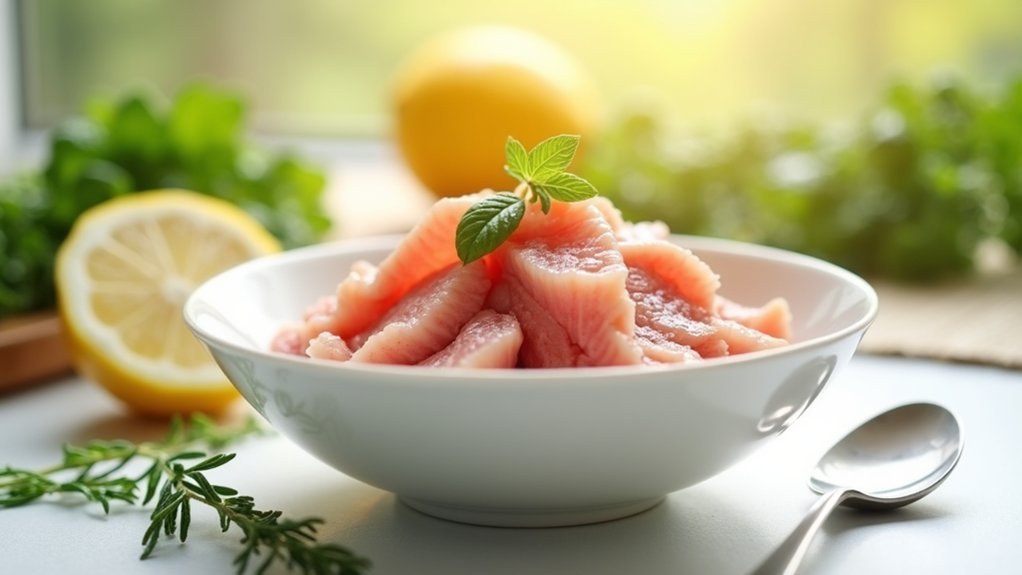

Yes, you can eat tuna after wisdom teeth removal, but it needs to be prepared in a way that guarantees a soft texture. Flaked tuna mixed with mayonnaise or Greek yogurt is a great option. Avoid chunky additions like celery that could irritate your gums. Serve it at room temperature for comfort, and consider it part of a balanced diet during your recovery. There’s more to know about food choices and recovery tips ahead.
Key Takeaways
- Tuna is a high-protein food that can aid in healing after wisdom teeth removal.
- Ensure the tuna is prepared to a soft texture, like flaked or blended, for easier consumption.
- Avoid adding crunchy ingredients like celery or onions that may irritate the surgical site.
- Serve tuna cool or at lukewarm temperature to enhance comfort while eating.
- Monitor for any discomfort or adverse reactions after eating tuna, and consult your dentist if issues arise.
Understanding Wisdom Teeth Removal
Understanding wisdom teeth removal is significant, especially if you’re facing the procedure. Typically occurring in your late teens or early twenties, wisdom teeth may need extraction if they’re impacted or causing crowding.
The procedure involves anesthesia, an incision in the gum, and extracting the tooth, often in pieces. Post-surgery, you may experience complications like dry socket or infections, making proper oral hygiene essential.
The recovery process usually takes a few days to a week, so following aftercare instructions is important for your healing. A diet of soft foods will aid your recovery and promote overall well-being during this time.
The Importance of a Soft Diet
After wisdom teeth removal, adhering to a soft diet is essential for your recovery.
Soft foods, like tuna salad made with flaky tuna and mayonnaise, provide necessary protein without requiring extensive chewing. It’s vital to maintain this diet for at least 72 hours to allow ideal healing and minimize discomfort.
Soft foods like tuna salad offer essential protein while minimizing chewing, crucial for healing in the first 72 hours post-surgery.
Consuming nutrient-rich, soft foods greatly influences your healing process and overall oral health during recovery.
As you progress, gradually introducing semi-soft foods, such as tuna, can help guide you back to a regular diet while ensuring you receive adequate nutrition for a successful recovery.
Can You Eat Tuna After Surgery?
You can eat tuna after surgery, as it offers valuable nutritional benefits, particularly high protein content that aids in healing.
To guarantee it’s safe and comfortable, prepare the tuna in a soft texture, like flaked or blended.
Avoid adding crunchy ingredients and serve it at a lukewarm temperature to minimize irritation at the surgical site.
Nutritional Benefits of Tuna
Tuna stands out as a nutritious option for those recovering from wisdom teeth removal. Its numerous nutritional benefits make it an excellent choice for healing and recovery.
Consider these highlights:
- High in protein, essential for tissue repair
- Rich in omega-3 fatty acids, promoting anti-inflammatory effects
- Soft texture, ideal for a post-surgery diet
- Versatile; easily combined with soft foods like mayonnaise or mashed avocado
- Opt for tuna packed in water for a lighter option
Including tuna in your diet can support your recovery, ensuring you get the necessary nutrients while enjoying a delicious meal.
Soft Texture Consideration
While recovering from wisdom teeth removal, it’s essential to choose foods that are easy to eat, and soft-textured options like tuna fit the bill perfectly.
Canned tuna, especially when packed in water, offers a moist consistency that simplifies consumption. Its soft texture minimizes chewing, making it ideal during your healing phase.
Additionally, the high protein content in tuna supports recovery by providing essential nutrients.
Just make certain that any tuna salad you prepare is smooth, avoiding chunky pieces that could irritate your surgical sites.
Allow the dish to cool to room temperature for added comfort as you heal.
Recommended Preparation Methods
When considering how to prepare tuna after wisdom teeth removal, opting for methods that guarantee a soft, smooth texture is essential for a comfortable eating experience.
Here are some recommended preparation methods:
- Blend tuna with mayonnaise or Greek yogurt for a creamy consistency.
- Choose flaky tuna packed in water or oil to minimize chewing.
- Serve tuna cool or at room temperature to enhance comfort.
- Avoid chunky additions like celery or onions to protect healing gums.
- Incorporate soft foods to create a balanced meal during your recovery from oral surgery.
These methods will assure you enjoy your tuna safely and comfortably.
Best Ways to Prepare Tuna for Recovery
After wisdom teeth removal, incorporating canned tuna into your diet can be an excellent choice for recovery. Canned tuna is soft, easy to chew, and rich in protein, essential for healing. Here are some preparation ideas:
| Preparation Method | Description |
|---|---|
| Tuna Salad | Mix with mayonnaise or Greek yogurt |
| Creamy Tuna Dip | Blend with avocado for a smooth dip |
| Chilled Tuna Salad | Serve cold for a revitalizing meal |
| Soft Veggie Addition | Finely chop soft veggies like cucumber |
These methods guarantee your meals are nutritious, gentle on your gums, and easy to enjoy, supporting your recovery as advised by your oral surgeon.
Other Soft Food Options to Consider
After wisdom teeth removal, it’s important to contemplate a variety of soft food options that can support your recovery.
In addition to tuna, scrambled eggs, mashed vegetables, and smoothies offer excellent nutritional benefits while being easy to prepare.
Incorporating soft fruits like bananas and applesauce can further enhance your diet, ensuring you get the essential nutrients you need during this healing period.
Nutritional Benefits of Tuna
Tuna offers numerous nutritional benefits that can aid your recovery after wisdom teeth removal. It’s packed with protein, essential for healing, and rich in omega-3 fatty acids, which help reduce inflammation.
Incorporating tuna into your diet provides:
- Approximately 22 grams of protein per 3-ounce serving
- Vitamins and minerals like vitamin D and selenium
- A soft food option easily blended with mayonnaise
- Convenient, quick preparation
- Versatility to complement other soft foods
Including tuna alongside other soft foods, like mashed avocados and yogurt, guarantees you get a balanced intake of nutrients vital for a smooth recovery.
Easy Preparation Methods
Incorporating tuna into your diet is just one way to guarantee you’re getting the necessary nutrients during your recovery. Tuna salad is an excellent option for easy preparation and can be blended for a smoother consistency. Combine tuna with soft ingredients like avocado or cottage cheese to enhance nutritional value while ensuring a soft texture. Here’s a quick reference for soft food options:
| Soft Food Options | Preparation Method |
|---|---|
| Tuna Salad | Blend with mayonnaise |
| Soft Pasta with Tuna | Cook pasta until soft |
| Tuna with Avocado | Mash together |
| Cottage Cheese Tuna | Mix until creamy |
| Soft Bread with Tuna | Use without crunchy edges |
Ideal Serving Suggestions
Choosing the right soft food options during your recovery can greatly impact your comfort and nutrition. Incorporating tuna can be both nutritious and easy to manage.
Here are some ideal serving suggestions:
- Tuna salad with mayonnaise for a creamy texture
- Mashed avocados mixed with tuna for added flavor
- Soft pasta with well-cooked noodles and a light, creamy sauce
- Smooth hummus served alongside tuna for a protein boost
- Tuna mixed into a soft casserole, ensuring a gentle consistency
Always serve tuna cool or at room temperature to minimize discomfort, and monitor your mouth for any irritation while eating.
Tips for a Smooth Recovery
Ensuring a smooth recovery after wisdom teeth removal hinges on your dietary choices. Focus on soft foods that promote healing, like finely blended tuna salad, which provides essential protein.
A smooth recovery after wisdom teeth removal relies on soft, nourishing foods like finely blended tuna salad for essential protein.
Serve it cold or at room temperature to avoid discomfort, and be sure to mash it with mayonnaise or yogurt for a smooth consistency. Avoid crunchy or hard pieces, as these can irritate your surgical sites.
Always consult with your dentist or oral surgeon for specific dietary guidelines and the right timing to reintroduce certain foods into your diet.
Prioritizing your nutrition will help facilitate a quicker and more comfortable recovery.
When to Consult Your Dentist
While it’s normal to experience some discomfort after wisdom teeth removal, knowing when to consult your dentist can help you avoid potential complications.
Consider reaching out if you notice:
- Prolonged pain or swelling after eating soft foods like tuna
- Unusual bleeding at the surgical site
- Difficulty swallowing or discomfort when consuming foods
- Concerns about your healing process or recovery timeline
- Signs of an allergic reaction or gastrointestinal distress