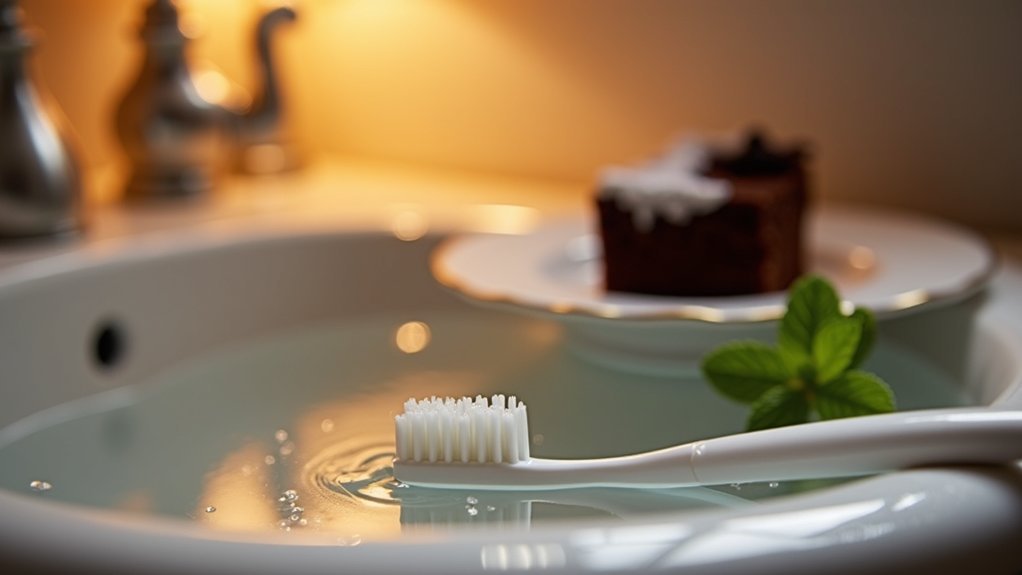

Eating after brushing your teeth at night can negatively impact your oral health. It reintroduces food particles that feed harmful bacteria, increasing plaque and cavity risk. Plus, it washes away the protective fluoride layer from your toothpaste, making your enamel more vulnerable to acid erosion. If you must snack, choose safe options like cheese or crunchy veggies. Want to know more about maintaining your dental health? There’s more essential information waiting for you.
Key Takeaways
- Eating after brushing compromises oral health by reintroducing food particles that fuel harmful bacteria and plaque build-up.
- Consuming sugary or acidic foods post-brushing reduces the effectiveness of fluoride toothpaste, diminishing its protective benefits.
- Acidic snacks increase acid exposure to teeth, raising the risk of cavities and enamel erosion.
- If you must eat at night, choose safe foods like cheese or crunchy veggies to minimize dental damage.
- Rinse immediately after eating, but wait at least 30 minutes before brushing to protect your enamel.
Impacts of Eating After Brushing Teeth
When you eat after brushing your teeth at night, you risk compromising your oral health. Consuming food post-brushing leaves particles on your teeth, fueling bacteria and increasing plaque build-up.
Sugary and acidic foods are particularly harmful, as they promote acid production that weakens enamel and leads to tooth decay. Brushing removes debris, but eating afterward reintroduces it, making your teeth vulnerable.
Since saliva’s protective effects diminish overnight, leftover particles can do more damage. To protect your smile, avoid eating after brushing, ensuring your hard work in maintaining oral health isn’t undone by late-night snacks.
Effects on Toothpaste Effectiveness
Eating after brushing your teeth can greatly undermine the protective benefits of the toothpaste you’ve just applied.
When you consume food, you wash away the protective fluoride layer, considerably reducing toothpaste effectiveness. At night, saliva’s ability to neutralize acids diminishes, making the barrier your toothpaste creates even more essential.
Introducing food particles promotes acid production and allows harmful bacteria in your mouth to thrive, leading to plaque formation. To protect your enamel and maintain the maximum effectiveness of your toothpaste, it’s best to avoid eating after brushing.
Introducing food particles can increase acid production and foster harmful bacteria, undermining your enamel and toothpaste’s effectiveness.
Prioritize your dental health by waiting until morning to indulge in snacks.
Risks of Acid Erosion
Acid erosion poses a significant threat to your dental health, especially if you indulge in snacks after brushing your teeth at night. Here’s what you need to know:
- Eating acidic foods increases acid exposure to your teeth.
- Bacteria produce harmful acids from sugars in snacks.
- Toothpaste’s protective layer gets washed away with food.
- Saliva, which neutralizes acids, is less active while you sleep.
- Cumulative acid exposure raises the risk of cavities and enamel erosion.
To protect your smile, consider avoiding late-night snacks and prioritize your dental health.
Your teeth deserve the best care, and preventing acid erosion is an essential step.
Choosing Safe Foods for Nighttime Consumption
Choosing the right foods for nighttime snacking can greatly impact your dental health, so it’s essential to make smart choices after brushing your teeth.
Opt for safe foods like cheese, which strengthens enamel, or crunchy veggies like carrots and celery that help eliminate plaque. Snacking on apples can act as a natural toothbrush, promoting oral hygiene.
You should avoid eating sugary snacks, as they can harm your teeth at night. Unsweetened nuts like almonds and whole grain crackers are excellent alternatives, providing nutrients without excessive sugar, keeping your smile healthy while satisfying those late-night cravings.
Rinsing and Brushing Recommendations
When it comes to rinsing after eating, you should be careful not to wash away the fluoride from your toothpaste.
It’s best to wait at least 30 minutes after snacking before brushing to protect your enamel.
Following these recommendations can help keep your teeth healthy and reduce the risk of decay.
Rinsing Techniques After Eating
To keep your teeth healthy after eating, it’s crucial to incorporate effective rinsing techniques into your routine.
Consider these tips to enhance your dental health:
- Rinse your mouth with water immediately after meals to remove food particles.
- Wait at least 30 minutes before brushing to protect softened enamel.
- Use fluoride mouthwash, especially after sugary or acidic foods, to restore pH balance.
- Floss before rinsing to clear debris stuck between teeth.
- Avoid eating food late at night to minimize risks to your dental health.
Optimal Brushing Timing
Maintaining ideal oral health involves not just effective rinsing techniques but also the timing of your brushing routine.
Brush your teeth before bed for at least two minutes to wash away plaque and food particles, reducing bacteria growth overnight.
After brushing, it’s essential to avoid eating or drinking anything except water. This helps maintain the fluoride layer that protects your teeth.
Rinsing immediately can wash away this beneficial layer, diminishing your dental health efforts.
So, commit to brushing before bed and refrain from post-brushing snacks to greatly enhance your oral health and prevent cavities.
Your smile will thank you!
Importance of Nighttime Oral Hygiene
Brushing your teeth before bed is essential, as it not only removes food particles and bacteria but also helps prevent plaque buildup that can lead to cavities and gum disease.
Brushing your teeth before bed is crucial for removing bacteria and preventing plaque buildup, protecting against cavities and gum disease.
Maintaining a consistent nighttime routine is vital for ideal oral health. Here’s why:
- It reduces acid attacks on your teeth.
- Saliva production decreases during the night, increasing decay risk.
- Brushing eliminates odor-causing bacteria for fresher breath.
- Experts recommend at least two minutes with fluoride toothpaste.
- Avoid eating after brushing to maintain the fluoride layer.
Prioritizing nighttime oral hygiene safeguards your teeth from acid and sugar, ensuring a healthy smile.
Expert Tips for Maintaining Dental Health
Taking care of your teeth goes beyond just nighttime routines; it’s about establishing effective habits throughout the day.
Encourage those you serve to brush their teeth twice daily with fluoride toothpaste and floss regularly to remove small food particles.
If you have a medical condition like diabetes, it’s crucial to keep your blood sugar in check, as it can affect oral health.
Limit sugary snacks to four times daily to keep away acid-producing bacteria.
After brushing at night, avoid that tempting midnight snack to maintain your teeth’s protective fluoride layer and guarantee lasting dental health for everyone.