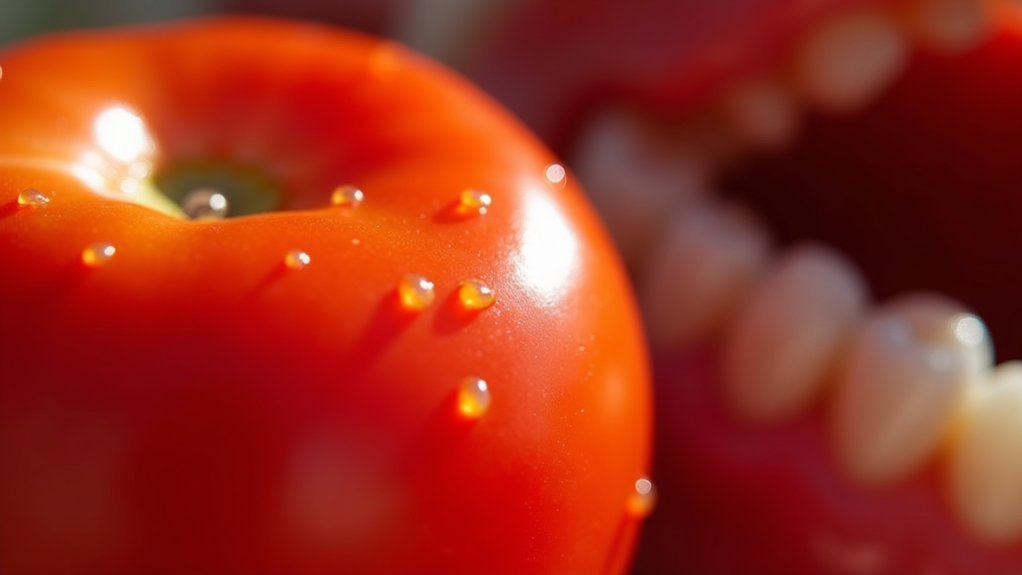

Yes, tomatoes can stain your teeth. Their high acidity and vibrant pigments can bond to your enamel, leading to discoloration over time. The acidity erodes enamel, making it easier for pigments to penetrate and causing visible stains. To minimize staining effects, rinse your mouth with water after consuming tomato-based dishes and maintain good oral hygiene. If you want to know more about other foods that can stain and how to protect your smile, there’s plenty to explore.
Key Takeaways
- Yes, tomatoes can stain teeth due to their high acidity and vibrant pigments that bond to enamel.
- The acidity in tomatoes erodes enamel, making it easier for pigments to penetrate and cause discoloration.
- Regular consumption of tomato-based dishes increases the risk of enamel erosion and staining.
- Rinsing your mouth with water after eating tomatoes can help reduce the staining effects.
- Maintaining good oral hygiene practices is essential to mitigate staining from tomatoes and other foods.
Understanding Tooth Stains
When you enjoy foods and drinks, it’s important to understand that certain items can stain your teeth.
Tooth stains often arise from chromogens in foods, which bond to tooth enamel. Acidic foods, like tomato sauce, can erode this enamel, making it easier for pigments to penetrate and cause discoloration.
Tooth stains can result from chromogens in foods that bond to enamel, with acidic items like tomato sauce exacerbating the issue.
When enamel wears away, the yellow-brown dentin beneath becomes exposed, leading to more challenging teeth staining. Frequent consumption of tomato-based dishes can greatly contribute to noticeable stains.
To combat this, maintain good oral hygiene by rinsing your mouth after eating and using whitening toothpaste to help mitigate staining effects.
The Role of Acidity in Staining
The acidity in tomatoes plays a significant role in tooth staining by eroding enamel and allowing pigments to penetrate more deeply.
As enamel wears away, the underlying dentin becomes more visible, which can darken your smile.
Understanding this staining mechanism can help you make informed choices about tomato consumption and its impact on your teeth.
Enamel Erosion Effects
Although tomatoes are a popular ingredient in many dishes, their high acidity can lead to significant enamel erosion, which plays an essential role in tooth staining.
Here’s how enamel erosion affects your teeth:
- The acid erodes enamel, making teeth more susceptible to staining.
- Roughened enamel surfaces allow pigments from foods to penetrate easily.
- Erosion can reveal yellow-brown dentin, increasing discoloration.
- Frequent consumption of tomato-based dishes heightens enamel wear.
- Proper oral hygiene, like rinsing after eating tomatoes, helps mitigate these effects.
Being aware of these factors is vital for maintaining your oral health and minimizing staining risks.
Staining Mechanism Explained
Acidity plays an essential role in the staining mechanism of teeth, particularly when it comes to tomatoes. The high acidity in tomatoes can erode tooth enamel, making it easier for pigments to penetrate and stain teeth.
This erosion roughens the enamel surface, increasing the likelihood of discoloration. Additionally, the bright red color of tomatoes contains chromogens that contribute to the staining effect.
If you regularly consume tomato-based dishes without proper oral hygiene, you may notice significant tooth discoloration over time. Protect your teeth by maintaining good oral hygiene practices to minimize the impact of these acidic foods on your smile.
Acidity and Color Impact
When you enjoy tomatoes, their acidity can greatly affect the color of your teeth. The high acidity can erode enamel, making teeth more susceptible to staining from pigments in the tomato’s vibrant hue.
This leads to noticeable discoloration as chromogens penetrate deeper into the enamel. To protect your smile, consider these tips:
- Rinse your mouth with water after eating tomatoes
- Limit tomato-based dishes if you’re concerned about staining
- Use a straw when drinking tomato juice
- Maintain regular dental hygiene
- Visit your dentist for professional cleanings
How Tomatoes Contribute to Discoloration
Tomatoes can contribute to teeth discoloration due to their high acidity and vibrant pigments. The acidic nature of tomatoes can roughen your enamel, making it easier for pigments to penetrate and stain your teeth.
Additionally, the bright red color contains chromogens, which are notorious for causing discoloration over time. Frequent consumption of tomato-based dishes can lead to noticeable stains, revealing the yellow-brown dentin underneath.
To mitigate these effects, it’s essential to take into account rinsing your mouth after enjoying tomatoes, as this can help reduce the impact of these staining foods on your smile and maintain your dental health.
Tips for Minimizing Stains From Tomatoes
To minimize stains from tomatoes, you should rinse your mouth with water right after enjoying tomato-based dishes.
Consider using white sauces instead of tomato sauces to reduce staining potential.
Additionally, limit your consumption of tomato-based meals to keep your teeth looking their best.
Rinse Mouth After Eating
Rinsing your mouth right after enjoying tomato-based dishes can greatly reduce the risk of staining. By doing so, you effectively wash away the acidic residue that contributes to discoloration.
To further protect your teeth, consider these tips:
- Rinse your mouth with water immediately after eating.
- Use a straw when drinking tomato juice to minimize contact with teeth.
- Pair tomatoes with crunchy vegetables like celery or carrots to scrub away pigments.
- Incorporate dairy products like cheese or yogurt to create a protective barrier.
- Maintain regular oral hygiene, including brushing twice a day and flossing.
Use White Sauces
While enjoying your favorite pasta or casserole, consider swapping out tomato-based sauces for white alternatives like Alfredo or béchamel to minimize the risk of tooth staining. These white sauces help reduce staining due to their lower acidity and lack of deep red pigments. Plus, they offer a creamy texture that enhances many dishes.
| White Sauce Options | Benefits |
|---|---|
| Alfredo | Creamy, rich flavor |
| Béchamel | Versatile and smooth texture |
| Light Cream Sauce | Lower in calories and fat |
Incorporating these options can serve as a delicious barrier against tooth discoloration.
Limit Tomato-Based Dishes
Although enjoying tomato-based dishes can be delicious, limiting their frequency is essential for minimizing potential stains on your teeth.
To further protect your oral hygiene, consider these tips:
- Opt for lighter sauce alternatives like white or pesto.
- Incorporate dark green vegetables such as kale or spinach to form a protective barrier against staining.
- Rinse your mouth with water immediately after eating to wash away acidity and pigments.
- Maintain regular oral hygiene by brushing and flossing after consuming tomato-based foods and drinks.
- Be mindful of your overall diet to reduce the risk of staining on your teeth.
Other Foods That Stain Teeth
Certain foods can considerably contribute to tooth staining, often surprising those who enjoy them.
Curry, with its turmeric, is notorious for its deep yellow hues that can lead to discoloration.
Soy sauce, commonly found in Asian cuisine, carries dark pigments that linger on teeth, causing yellowish stains.
Balsamic vinegar’s sticky, sugary nature can seep into enamel, resulting in staining if not rinsed promptly.
Berries like blueberries and blackberries, along with red and black grapes, are vibrant and acidic, making them potential culprits for tooth staining.
Regular consumption of these foods may require extra attention to your dental care routine.
Maintaining Oral Hygiene
Maintaining oral hygiene is essential for preventing tooth staining and ensuring a bright smile. To keep your teeth healthy and white, focus on these key practices:
Maintaining oral hygiene is crucial for a bright smile and preventing tooth staining. Focus on key practices for healthy, white teeth.
- Brush regularly with fluoride toothpaste to remove surface stains from staining foods.
- Floss daily to prevent plaque buildup that can worsen staining.
- Rinse your mouth with water after consuming tomato-based dishes to neutralize acidity.
- Schedule routine dental cleanings to address deeper stains.
- Use a straw when drinking acidic beverages to minimize contact with teeth.
The Importance of Rinsing After Eating
After focusing on oral hygiene practices, it’s important to recognize how rinsing your mouth after eating plays an essential role in protecting your teeth.
Rinsing helps wash away acidic residues from tomatoes, which can erode enamel and lead to staining. The high acidity not only contributes to potential tooth discoloration but also roughens enamel, allowing pigments to penetrate more easily.
A quick rinse with water can considerably reduce the likelihood of stains setting in, helping maintain your bright smile. Incorporating rinsing into your post-meal routine is vital for protecting your teeth from the compounded effects of enamel wear and discoloration.