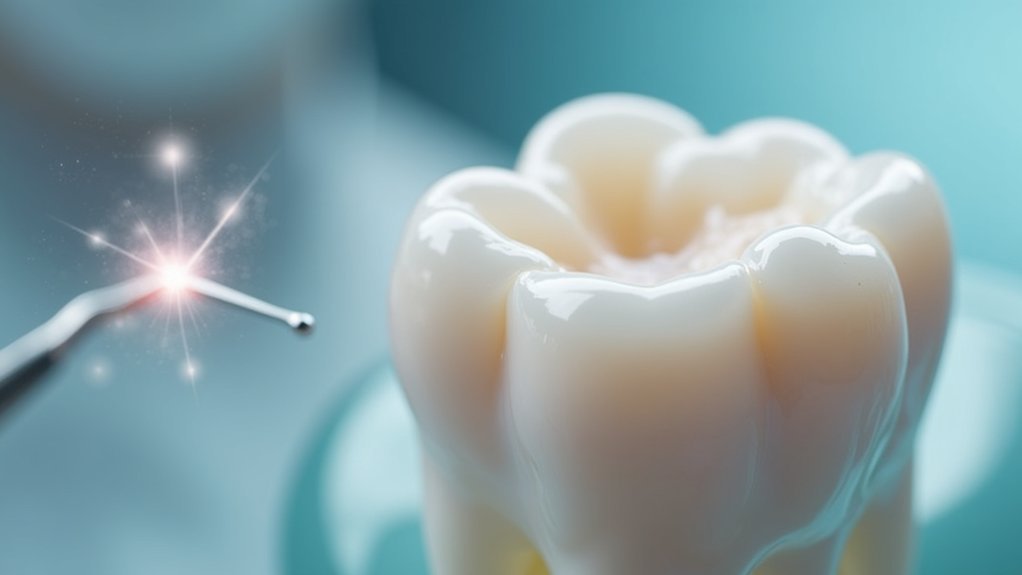

Crowns aren’t fake teeth; they’re protective caps designed to restore the shape, strength, and appearance of damaged or decayed teeth. They cover existing teeth and help maintain their functionality, rather than replacing the entire tooth structure. Made from materials like metal or porcelain, crowns improve aesthetics and support dental bridges. If you’re considering a crown for a compromised tooth or want to know more about their benefits, further exploration of the topic will provide valuable insights.
Key Takeaways
- Crowns are not fake teeth; they are prosthetic caps that cover and protect existing teeth.
- They restore the shape, strength, and appearance of damaged or decayed natural teeth.
- Crowns do not replace the entire tooth structure; they support and enhance existing teeth.
- Made from materials like metal, porcelain, or ceramic, crowns mimic the look of natural teeth.
- Misunderstanding arises from their prosthetic nature, but crowns serve to restore rather than replace.
Understanding Dental Crowns
When you think about dental crowns, it’s important to realize they aren’t fake teeth; rather, they’re prosthetic covers that restore the shape, strength, and appearance of damaged or decayed teeth.
Crafted from materials like metal, porcelain, or ceramic, crowns effectively mimic natural teeth. The process requires tooth preparation, which involves enamel removal and may include building up the tooth structure for a secure fit.
Crowns serve essential roles in dental restoration, protecting weak teeth, covering dental implants, and enhancing aesthetics for cosmetic purposes. They don’t replace the tooth root but fit over existing teeth or implants, ensuring ideal functionality.
The Function of Dental Crowns
Though they might seem like simple cosmetic enhancements, dental crowns play an essential role in maintaining oral health and function.
These prosthetic caps restore damaged teeth by protecting weak structures from further harm. They help you regain strength and integrity in broken or worn-down teeth while supporting dental bridges.
Additionally, crowns enhance aesthetics, providing a natural look for stained or irregularly shaped teeth. The materials used, such as porcelain, ceramic, or metal, are crafted to mimic the appearance of natural teeth.
Crowns also cover dental implants, ensuring a seamless, functional tooth replacement that blends beautifully with your smile.
The Difference Between Crowns and Implants
Understanding the role of dental crowns is pivotal in distinguishing them from dental implants, which serve a different purpose in restorative dentistry.
Understanding dental crowns is crucial for differentiating them from dental implants in restorative dentistry.
Here are key differences to take into account:
- Function: Crowns cover existing teeth to restore damage, while implants replace the entire tooth structure, including the root.
- Procedure: Obtaining a crown typically takes 1-2 visits, but implants require surgery and several months for healing.
- Longevity: Crowns last 10-15 years with proper dental care, whereas implants often exceed 25 years due to their titanium foundation.
Knowing these distinctions helps you make informed decisions about your dental care needs.
Common Misconceptions About Crowns
Many people mistakenly believe that dental crowns are fake teeth, but this couldn’t be further from the truth. A crown is a tooth-shaped cap designed to cover a natural tooth, restoring its function and enhancing aesthetics.
Unlike implants, crowns don’t replace the entire tooth structure; they protect and support existing teeth. Crafted from durable materials, crowns closely mimic natural teeth, ensuring a seamless smile.
The misconception of crowns being fake arises from their prosthetic nature, yet they serve as valuable dental treatments. With proper care, crowns can last between five to 15 years, helping maintain your natural teeth effectively.
When to Consider a Crown
When a tooth is considerably damaged or decayed, considering a crown is often the best option for restoring its strength and function.
Here are three common situations where you might need a dental crown:
- After root canal treatment, to protect the fragile tooth.
- For teeth with large fillings, ensuring support and protection.
- To enhance the appearance of stained or irregularly shaped front teeth, addressing cosmetic concerns.
While crowns can improve both function and aesthetics, it’s essential to weigh the pros and cons.