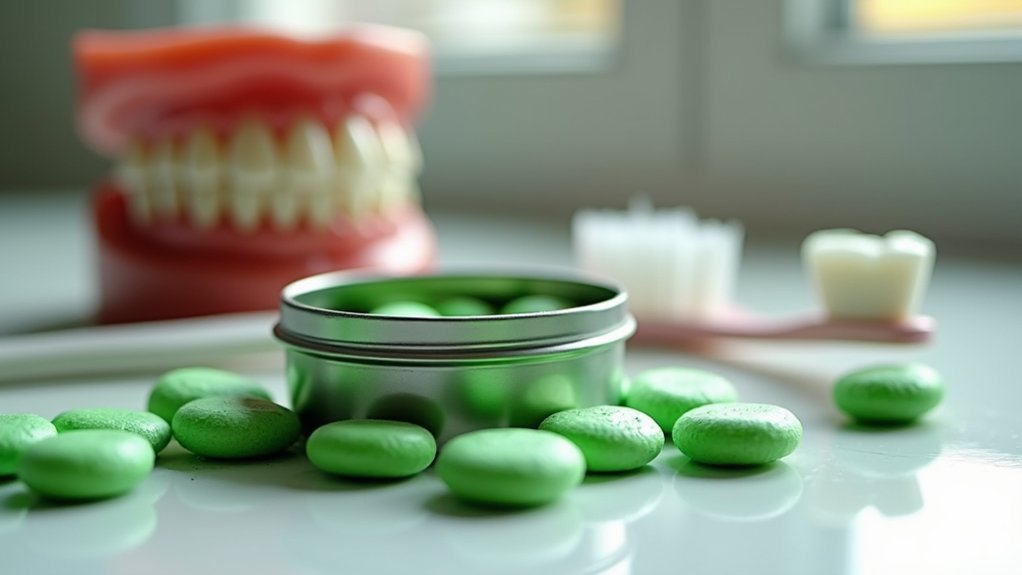

Mints can harm your teeth by promoting bacterial growth and tooth decay, regardless of whether they’re sugary or sugar-free. Sugary mints feed harmful bacteria, which produce acids that erode enamel. Even sugar-free mints can be problematic, as they may still lead to enamel erosion. Regular consumption masks bad breath without addressing hygiene issues. It’s crucial to maintain proper oral care to protect your teeth effectively. There’s more to learn about better alternatives for fresh breath.
Key Takeaways
- Sugary mints feed harmful bacteria, increasing the risk of tooth decay and cavities.
- They create an acidic environment, leading to enamel erosion over time.
- Frequent mint use can mask bad breath without improving oral hygiene practices.
- Sugar-free mints can still harm enamel due to acid production in the mouth.
- Better alternatives for fresh breath include sugar-free gum and proper oral hygiene.
Understanding the Risks of Breath Mints
While you might reach for breath mints to freshen your mouth, it’s important to understand the potential risks associated with their consumption.
Many sugary breath mints are bad for your teeth, as they feed harmful bacteria, leading to tooth decay and enamel erosion. Sugar-free mints may seem like a safer option, but frequent use can still harm your enamel due to acid production.
Relying too heavily on mints can mask bad breath without addressing oral hygiene issues. To promote dental care, focus on proper brushing and flossing instead of depending solely on breath mints for freshening your breath.
The Impact of Sugar on Dental Health
Sugar plays an essential role in dental decay by feeding harmful bacteria in your mouth, which produce acids that erode tooth enamel.
Regularly consuming sugary mints increases your risk of cavities and gum disease due to prolonged sugar exposure.
Opting for sugar-free alternatives can help protect your dental health while minimizing the growth of harmful bacteria.
Sugar’s Role in Decay
When you consume mints containing sugar, harmful bacteria in your mouth thrive, leading to acid production that erodes tooth enamel. This process increases the risk of dental caries and cavities, as these cavity-causing bacteria feed on sugar.
Regularly consuming sugary mints can considerably contribute to plaque buildup, a primary cause of tooth decay and gum disease. The American Dental Association warns that frequent exposure to sugar creates an acidic environment detrimental to your oral health.
While sugar-free mints are better, they may still contain artificial sweeteners that don’t promote saliva production, unlike sugar-free gum, which helps protect your teeth.
Bacterial Growth and Acids
As you enjoy sugary mints, harmful bacteria in your mouth flourish, converting the sugar into acids that gradually erode your tooth enamel. This process can lead to cavities and gum disease over time. Frequent mint consumption creates an environment for bacteria to thrive, increasing plaque buildup and worsening oral health.
| Type of Mint | Impact on Dental Health |
|---|---|
| Sugary Mints | Promote bacteria growth and acids |
| Sugar-Free Mints | May not address bacteria; false security |
To protect your smile, consider limiting sugary mints and focusing on overall oral hygiene.
Alternatives for Dental Health
While many people reach for mints to freshen their breath, there are healthier alternatives that can better support dental health. Consider these options:
- Chewing sugarless gum to stimulate saliva production
- Incorporating raw vegetables like carrots for natural cleaning
- Drinking water regularly to rinse away bacteria in your mouth
Sugarless gum not only freshens your breath but also helps prevent cavities by washing away food particles and neutralizing harmful acids.
Sugar-Free Mints: Are They a Better Choice?
Are sugar-free mints truly a healthier option for your oral health? Generally, yes. They lack sugar, which can cause plaque and tooth decay. Many contain xylitol, reducing harmful bacteria and cavities. However, remember that sugar-free mints only mask bad breath, not treat its root causes.
| Feature | Benefits | Cautions |
|---|---|---|
| Sugar-Free | Reduces plaque buildup | Monitor consumption |
| Xylitol | Lowers cavity risk | Not a substitute for hygiene |
| Artificial Sweeteners | Quick breath freshening | Potential for enamel erosion |
Choosing mints with natural ingredients is essential to protect your enamel.
When Breath Mints Are Acceptable
Breath mints can be an acceptable choice for freshening your breath, particularly when you’re in social situations or after meals.
- Opt for sugar-free varieties to protect dental health.
- Choose mints containing xylitol, which can reduce cavity-causing bacteria.
- Use them sparingly; they shouldn’t replace regular oral hygiene.
Moderation is key—occasional use of breath mints can help combat bad breath without harming your teeth.
Remember, while these mints provide temporary relief, maintaining effective brushing and flossing routines is essential for peak oral hygiene.
Chewing gum can also be beneficial; it stimulates saliva production, further supporting your dental health.
Signs That Breath Mints May Be Harmful
Relying on breath mints for freshening your breath can lead to unexpected consequences for your dental health.
If you notice persistent bad breath despite frequent mint consumption, it might signal an underlying oral health issue. Many mints are high in sugar, which feeds bacteria, causing plaque buildup and increasing your risk of dental issues like cavities.
Regularly sucking on these mints exposes your teeth to sugar, contributing to enamel erosion over time. Opting for sugar-free alternatives is essential.
If mints have become a necessity, consider seeking professional dental advice to address the root causes of your oral health concerns.
Healthier Alternatives for Fresh Breath
There are numerous healthier alternatives for freshening your breath that can effectively support your oral health. Consider these options:
- Chew sugar-free gum to stimulate saliva flow, neutralizing acids and washing away food particles.
- Use sugar-free mints with xylitol to reduce cavity-causing bacteria and promote dental health.
- Stay hydrated by drinking water throughout the day to help eliminate bad breath naturally.
Incorporating these healthier alternatives into your routine can greatly enhance your breath without relying on traditional mints.
Plus, they contribute positively to your overall oral hygiene, making them a smart choice for anyone looking to serve others through fresh breath.
The Importance of Regular Oral Hygiene
Maintaining regular oral hygiene is crucial for preventing dental issues and ensuring fresh breath. Brushing and flossing twice daily effectively remove plaque, reducing your risk of tooth decay.
The American Dental Association recommends biannual dentist visits to identify potential problems early. By practicing good oral hygiene, you minimize the bacteria that cause bad breath, making breath mints unnecessary. Opting for sugar-free gum can also help.
Consistent care, including fluoride toothpaste, strengthens enamel and protects against harmful acids. Ultimately, a thorough oral hygiene routine is essential for your dental health and can mitigate the adverse effects of frequent sugar exposure from mints.