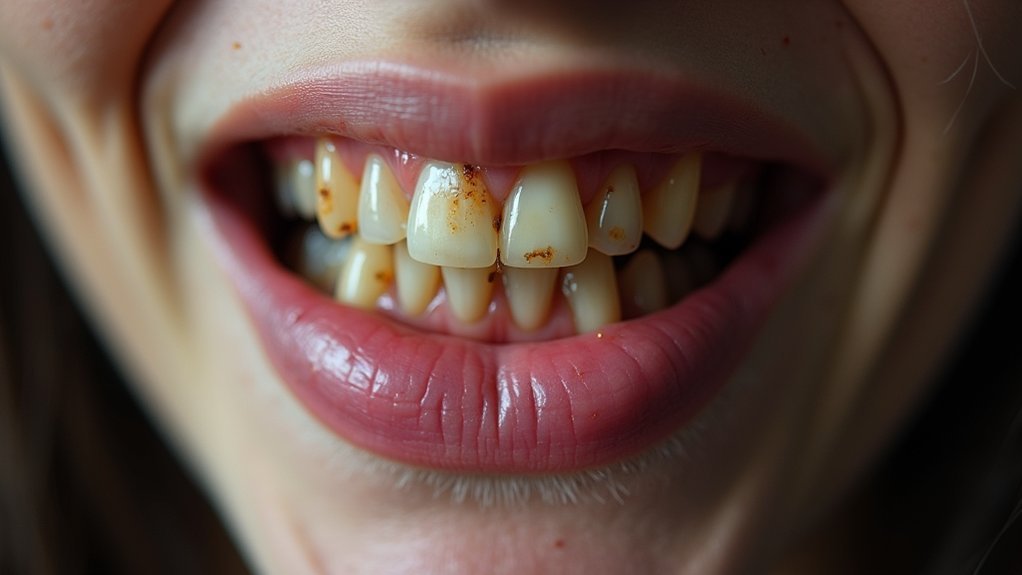

If you’re wondering whether your teeth are too far gone, look for signs like visible cracks, persistent pain, or severe discoloration. Early-stage decay can be reversible, but advanced decay may signal deeper issues that need professional help. Regular dental check-ups are essential for early detection. If you’re noticing troubling symptoms, it’s wise to consult a dentist. They’ll assess your teeth and suggest tailored treatment options to help you maintain your dental health. Discover more about your options.
Key Takeaways
- Look for visible damage like cracks, fractures, or severe decay to assess the state of your teeth.
- Persistent pain, increased sensitivity, or signs of infection indicate deeper issues that may require professional intervention.
- Dark discoloration on teeth suggests decay has progressed beyond the enamel, necessitating a dental evaluation.
- Regular dental check-ups are crucial for early detection and tailored treatment to prevent further complications.
- Consult your dentist for a personalized assessment to determine if your teeth can still be saved.
Understanding Tooth Decay and Its Stages
Tooth decay is a gradual process that can sneak up on you if you’re not paying attention, starting with seemingly minor signs like white spots on your teeth.
This early stage involves enamel damage due to plaque buildup, but with early intervention, you can reverse this damage.
As decay progresses to dentin, you may experience increased sensitivity and pain, signaling a dental emergency.
If the infection reaches the pulp, intense pain typically requires root canal treatment to save the tooth.
Understanding these stages helps you prioritize your oral health and explore treatment options before decay leads to tooth loss.
Signs Your Teeth May Be Beyond Repair
When evaluating your teeth, visible damage like cracks, fractures, or severe decay can be strong indicators that they may be beyond repair.
Additionally, if you’re experiencing persistent pain or sensitivity, it could signal deeper issues that compromise the integrity of your teeth.
Recognizing these signs early on is essential for determining the best course of action for your oral health.
Visible Damage Assessment
Your smile can reveal a lot about your oral health, and visible signs of damage may indicate that your teeth are beyond repair.
Look out for:
- Severe discoloration or significant chips
- Large cavities that worsen over time
- Swollen gums or loose teeth
These signs often suggest advanced decay or gum disease, requiring a professional assessment.
If you experience constant tooth pain or notice pus around your teeth, it could mean extraction is necessary.
Don’t wait too long; addressing these issues promptly can help preserve your overall oral health and prevent further complications.
Pain and Sensitivity
How can you tell if pain and sensitivity are signs that your teeth might be beyond repair?
Constant or sharp tooth pain often indicates severe decay or infection, suggesting the tooth may be too far gone. If you experience sensitivity to hot, cold, or sweet foods, that’s a red flag for compromised tooth structure requiring immediate dental evaluation.
Additionally, swelling in your gums or jaw may signal an underlying infection jeopardizing your tooth’s viability. Loose teeth and bleeding gums are also serious warning signs.
If you notice these issues, consult your dentist promptly to discuss potential solutions.
Assessing the Extent of Damage
To effectively assess the extent of damage to your teeth, it’s essential to identify signs of tooth decay and evaluate the severity of any damage.
Imaging can uncover issues that aren’t visible during a standard check-up, providing a clearer picture of your dental health.
Understanding these factors will help you and your dentist determine the best path forward for your treatment.
Identifying Tooth Decay Signs
Wondering if your teeth are showing signs of decay? Identifying early indicators can help safeguard your dental health. Look out for:
- White spots on enamel, signaling reversible demineralization
- Sensitivity to hot, cold, or sweet foods, indicating dentin involvement
- Bleeding gums or swelling, warning of gum disease
These signs can lead to more serious issues like infection and tooth loss if ignored.
If you notice loose teeth or persistent discomfort, it’s essential to seek immediate dental care.
Regular check-ups can help catch tooth decay early, ensuring you can intervene before significant damage occurs, preserving your smile for years to come.
Evaluating Damage Severity
When evaluating the extent of damage to your teeth, it’s important to recognize the signs that indicate whether decay has progressed beyond the enamel.
If you notice white spots, you might still reverse the damage, but darker discoloration suggests decay has destroyed more than just enamel.
Increased sensitivity or pain signals that infection has spread beyond the enamel, potentially reaching the pulp.
In such cases, determining whether root canal therapy is needed becomes essential.
If you have a tooth too damaged or loose, it’s critical to see a dentist promptly to determine the best course of action before it’s too late.
Treatment Options for Damaged Teeth
Whether you’ve got a minor chip or extensive decay, several effective treatment options exist for damaged teeth. Depending on the severity, you can consider:
- Dental bonding for quick repairs of chips or cracks.
- Root canal therapy to remove infection and save severely damaged teeth.
- Dental implants or dental bridges for missing or irreparable teeth.
Maintaining proper oral hygiene is essential for long-term success with these treatments.
Each option aims to restore functionality and aesthetics, ensuring your smile remains healthy and vibrant.
Consult with your dentist to determine the best course of action tailored to your needs.
When Extraction Becomes Necessary
At what point do you know it’s time for a tooth extraction?
If you’re facing severe tooth decay that’s destroyed most of the structure, extraction may be necessary.
Advanced gum disease can loosen teeth and deteriorate the jawbone, making removal a preferable option.
A tooth with a severe fracture below the gum line often can’t be repaired, while recurring infections signal that saving the tooth isn’t feasible.
Additionally, impacted wisdom teeth can cause crowding and complications, necessitating extraction.
Recognizing these signs can help you maintain overall oral health and prevent further issues down the line.
The Importance of Dental Consultations
While you might feel hesitant about scheduling a dental consultation, doing so is essential for maintaining your oral health. Regular check-ups allow for early detection of issues and can prevent infections or further complications.
- A dentist can assess your damaged teeth and gums.
- Personalized treatment options can help save your teeth.
- Open dialogue fosters a collaborative approach to your care.
It’s important to see a professional, especially if you’ve avoided dental visits. Discussing your concerns can clarify the severity of your situation and guide you toward a plan for long-term maintenance and health.
Don’t wait—take action today!
Replacing Missing Teeth: What Are Your Options?
If you’ve lost a tooth, you might be wondering about your options for replacement.
Dental implants offer a permanent solution, fusing with your jawbone for both function and aesthetics.
If you’re replacing one tooth, a dental bridge can anchor onto adjacent teeth, providing stability.
For multiple missing teeth, partial dentures are removable options that maintain natural chewing and speaking.
If all teeth are missing, full dentures restore your smile and oral function.
Timely tooth replacement is essential; delaying can cause adjacent teeth to shift, leading to further complications or even infection spreading.
Your dental health deserves attention.
Preventive Measures to Maintain Dental Health
Maintaining your dental health is essential for preventing future issues, and adopting a proactive approach can make all the difference.
Here are some key preventive measures to contemplate:
- Brush twice daily with fluoride toothpaste to strengthen enamel and prevent cavities.
- Floss daily to remove plaque and food particles that lead to gum disease.
- Limit sugary snacks and acidic beverages to decrease the risk of decay reaching critical levels.