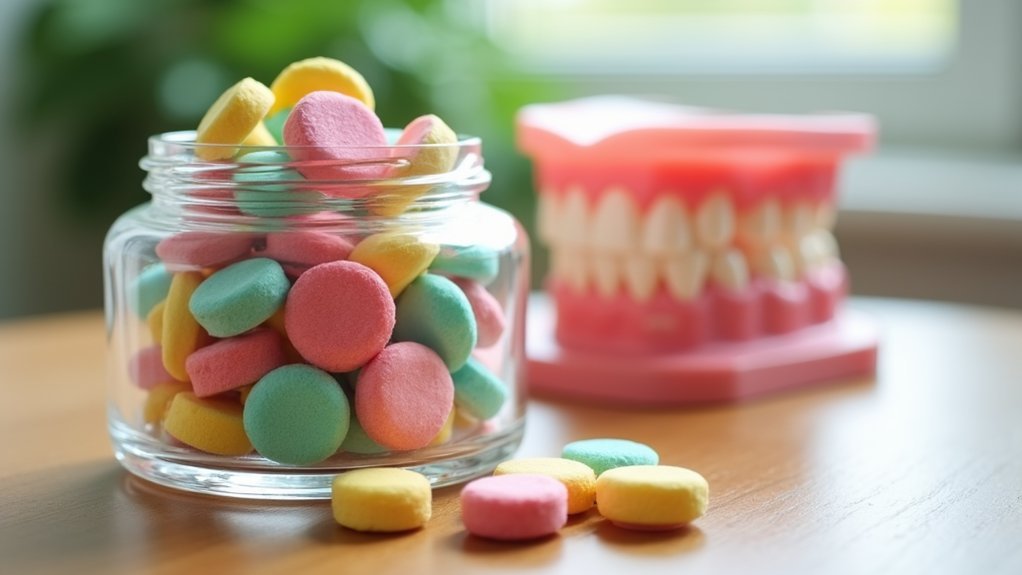

Yes, sugar-free mints are good for your teeth. They freshen breath and contain xylitol, which reduces cavity-causing bacteria and supports better dental health. Unlike sugary mints, they help prevent plaque buildup and enamel erosion. Sugar-free mints also stimulate saliva production, which neutralizes acids and washes away food particles. However, they aren’t a replacement for regular brushing and flossing. If you want to find out more about their benefits and limitations, continue exploring.
Key Takeaways
- Sugar-free mints with xylitol help reduce cavity-causing bacteria, promoting better dental health.
- Xylitol stimulates saliva flow, neutralizing acids and washing away food particles.
- These mints minimize the risk of enamel erosion compared to sugary alternatives.
- They complement oral hygiene practices but should not replace regular brushing and flossing.
- Be mindful that some sugar-free mints may contain acids that can still affect enamel.
Benefits of Sugar-Free Mints for Dental Health
When you choose sugar-free mints, you’re not just freshening your breath; you’re also taking a proactive step toward better dental health.
These mints often contain xylitol, which helps reduce cavity-causing bacteria in your mouth. Unlike traditional mints, sugar-free options won’t contribute to plaque buildup, making them a healthier option.
They provide a quick fix for bad breath without the risk of enamel erosion associated with sugary products. Regular use of sugar-free mints can lower the incidence of dental caries, thereby promoting overall oral health.
The Role of Xylitol in Sugar-Free Mints
Although you may think of xylitol as just another sweetener, it plays an essential role in enhancing the dental benefits of sugar-free mints. This natural ingredient helps combat cavity-causing bacteria, considerably reducing harmful bacteria levels in your mouth.
Unlike sugar, xylitol isn’t metabolized by oral bacteria, which decreases acid production and fosters a safer environment for your teeth. Regularly consuming xylitol-containing mints stimulates saliva flow, further neutralizing acids and washing away food particles.
Comparing Sugar-Free Mints to Sugary Alternatives
Sugar-free mints stand out as a favorable choice for maintaining dental health, especially when compared to their sugary counterparts.
Here are three key benefits of sugar-free mints:
- Reduced Cavity-Causing Bacteria: With xylitol, sugar-free mints help lower bacteria that cause cavities, unlike sugary mints that promote tooth decay.
- Minimized Enamel Erosion: Sugary mints can lead to enamel erosion due to acid production; sugar-free options mitigate this risk.
- Complement to Oral Hygiene: While they freshen breath, sugar-free mints shouldn’t replace essential practices like brushing and flossing for peak dental health.
The Importance of Saliva Production
Saliva plays a crucial role in protecting your teeth by neutralizing harmful acids produced by bacteria, which helps prevent enamel erosion.
Chewing sugar-free gum is an effective way to stimulate saliva production, enhancing your mouth’s ability to wash away food particles and combat decay.
Increased saliva flow not only cleans your teeth but also delivers essential minerals that strengthen enamel over time, promoting long-term oral health.
Saliva’s Role in Protection
When it comes to maintaining oral health, the production of saliva is crucial for protecting your teeth.
Saliva acts as a natural defense by:
- Washing away food particles and neutralizing acids from bacteria.
- Remineralizing tooth enamel with essential minerals like calcium and phosphate.
- Preventing dry mouth, thereby reducing the risk of cavities and gum disease.
Chewing sugar-free mints can stimulate saliva flow, enhancing this protective role.
A healthy level of saliva helps maintain the balance of oral bacteria and shields your teeth from decay, ensuring a healthier mouth overall.
Prioritize saliva production for ideal oral health.
Stimulating Saliva With Gum
Chewing gum can be an effective way to boost your saliva production, which is essential for maintaining oral health.
Sugar-free gum, particularly those containing xylitol, stimulates saliva flow and helps wash away food particles, reducing the risk of cavities. As saliva contains minerals that remineralize enamel, it strengthens your teeth and prevents decay.
Chewing gum for about 20 minutes after meals considerably enhances saliva production, creating a safer environment for dental health. By incorporating sugar-free gum into your routine, you actively support saliva production, protect your teeth, and contribute to overall oral health.
Acid Neutralization Benefits
Engaging in habits that stimulate saliva production, like chewing sugar-free mints, can greatly contribute to your oral health by neutralizing harmful acids.
Here are three benefits of increased saliva flow:
- Reduces plaque buildup: Saliva helps wash away food particles and debris, lowering the risk of tooth decay.
- Aids enamel remineralization: Saliva contains minerals that restore and strengthen teeth after acid exposure.
- Protects against cavities: A healthy saliva level counters acidic foods and drinks, safeguarding your teeth from erosion.
Limitations of Sugar-Free Mints
Although sugar-free mints can seem like a healthier alternative to traditional candies, they do have several limitations that can impact your dental health. These mints often contain acids that may lead to enamel erosion over time. Unlike sugar-free gum, they don’t considerably stimulate saliva production, which is vital for neutralizing acids and reducing cavity-causing bacteria.
| Limitation | Impact on Dental Health |
|---|---|
| Acids in mints | Can cause enamel erosion |
| Limited saliva stimulation | Less effective against bacteria |
| Not a substitute for brushing | Regular care still essential |
Best Practices for Maintaining Oral Health
Maintaining oral health goes beyond just choosing sugar-free mints, as thorough care is essential for preventing dental issues. Here are some best practices to guarantee healthy teeth and gums:
- Brush and Floss: Brush twice daily and floss regularly to remove plaque and prevent cavities.
- Stay Hydrated: Drink plenty of fluoridated water to reduce the risk of tooth decay.
- Limit Acidic Foods: Cut back on acidic and sugary foods, which can erode enamel and increase cavity risk.
Also, don’t forget to schedule dental checkups every six months for professional cleanings and to catch any potential issues early.