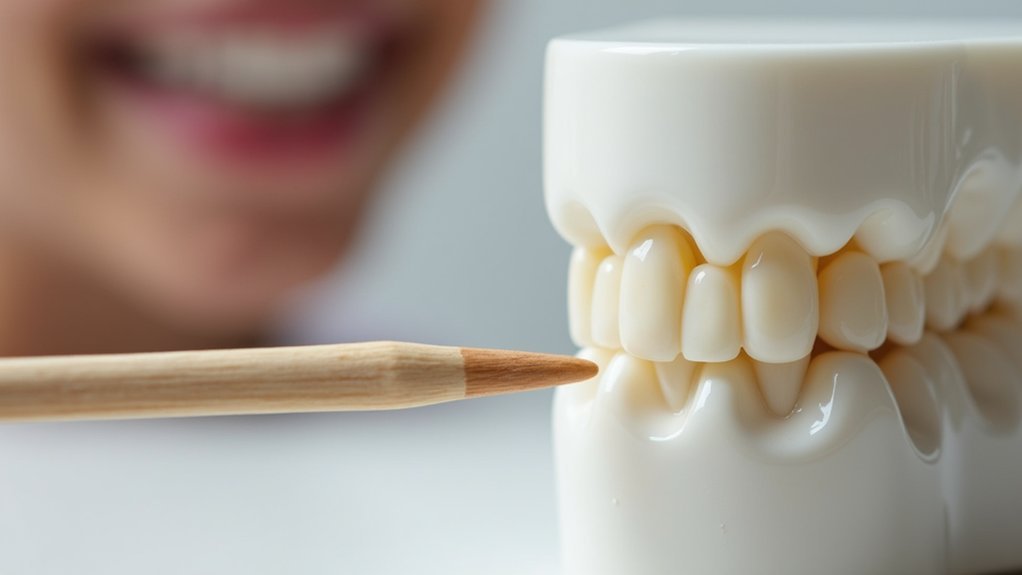

Toothpicks can harm your teeth and gums. They often cause lacerations in your gum tissue, increasing the risk of infections and promoting gum recession. Additionally, wooden toothpicks may introduce harmful bacteria into your mouth and potentially damage dental work like fillings and crowns. Instead of using toothpicks, consider safer alternatives like dental floss or interdental brushes. If you’re curious about maintaining peak oral health, you’ll find more effective strategies to protect your smile.
Key Takeaways
- Toothpicks can cause lacerations in gums, leading to painful injuries and increased risk of infection.
- Frequent use may result in gum recession, exposing tooth roots and increasing sensitivity.
- Wooden toothpicks are often unsterilized, harboring harmful bacteria that can worsen oral health.
- They can damage existing dental work, such as fillings and crowns, leading to costly repairs.
- Dentists recommend safer alternatives like dental floss and interdental brushes for effective oral hygiene.
The Historical Use of Toothpicks
Toothpicks have served as tools for dental hygiene for over five thousand years, with their origins traced back to ancient Mesopotamia. Throughout history, toothpicks have been used by high-class societies, often crafted from luxurious materials like gold and ivory, highlighting their role in oral hygiene.
While wooden toothpicks became common in households and restaurants, they evolved from these ancient practices. However, modern dental professionals caution against their use, as they can harm gum health and dental work.
Understanding this history can help you appreciate the significance of toothpicks while making informed choices about contemporary dental hygiene practices.
Oral Health Risks Associated With Toothpicks
While many people rely on toothpicks for quick dental cleaning, they can pose significant oral health risks that shouldn’t be overlooked.
Using toothpicks to remove food debris can lead to lacerations in your gums and soft tissues, increasing the risk of infections, especially if you have existing gum issues. Frequent use may result in receding gums, exposing tooth roots and compromising your dental health.
Additionally, wooden toothpicks often lack proper sterilization, raising concerns about harmful bacteria. They can also damage existing dental work, like fillings and crowns, further complicating your overall oral health.
Proceed with caution when using toothpicks.
Dentist-Approved Alternatives for Dental Hygiene
When it comes to maintaining oral hygiene, many dentists recommend safer alternatives to toothpicks that effectively remove food particles without risking damage to your gums or teeth.
High-quality dental floss, especially waxed versions, slides easily between teeth spaces, reducing gum irritation. Interdental brushes are another excellent choice for cleaning hard-to-reach areas.
Additionally, plastic-handled flossing sticks with tipped ends offer convenience and safety. Water flossers, utilizing pressurized water, gently enhance your oral health.
Regular dental visits guarantee tailored strategies for effective cleaning, promoting good oral hygiene and long-term teeth health.
Choose these alternatives for a safer approach to your dental care.
Signs of Gum Damage From Toothpick Use
Using toothpicks can lead to noticeable signs of gum damage that shouldn’t be ignored.
Using toothpicks can cause significant gum damage that requires attention and care.
Here are the key indicators you might experience:
- Persistent Bleeding: Frequent bleeding after using toothpicks suggests lacerations in your gums.
- Swollen Gums: Inflammation around the gums can indicate irritation from toothpick use.
- Increased Sensitivity: Sensitivity in areas where toothpicks are used may signal gum recession.
- Infection Risk: Splinters from toothpicks can lodge in gums, heightening the risk of infection.
If you notice any of these signs, consider reevaluating your dental hygiene practices to protect your gums.
Best Practices for Maintaining Oral Health
Maintaining ideal oral health involves a combination of effective practices that protect your teeth and gums.
Regularly flossing with high-quality dental floss helps remove food particles and plaque between your teeth, while using an interdental brush enhances gum health, especially in tight spaces.
Stay hydrated and eat a balanced diet rich in vitamins and minerals to support your oral health.
Schedule your dental check-ups at least twice a year for early detection of potential issues and professional cleaning.
Additionally, avoid tobacco products and minimize sugary snacks to reduce the risk of cavities and periodontal disease, ensuring your smile stays healthy.