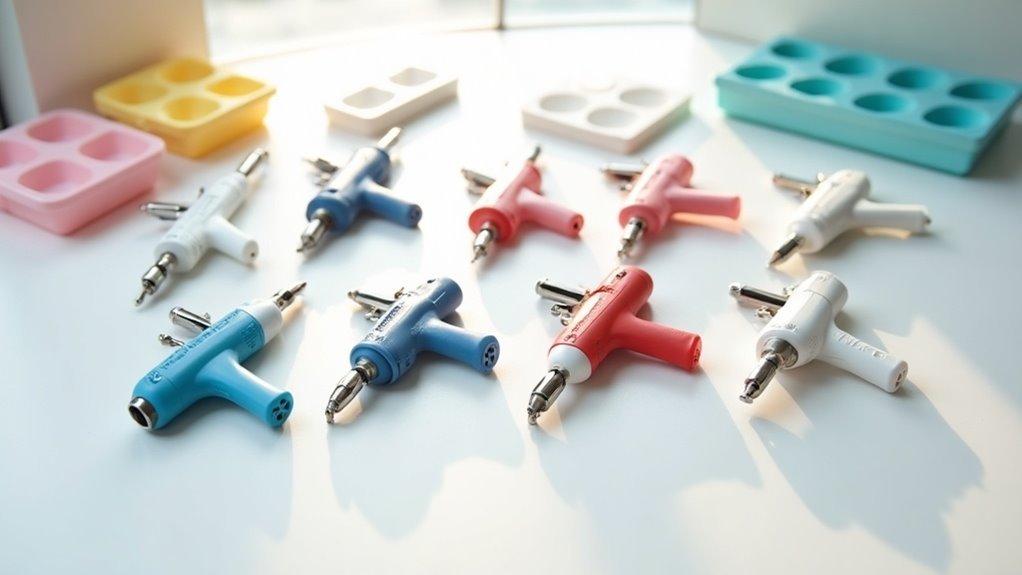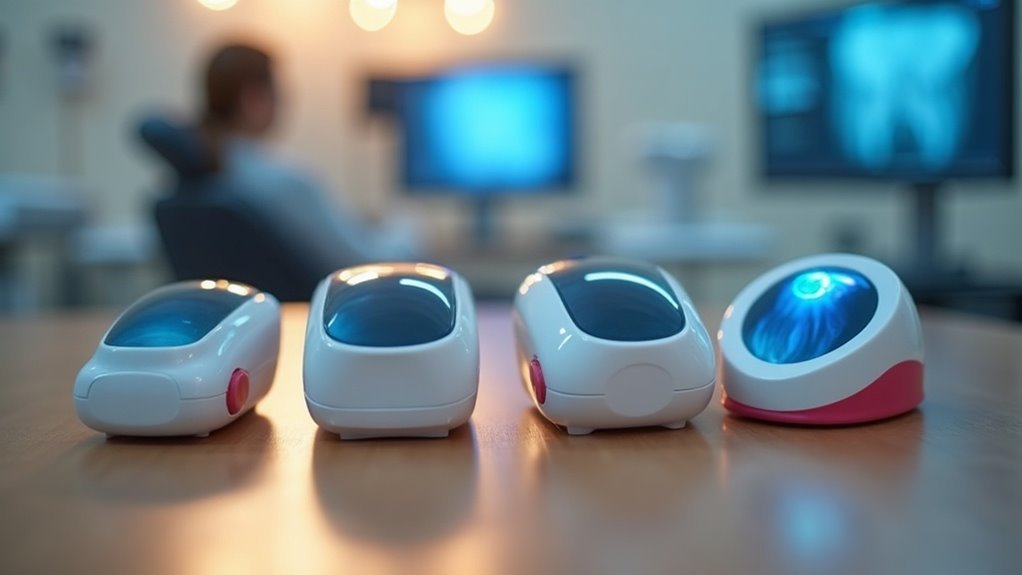

To enhance your dental practice’s precision, consider the BITEWING™ digital radiography system, which excels in providing superior bitewing and periapical imaging.
The Veterinary Dental X-Ray Sensor Imaging System is designed for speed and efficiency, ensuring quick results.
For those seeking portability, the Radiovisograph system offers instant high-definition images, making it a valuable tool in any dental setting.
Additionally, the “Essentials of Dental Imaging” guide offers crucial insights into radiation safety and effective imaging techniques.
By prioritizing user-friendly features and various sensor sizes, you’ll discover the ideal solutions tailored to your patients’ needs.
Explore further options that can truly elevate your dental practice.
Digital Radiography Technique for Bitewing and Periapical X-Ray

When enhancing your dental practice, the “Digital Radiography Technique for Bitewing and Periapical X-Ray” is an essential resource. This first edition manual, published in July 2006, offers a comprehensive guide to utilizing digital sensors for effective bitewing and periapical imaging. With 50 pages of practical insights, it equips you to master these techniques seamlessly. The BITEWING™ brand is well-regarded for its reliability in the dental radiography field. Although it is a used book in good condition, the invaluable knowledge it imparts can significantly improve your diagnostic accuracy and patient care.
Best For: Dental practitioners looking to enhance their imaging skills with digital radiography techniques for bitewing and periapical X-rays.
Pros:
- Comprehensive Guide: Offers detailed insights on using digital sensors for effective imaging.
- User-Friendly: Designed for clarity, making it accessible to both novice and experienced practitioners.
- Trusted Brand: The BITEWING™ brand is recognized for its dependability in dental radiography.
Cons:
- Used Condition: As a used book, it may exhibit signs of wear and tear.
- Older Edition: Published in 2006, some techniques may be less relevant compared to newer advancements in digital radiography.
- Limited Pages: At 50 pages, it might not delve into all topics in extensive detail.
Veterinary Dental X-Ray Sensor Imaging System

The Veterinary Dental X-Ray Sensor Imaging System is an ideal solution for veterinarians seeking efficient and dependable imaging. This system connects via USB 2.0 and provides high-resolution images in just 3 seconds. With a dynamic range of 16 bits, you can capture critical diagnostic details, such as periapical images and the visibility of the periodontal ligament. The one-handed operation simplifies positioning, enhances stability, and reduces the risk of cross-infection. Additionally, the intuitive software ensures a seamless experience with one-click installation and advanced contrast features. Essential accessories, including a sensor holder and 100 protective sleeves, are included, making it a convenient choice for your practice’s dental imaging needs.
Best For: Veterinarians looking for a fast, reliable, and user-friendly dental imaging solution for their practice.
Pros:
- Delivers high-resolution images in just 3 seconds via USB 2.0 connectivity.
- One-handed operation improves stability and minimizes cross-infection risks.
- Intuitive software with one-click installation and advanced contrast features for enhanced image clarity.
Cons:
- Requires a USB connection, which may limit mobility if not near a computer.
- Initial setup might be complex for those unfamiliar with digital imaging systems.
- The portable design may not meet the needs of larger veterinary practices that require multiple units.
Dental X-Ray Sensor Veterinary Radiovisograph Portable System
Dental X-Ray Sensor Veterinary Radiovisograph Portable System
Veterinarians in search of effective imaging solutions will find the Dental X-Ray Sensor Veterinary Radiovisograph Portable System to be an exceptional choice. This HD digital intraoral imaging system from SKATTOOTH provides instant images in just three seconds via its USB 2.0 connection. With a robust 16-bit dynamic range, you’ll obtain high-quality diagnostic images that capture essential details, such as trabecular bone structure. Its intuitive software simplifies both installation and management, while one-hand operation enhances stability and helps reduce cross-infection risks. The comprehensive package includes a digital sensor, protective sleeves, and more, ensuring you have everything required for effective imaging and remote consultations.
Best For: Veterinarians seeking a portable and efficient solution for intraoral diagnostics.
Pros:
- Rapid imaging capabilities deliver results in just 3 seconds for expedited diagnosis.
- High-resolution images with a 16-bit dynamic range, facilitating detailed visual analysis.
- Intuitive software with straightforward installation and one-handed operation for added convenience.
Cons:
- Primarily designed for intraoral imaging, which may not address all diagnostic requirements.
- Dependent on a USB connection, which could limit mobility during use.
- Initial setup may necessitate some technical knowledge for optimal functionality.
Essentials of Dental Imaging: A Clinical Guide
Product not found or API error.
For dental professionals looking to elevate their imaging expertise, “Essentials of Dental Imaging” is an essential resource. This comprehensive guide delves into key topics such as radiation science and radiographic techniques, emphasizing safety protocols to minimize exposure. It contrasts traditional and digital methods, showcasing the benefits of digital sensors for superior image quality. The book also introduces Cone Beam Computed Tomography (CBCT) and its diagnostic applications. You’ll gain valuable insights into interpreting dental images and understanding oral anatomy, empowering you to make informed decisions in your practice.
Best For: Dental professionals eager to refine their imaging skills and grasp radiographic techniques.
Pros:
- Comprehensive Coverage: Delivers extensive information on radiation science, radiographic techniques, and digital imaging.
- Modern Techniques: Emphasizes the advantages of digital sensors and CBCT, enhancing diagnostic capabilities.
- Practical Application: Offers guidance on interpreting dental images and understanding oral anatomy for better clinical decision-making.
Cons:
- Lengthy Read: At 479 pages, it may require a significant time commitment from busy professionals.
- Niche Focus: Primarily aimed at dental professionals, which may limit its broader appeal.
- Independently Published: The absence of peer review might raise concerns about the depth and validation of the content.
Factors to Consider When Choosing Dental X-Ray Sensors
When selecting dental X-ray sensors, there are several important factors to consider. First and foremost, evaluate the imaging quality standards to ensure clear and accurate diagnostics. Additionally, consider the variability in sensor sizes to accommodate different patient needs. User-friendly features are also crucial, as they can enhance the overall experience for both practitioners and patients. Lastly, ensuring compatibility with your existing dental software can significantly improve your practice’s efficiency and workflow.
Factors to Consider When Choosing Dental X Ray Sensors
Choosing the right dental X-ray sensor is crucial for ensuring optimal imaging and patient care in your dental practice. First, consider sensors with a high dynamic range of 16 bits or more, as this guarantees enhanced clarity and detail in your images. Speed is another vital factor; opt for sensors that deliver instant imaging within seconds to improve your efficiency during examinations. User experience is equally important—select sensors equipped with intuitive software for easy installation and smart adjustments. Lightweight and portable sensors facilitate positioning while reducing the risk of cross-infection. Lastly, make sure your sensor package includes essential accessories like disposable protective sleeves and holders to maintain hygiene and ensure effective use. By keeping these factors in mind, you can significantly enhance your practice’s precision and workflow.
Imaging Quality Standards
Imaging Quality Standards in Dentistry
High imaging quality standards are essential for accurate diagnostics in dental practices. When selecting dental X-ray sensors, focus on the dynamic range; a minimum of 16 bits is vital for capturing high-resolution images that reveal fine anatomical details. Consider the speed of image acquisition—opt for sensors that provide images in under 3 seconds to enhance patient comfort and improve procedural efficiency. Ensure the sensor offers clear visibility of critical structures, such as trabecular bone and periodontal ligaments, to support your diagnostic assessments. Don’t forget the importance of user experience; intuitive software and efficient image management can streamline your workflow. Lastly, prioritize safety by selecting sensors that minimize radiation exposure while maintaining image quality, ensuring compliance with health standards and protecting your patients.
Sensor Size Variability
Sensor size variability is crucial in the realm of dental X-ray imaging. Smaller sensors, typically measuring around 21×21 mm, are ideal for navigating tight spaces, such as canine teeth, which facilitates easier and more comfortable positioning for patients. Conversely, larger sensors, reaching up to 25×30 mm, cover broader areas and provide enhanced image resolution—essential for complex diagnostics. It’s important to consider patient demographics in your choice; for instance, pediatric patients often benefit from smaller sensors due to their unique anatomical proportions. By balancing sensor size with image quality, dental professionals can ensure detailed visuals while prioritizing patient comfort. Taking these factors into account can significantly enhance your practice’s precision and diagnostic capabilities.
User-Friendly Features
User-Friendly Features in Dental X-Ray Sensors
When choosing dental X-ray sensors, it’s essential to consider user-friendly features that enhance both operational efficiency and patient comfort. Look for sensors designed for one-handed operation, which not only improves stability during imaging but also helps reduce the risk of cross-infection. Select systems equipped with intuitive software that allows for minimal setup—ideally with one-click installation—to simplify your imaging workflow.
Ensure the sensor offers instant image acquisition within seconds, enabling prompt diagnoses. Opt for digital sensors that feature smart contrast technology for superior image clarity and support multiple format sharing, making remote consultations more effective. Additionally, consider models that come with a comprehensive set of accessories, such as protective sleeves and sensor holders, to improve usability and maintain hygiene during dental procedures.
Compatibility With Software
Ensuring Compatibility with Dental Imaging Software
Selecting the right dental X-ray sensors is crucial for ensuring compatibility with your existing imaging software, as this is essential for a smooth integration into your dental practice. Many modern sensors come equipped with user-friendly software that allows for one-click installation and minimal setup, simplifying your workflow. It’s important to ensure compatibility with various image formats for efficient sharing and remote consultations, which fosters collaboration with fellow dental professionals.
Don’t overlook the importance of software updates and support; regular updates can enhance sensor performance and introduce valuable new features. Look for software that offers digital case management and smart contrast adjustments to improve diagnostic accuracy and efficiency. These considerations will ultimately elevate your practice’s precision and productivity, contributing to better patient care.