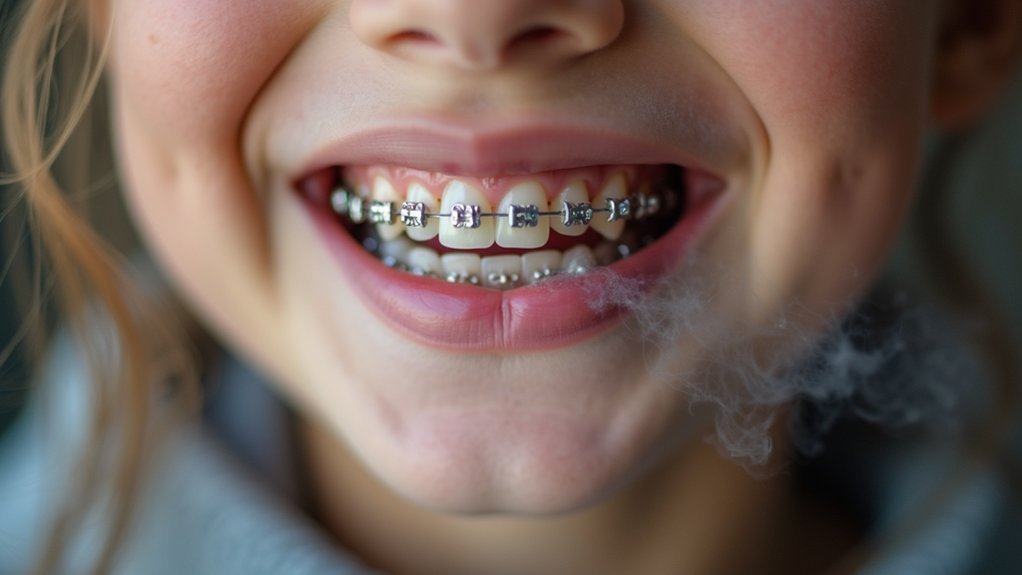

Braces can indeed make your teeth sensitive to cold. This sensitivity often results from the pressure braces place on nerves and the exposure of dentin beneath your enamel. Temporary discomfort is common, especially after adjustments, but it usually lasts a few days to a week. To manage this sensitivity, you can use soft-bristled toothbrushes and desensitizing toothpaste. For further insights on addressing this issue, important tips and information follow.
Key Takeaways
- Yes, braces can cause temporary tooth sensitivity to cold due to pressure on nerves during adjustments.
- Sensitivity often occurs as enamel erosion exposes the sensitive dentin beneath.
- Mild discomfort is typical, lasting a few days to a week after orthodontic adjustments.
- Using desensitizing toothpaste and a soft-bristled toothbrush can help alleviate cold sensitivity.
- If sensitivity persists beyond a week or causes severe pain, consult your orthodontist.
Understanding Tooth Sensitivity With Braces
When you get braces, you might notice an increase in tooth sensitivity, especially to cold temperatures. This temporary sensitivity occurs as braces exert pressure, irritating the nerves and ligaments around your teeth.
As your teeth shift, exposure of dentin beneath the enamel can heighten sensitivity to cold. This sensation is common shortly after getting braces or after adjustments, typically lasting a few days.
Maintaining good oral hygiene is essential; using fluoride toothpaste can strengthen enamel and alleviate sensitivity.
If you experience any pain lasting over a week, consult with an orthodontist to address potential underlying dental issues.
Common Causes of Sensitivity
Although sensitivity can be a common experience during orthodontic treatment, understanding its underlying causes is essential for managing discomfort effectively.
Tooth movement from braces places pressure on nerves and surrounding tissues, causing temporary discomfort. Enamel erosion, often worsened by hard brushing or acidic foods, can expose the sensitive dentin layer, heightening sensitivity to cold.
Tooth movement from braces can cause pressure on nerves, leading to temporary discomfort and increased sensitivity, especially to cold.
Additionally, gum recession from aggressive brushing or gum disease may reveal tooth roots, making them more susceptible to temperature changes.
Finally, braces can trap food and plaque, complicating oral hygiene and potentially leading to cavities and increased sensitivity.
Regular care is crucial for minimizing these issues.
How Long Does Sensitivity Last?
Understanding how long sensitivity lasts after getting braces can help you manage expectations during your orthodontic treatment.
Typically, sensitivity to cold is temporary, lasting a few days to a week as your teeth adjust to their new positions. While you may experience mild discomfort, severe pain is less common.
Sensitivity often peaks after orthodontic adjustments when pressure irritates nerve endings. If it persists beyond a week or intensifies, consulting your orthodontist is essential for evaluation.
Regularly monitoring your sensitivity levels helps assess your dental health and address any potential issues early on, ensuring a smoother orthodontic journey.
Tips to Reduce Tooth Sensitivity With Braces
Tooth sensitivity can be a common issue for those wearing braces, but there are effective strategies to help mitigate discomfort.
Use a soft-bristled toothbrush and brush gently to avoid irritating sensitive teeth and gums. Incorporating fluoride toothpaste into your routine strengthens enamel, reducing sensitivity to cold. Consider desensitizing toothpaste designed for sensitive teeth to help block pain signals.
Maintain proper care by brushing twice daily and flossing once a day to prevent plaque buildup. Additionally, avoid hot or cold foods and drinks, opting for lukewarm options to minimize tooth sensitivity while your teeth adjust to braces.
When to Seek Professional Help
Experiencing tooth sensitivity while wearing braces can often be managed with at-home strategies, but there are specific situations where professional help is necessary.
If your sensitivity to cold foods persists for more than a few days after braces treatment, consult your orthodontist. Severe pain or discomfort when consuming cold items could signal underlying issues.
If cold sensitivity lasts beyond a few days, consult your orthodontist to rule out any serious issues.
Additionally, if you notice swelling or bleeding gums, seek professional help to address potential gum disease.
Regular orthodontic visits are essential for monitoring ongoing sensitivity levels and ensuring your treatment progresses without complications.
Open communication with your orthodontist is key to adjusting your care effectively.