
Yes, you can eat chicken after a deep cleaning of your teeth, but choose soft, tender options. Shredded chicken or chicken soup is ideal, as it’s easier to chew and won’t irritate sensitive gums. Avoid tough cuts like grilled or fried chicken, as well as spicy and overly hot dishes. Stick to a soft diet for 24-48 hours to promote healing. Want to know more about suitable foods and preparation tips? Keep going for more details.
Key Takeaways
- Wait until any numbness from anesthesia wears off before eating chicken.
- Choose soft chicken options like shredded chicken or chicken soup to avoid discomfort.
- Avoid tough cuts and spicy chicken dishes that can irritate sensitive gums.
- Serve chicken at lukewarm temperatures to prevent sensitivity and discomfort.
- Stick to a soft diet for 24-48 hours to promote faster healing after deep cleaning.
How Long After a Deep Cleaning Can You Eat?
After a deep cleaning, you might wonder how long you should wait before eating.
It’s best to wait until the numbness from anesthesia wears off to avoid biting your cheeks or tongue. If fluoride treatment was applied, wait at least 30 minutes for proper adhesion.
Start with soft foods that are gentle on your sensitive gums, and avoid crunchy, hard, or spicy foods for 24-48 hours to prevent discomfort.
As your gums heal, you can gradually reintroduce regular foods, typically within a week, depending on your individual recovery process.
Prioritize your comfort and healing during this time.
What Types of Chicken Are Suitable After Deep Cleaning?
Choosing the right type of chicken after a deep cleaning is vital for your comfort and recovery.
Opt for soft and tender chicken options like shredded chicken or chicken cooked in a stew, as they minimize discomfort on sensitive gums. It’s important to avoid tough cuts, such as grilled or fried chicken, since they require more chewing and can irritate tender areas.
Chicken soups or broths are excellent choices, just make sure they’re not too hot.
Always prioritize well-cooked, moist-to-chew chicken and steer clear of spicy foods for at least 48 hours to support your healing process.
Tips for Preparing Chicken for Post-Cleaning Consumption
When preparing chicken for consumption after a deep cleaning, it’s important to focus on texture and temperature to guarantee comfort during your recovery.
Choose tender cuts, like thighs or breasts, ensuring they’re well-cooked and easy to chew. Shred or cut the chicken into small pieces to avoid stressing sensitive gums.
Opt for tender cuts like thighs or breasts, cooked well and cut into small pieces for easier chewing.
Consider soft formats, such as chicken soup or chicken salad, to make it easier to consume. Avoid spicy or heavily seasoned sauces that could irritate your gums.
Finally, serve the chicken at a lukewarm temperature to prevent discomfort from hot foods during your healing process.
Foods to Avoid When Eating Chicken After a Deep Cleaning
To guarantee a smooth recovery following a deep cleaning, it’s essential to avoid certain foods that could irritate your gums.
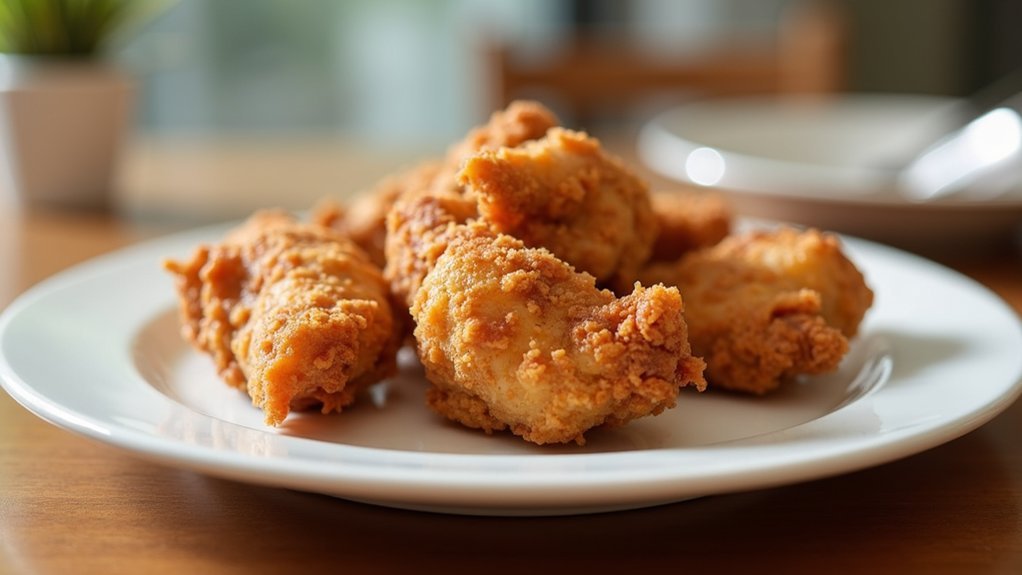
Steer clear of tough cuts of chicken like grilled or fried varieties, as they require significant chewing and may aggravate sensitive gums. Avoid spicy chicken dishes that can cause discomfort to healing tissue.
Also, skip overly hot chicken, as high temperatures can intensify sensitivity. Finally, refrain from chicken served with crunchy sides, which can lead to discomfort during chewing.
Instead, focus on soft chicken preparations, like shredded or poached chicken, to minimize irritation and guarantee ease of eating.
The Importance of a Soft Diet for Gum Healing
After a deep cleaning, sticking to a soft diet is essential for preventing gum irritation and promoting faster healing.
Soft foods minimize discomfort and reduce the risk of food particles getting trapped in sensitive areas.
Preventing Gum Irritation
Understanding the importance of a soft diet following a deep cleaning can greatly impact your gum healing process. A soft diet minimizes irritation to sensitive gums, ensuring a smoother recovery.
Tough foods can stress healing gums, potentially prolonging discomfort and increasing complications. Opt for well-cooked chicken, shredded or cut into small pieces, to ease chewing and prevent gum strain.
Adhering to this diet for at least 24 to 48 hours allows your gums to heal and reattach, reducing the chances of food particles getting trapped in delicate areas. Mindful choices, like avoiding sharp or crunchy foods, enhance your healing experience.
Promoting Faster Healing
Maintaining a soft diet is vital for promoting faster healing after deep cleaning your teeth. Soft foods minimize irritation to treated gum areas, allowing for a more comfortable recovery process.
They’re easier to chew and help prevent food particles from getting lodged in sensitive gums, reducing complications. A balanced diet, including options like mashed potatoes and yogurt, supports your overall nutrition while facilitating healing.
For the first 24 to 48 hours post-procedure, it’s important to stick to soft foods. Gradually reintroducing regular foods as your gums heal will guarantee your recovery timeline remains on track, typically within a week.
Signs That Indicate You Should Avoid Certain Foods
If you notice increased gum sensitivity or experience pain while chewing, it’s essential to reconsider your food choices.
Hard or chewy items, like chicken, can exacerbate discomfort and hinder your recovery.
Paying attention to these signs will help you maintain your oral health after a deep cleaning.
Increased Gum Sensitivity
After a deep cleaning, you might notice increased gum sensitivity, which can manifest as tenderness or discomfort when chewing.
Signs of this heightened sensitivity, like pain from hot, cold, or spicy foods, suggest you should avoid certain foods during recovery. If chewing tougher foods, such as chicken, causes discomfort, consider opting for softer food options until your sensitivity decreases.
Persistent discomfort while eating may indicate that your gums are still healing, necessitating the avoidance of irritating foods.
Pain While Chewing
Experiencing pain while chewing can be a significant concern following a deep cleaning. If you notice discomfort while eating, such as sharp pain or throbbing, it’s wise to avoid certain foods that require heavy biting or chewing.
Your healing gums may be sensitive, making it essential to stick to softer options until they fully recover. Chewing causes swelling or bleeding in your gums, indicating that hard or crunchy foods should be avoided.
Listen to your body—refraining from foods that trigger pain is vital for ensuring a smooth recovery after your dental procedure. Prioritize your comfort and healing.